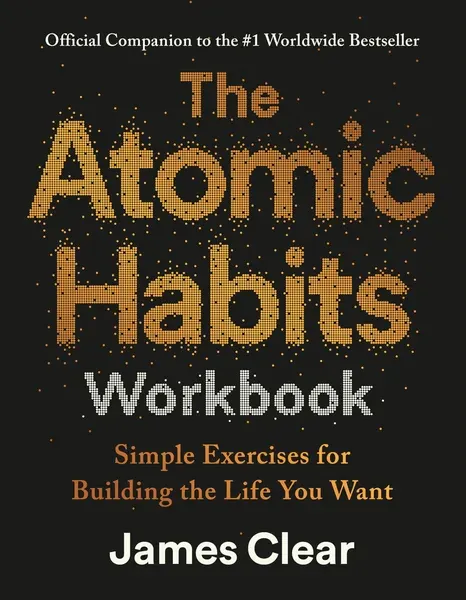
Is The Atomic Habits Workbook worth adding to your self-improvement library if you already own James Clear's bestselling original? This official companion promises to transform the concepts from Atomic Habits into actionable exercises, but companion workbooks often feel like cash grabs rather than genuine value adds. Clear's workbook takes a different approach, functioning as a structured implementation guide rather than a simple recap with fill-in-the-blank spaces.
For readers familiar with other companion workbooks or similar follow-up materials, this stands apart by focusing on practical application rather than philosophical reflection. The sleek black cover with dotted typography mirrors the original book's clean aesthetic, suggesting the same attention to design and user experience that made the original so appealing.
Clear's Structured Approach to Habit Implementation
Where many workbooks simply restate concepts with added worksheets, James Clear builds on his four-step habit loop framework with guided exercises that force deeper engagement. The workbook doesn't assume you've memorized every principle from the original—it reintroduces key concepts before asking you to apply them.
The methodology here revolves around Clear's "2-minute rule" and "habit stacking" techniques, but with step-by-step implementation guides. Rather than telling readers to "start small," the James Clear workbook provides templates for breaking down complex goals into genuinely manageable components. Clear's writing maintains the accessible tone from the original while adding more directive, coach-like guidance.
Each section builds systematically, moving from habit identification through environmental design to long-term maintenance. This isn't random worksheets—it's a curriculum.
The workbook's strength lies in its exercise variety and progression. James Clear includes habit trackers, but these aren't generic daily checkboxes. The tracking systems adapt to different habit types—some require frequency tracking, others focus on consistency streaks, and advanced exercises tackle habit stacking chains.
The environmental design exercises stand out particularly well. Rather than vague advice about "optimizing your space," Clear provides room-by-room audits and specific modification checklists. The workbook asks pointed questions: What's the first thing you see when you wake up? What's within arm's reach of your workspace? These details matter for sustainable habit formation.
However, the identity-based habit exercises feel less developed. While the original book's discussion of identity change was compelling, the workbook's identity exploration worksheets rely heavily on self-reflection without providing clear frameworks for measuring identity shifts over time.
Where the Companion Adds Real Value
This workbook succeeds where many companions fail by introducing new content rather than simply restating the original. James Clear includes case studies and examples that didn't appear in Atomic Habits, particularly around habit maintenance during life transitions and setbacks.
The "habit autopsy" framework—analyzing why specific habits failed—provides a troubleshooting methodology missing from the original book. Clear walks readers through common failure points and offers diagnostic questions for identifying weak links in their habit systems.
The community and accountability sections also expand beyond the original's scope. Clear provides templates for habit partnerships and family habit implementation that acknowledge the social dynamics affecting personal change efforts.
Limitations and Missing Elements
Despite its practical focus, the workbook sometimes oversimplifies complex behavioral change. The exercises work well for straightforward habits like exercise or reading, but struggle with more complex behavioral patterns like emotional regulation or relationship habits.
The James Clear workbook also assumes a level of self-awareness and motivation that not all readers possess. While Clear provides frameworks for habit selection, he doesn't adequately address the underlying resistance or ambivalence many people feel toward change itself.
The digital integration feels underdeveloped compared to other modern self-help workbooks. While Clear mentions apps and digital tools, the workbook doesn't seamlessly integrate with digital tracking systems that many readers prefer.
Worth the Investment for Implementation-Focused Readers
The Atomic Habits Workbook justifies its existence by serving readers who struggle with the gap between understanding concepts and implementing them consistently. This isn't essential reading for everyone who enjoyed the original, but it provides genuine value for action-oriented learners who prefer structured guidance over independent application.
If you found yourself nodding along with Atomic Habits but struggling to translate insights into consistent practice, this companion offers the scaffolding many readers need. However, if you're already successfully implementing habit changes or prefer to create your own systems, the James Clear workbook may feel unnecessarily prescriptive.
The workbook works best as a 30-60 day intensive implementation guide rather than a long-term reference, making it a worthwhile investment for readers ready to commit to structured behavior change.
Where to Buy
You can find The Atomic Habits Workbook at Amazon, Barnes & Noble, your local bookstore, or directly from Portfolio Books.