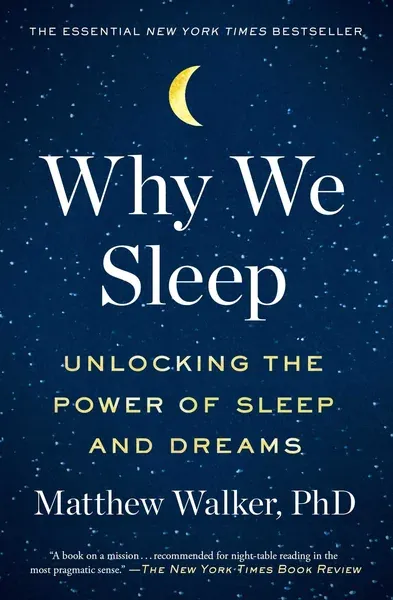
Few books have sparked as much debate about sleep habits as Matthew Walker's Why We Sleep. Published in 2017, this ambitious work promises to revolutionize how we think about our nightly rest, but is Why We Sleep worth reading in 2026? Walker's accessible approach to sleep science has captivated millions of readers, though the book has faced scrutiny from researchers questioning some of its more dramatic claims.
Readers seeking practical sleep guidance comparable to Atomic Habits or The Power of Now will find Walker takes a different approach—focusing heavily on the science behind sleep rather than quick fixes or meditation techniques.
The Case for Sleep's Critical Role
Walker, a neuroscience professor and director of the Center for Human Sleep Science at UC Berkeley, builds his argument methodically. The book's central thesis positions sleep not as time lost to productivity, but as the foundation of physical health, mental performance, and emotional regulation. Walker presents sleep as a biological imperative that modern society has dangerously undervalued.
The author's academic credentials shine through in his detailed exploration of sleep stages, circadian rhythms, and the glymphatic system—the brain's waste-clearing mechanism that operates primarily during deep sleep. Walker explains complex neuroscience concepts with remarkable clarity, making research findings accessible to general readers without dumbing down the science.
What distinguishes this work from lighter sleep improvement guides is Walker's comprehensive examination of sleep's role across the human lifespan. From infant brain development to age-related sleep changes, he traces how sleep needs and patterns evolve, offering insights that extend far beyond basic sleep hygiene tips.
The Science Behind the Claims
Walker's approach relies heavily on scientific studies, brain imaging data, and population health research. He draws connections between sleep deprivation and conditions ranging from Alzheimer's disease to immune system dysfunction. The book presents compelling evidence linking adequate sleep to memory consolidation, creativity, and emotional processing.
However, this scientific foundation has become a point of contention. Some researchers have challenged Walker's interpretation of certain studies and questioned whether his conclusions sometimes exceed what the data actually supports. The book's more alarming claims about sleep loss—including assertions about drastically reduced lifespan—have sparked ongoing academic debate.
Despite these controversies, Walker's core message about sleep's importance aligns with mainstream sleep medicine. His emphasis on sleep as a pillar of health alongside diet and exercise reflects current medical consensus, even if specific details remain disputed.
Practical Applications and Limitations
Unlike purely academic texts, Why We Sleep offers concrete guidance for improving sleep quality. Walker addresses common sleep disruptors including caffeine, alcohol, temperature, and light exposure. His recommendations for sleep hygiene practices are evidence-based and actionable, though not groundbreaking for readers already familiar with basic sleep principles.
The book's strength lies in motivating behavior change through understanding rather than simple rule-following. By explaining why sleep matters at a biological level, Walker provides compelling reasons to prioritize rest in our productivity-obsessed culture.
However, readers seeking detailed step-by-step protocols may find the book frustrating. Walker focuses more on explaining what happens during sleep than providing comprehensive solutions for sleep disorders or chronic insomnia. Those with serious sleep issues will likely need additional resources beyond this overview.
Where the Book Falters
Why We Sleep suffers from occasional overstatement that undermines its credibility. Walker's writing style sometimes veers toward alarmism, particularly when discussing the consequences of sleep deprivation. While sleep is undoubtedly important, some claims feel designed more for impact than accuracy.
The book also shows its age in some technology recommendations and fails to adequately address individual variation in sleep needs. Walker's one-size-fits-all approach to sleep duration doesn't account for genetic differences or varying life circumstances that affect sleep patterns.
Additionally, the work could benefit from more nuanced discussion of the trade-offs inherent in sleep prioritization. For parents, shift workers, or caregivers, Walker's idealized sleep schedule may be unrealistic or impossible to implement.
A Valuable Entry Point Despite Its Flaws
Why We Sleep succeeds as an engaging introduction to sleep science that challenges readers to reconsider their relationship with rest. Walker's passion for the subject is evident, and his ability to translate complex research into compelling narratives makes the book genuinely page-turning despite its scientific focus.
The book works best for readers new to sleep science who want to understand the biological rationale behind sleep recommendations. It's less suitable for those seeking advanced sleep optimization techniques or dealing with specific sleep disorders.
While some of Walker's more dramatic claims warrant skepticism, his fundamental message about sleep's importance remains sound. The book serves as a wake-up call about our culture's sleep-depriving tendencies, even if readers should supplement it with additional sources for a complete picture of sleep research.
Where to Buy
You can find Why We Sleep at Amazon, Barnes & Noble, your local bookstore, or directly from Scribner Publishing.