Ancient Wisdom for Contemporary Struggles
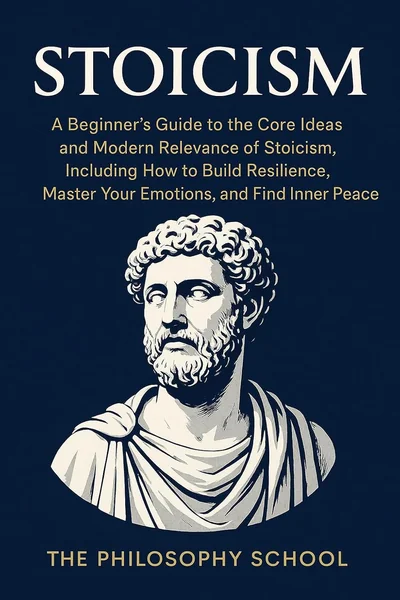
The Philosophy School structures their exploration around three core pillars that defined Stoic thought: the dichotomy of control, emotional regulation, and living according to nature. Rather than presenting these as abstract philosophical concepts, the authors consistently connect Stoic principles to modern challenges like workplace stress, relationship conflicts, and social media overwhelm.
The book's strength lies in its systematic presentation of key Stoic figures and their contributions. Epictetus's teachings on mental freedom receive thorough treatment, while Marcus Aurelius's Meditations serves as a practical example of Stoic reflection in action. Seneca's letters provide the foundation for discussions on applying philosophy to daily decision-making. The approach feels refreshingly practical rather than purely academic.
What distinguishes this guide from purely historical treatments is its emphasis on contemporary applications. The authors draw connections between ancient Stoic practices and modern psychological techniques, particularly cognitive behavioral therapy. This parallel helps readers understand why Stoic principles remain relevant rather than dismissing them as outdated philosophical musings.
Breaking Down Complex Concepts
For readers new to philosophy, The Philosophy School demonstrates admirable clarity in explaining potentially intimidating concepts. The discussion of virtue ethics avoids dense academic jargon while maintaining intellectual rigor. Complex ideas like the relationship between reason and emotion receive patient explanation through contemporary examples and analogies.
The writing style maintains accessibility without sacrificing depth. Technical philosophical terms receive clear definitions, and abstract concepts are grounded through practical scenarios. The authors understand that many readers approach Stoicism not from academic curiosity but from personal necessity—seeking tools for managing stress, disappointment, and uncertainty.
However, the presentation occasionally feels oversimplified. Stoicism's relationship with political engagement and social justice receives limited attention, presenting a somewhat sanitized version of ancient practice. The historical Stoics were deeply engaged in public life, yet this guide focuses primarily on individual emotional management and personal resilience.
Practical Applications and Modern Context
The book's central promise involves translating ancient principles into actionable modern practices. Readers seeking practical exercises will find structured approaches to implementing Stoic reflection, though the methodology sometimes feels closer to contemporary self-help than classical philosophy. The authors provide frameworks for morning reflection, evening review, and decision-making processes rooted in Stoic principles.
Where this guide truly succeeds is in addressing modern anxieties through Stoic lenses. Social media comparison, career uncertainty, and relationship challenges receive thoughtful analysis through the framework of what we can and cannot control. The authors demonstrate genuine understanding of contemporary stressors while offering time-tested wisdom for managing them.
The discussion of emotional regulation avoids the common misconception that Stoicism promotes emotional suppression. Instead, the authors carefully explain the Stoic view of emotions as judgments that can be examined and modified. This nuanced approach helps readers understand that Stoic practice involves engaging with emotions thoughtfully rather than eliminating them entirely.
Limitations and Missing Depth
The main weakness lies in the book's occasionally superficial treatment of complex philosophical questions. While accessibility remains important, some discussions sacrifice philosophical rigor for ease of understanding. The relationship between Stoicism and other philosophical traditions receives minimal attention, potentially leaving readers with an incomplete picture of where Stoic thought fits within broader philosophical discourse.
The guide also tends to present Stoicism as universally applicable without adequately addressing cultural and individual differences in how these principles might be practiced. Ancient Stoicism developed within specific social and political contexts that differed significantly from contemporary democratic societies. This historical context feels underexplored.
Additionally, the book's focus on individual resilience and emotional management sometimes neglects Stoicism's broader ethical dimensions. The ancient Stoics emphasized duty to the common good and active engagement with community welfare—aspects that receive less attention in this primarily individual-focused treatment.
Who Should Read This Guide
This book works best for philosophy beginners genuinely interested in understanding Stoic principles rather than seeking quick emotional fixes. Readers looking for a gentle introduction to classical philosophy will appreciate the careful explanations and contemporary connections. The structured approach makes complex ideas approachable without requiring extensive background knowledge.
However, readers already familiar with Stoic texts may find the treatment somewhat elementary. Those seeking deep philosophical analysis or historical scholarship should look elsewhere. The guide serves its intended audience—beginners seeking practical wisdom—rather than advanced students of philosophy.
The book particularly benefits readers experiencing stress, uncertainty, or emotional volatility who want philosophical grounding rather than purely psychological approaches. If you're struggling with anxiety or seeking greater emotional stability, this guide provides a solid foundation in time-tested principles.