Why Money Behavior Matters More Than Math
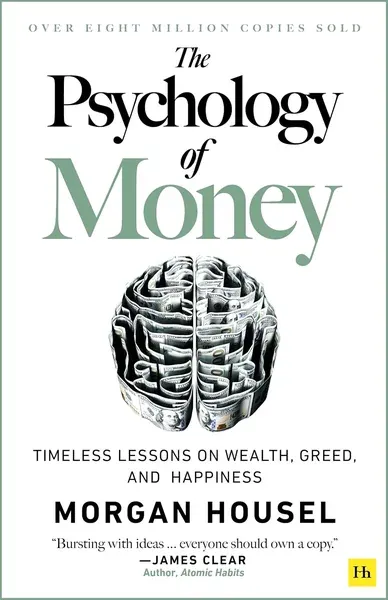
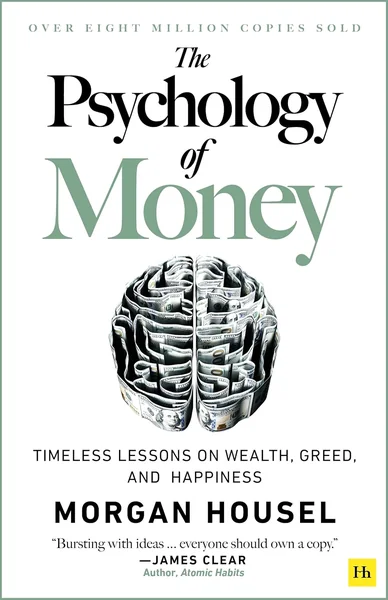
Is The Psychology of Money worth reading? Absolutely, but not for the reasons most financial books claim relevance. Morgan Housel's 2020 exploration of behavioral finance sidesteps the typical advice about budgets and investment formulas, focusing instead on why smart people make terrible financial decisions. Rather than competing with technical analysis guides like A Random Walk Down Wall Street, this book examines the emotional and psychological forces that drive our relationship with money.
Housel argues that financial success depends less on intelligence or education and more on behavior patterns developed over decades. The book's central thesis challenges the finance industry's obsession with complex models by demonstrating how simple psychological principles often outweigh sophisticated mathematical calculations. Through compelling anecdotes and research-backed insights, Housel reveals why a janitor can accumulate more wealth than a surgeon, and why market timing rarely works despite our persistent attempts.
Storytelling That Makes Finance Accessible
Housel's background as a financial journalist shows in his narrative approach. He transforms dry economic concepts into engaging stories about real people making consequential financial decisions. The writing style balances sophistication with clarity, avoiding both academic jargon and oversimplified platitudes that plague many personal finance books.
The book's structure revolves around nineteen short chapters, each exploring a specific behavioral pattern or psychological principle. This modular approach allows readers to digest complex ideas without feeling overwhelmed by technical details. Housel's prose maintains momentum through vivid examples and counterintuitive observations that challenge conventional financial wisdom.
Unlike most finance books that rely heavily on charts and formulas, Housel uses storytelling as his primary vehicle for conveying insight. He examines historical events, profiles unexpected millionaires, and deconstructs famous financial disasters to illustrate broader principles about human behavior and money.
Key Insights That Challenge Financial Orthodoxy
The book's most powerful contributions center on several counterintuitive observations about wealth building. Housel demonstrates how time and compounding matter more than investment returns, using Warren Buffett's career as evidence that consistency over decades trumps brilliant individual decisions. This perspective shifts focus from finding the perfect investment to developing sustainable financial habits.
Another critical insight involves the role of luck versus skill in financial outcomes. Housel acknowledges that randomness plays a larger role in financial success than most people admit, while emphasizing that preparation and good behavior improve odds over time. This nuanced view helps readers avoid both fatalism and overconfidence about their financial control.
The discussion of lifestyle inflation and social comparison proves particularly valuable. Housel explores how wealth accumulation often depends more on what you don't spend than what you earn, challenging readers to examine their relationship with status consumption. His analysis of how social media amplifies financial comparison provides relevant context for modern wealth-building challenges.
Where Theory Meets Practical Application
For readers seeking actionable strategies, the book delivers practical frameworks without prescriptive formulas. Housel emphasizes building financial margins of safety, maintaining long-term perspectives during market volatility, and recognizing the difference between being rich and being wealthy. These concepts translate into specific behavioral changes rather than investment recommendations.
The book's treatment of risk management stands out for its psychological sophistication. Rather than focusing solely on mathematical risk calculations, Housel examines how emotions influence risk perception and decision-making during financial stress. This approach proves particularly valuable for beginners who need to understand their own behavioral tendencies before implementing complex financial strategies.
However, readers expecting detailed investment advice or specific portfolio recommendations will find the book lacking in tactical guidance. Housel deliberately avoids recommending particular investments or financial products, focusing instead on the psychological frameworks that inform good financial decision-making across various circumstances.
Limitations and Missing Elements
The main weakness lies in the book's limited treatment of systemic financial challenges. While Housel excels at explaining individual behavioral patterns, he provides insufficient analysis of how economic inequality, policy changes, or structural barriers affect financial outcomes. This individual-focused approach may frustrate readers dealing with systemic financial constraints.
The book also feels somewhat repetitive in its later chapters, with similar themes appearing across multiple sections without significant new insights. Housel's emphasis on long-term thinking and behavioral consistency, while valuable, could have been explored more concisely without losing impact.
Additionally, the book's optimistic tone may not resonate with readers facing immediate financial crises or those dealing with structural economic disadvantages. Housel's examples often feature individuals with sufficient income to implement his behavioral recommendations, potentially limiting relevance for readers with more constrained financial circumstances.
A Behavioral Finance Classic for Modern Times
The Psychology of Money deserves its reputation as essential reading for anyone interested in understanding financial behavior. Housel succeeds in making complex psychological principles accessible without oversimplifying the underlying research. The book functions equally well as an introduction to behavioral finance and as a refresher for experienced investors who need reminders about emotional discipline.
This book works best for readers who prefer conceptual frameworks over tactical advice, those struggling to understand their own financial behaviors, and anyone frustrated by traditional personal finance books that ignore psychological realities. It serves as an excellent foundation text that pairs well with more tactical financial guides.