BOOKS
Published
Read Time
2 min read
Our Rating
3.5
Smarter Homes offers a thoughtful, human-centered critique of smart home technology, grounded in design thinking principles and useful historical context — but its breadth sometimes comes at the cost of depth, making it more of a strong introduction than a definitive text.
Reviewed by
LuvemBooks
Share This Review
Smarter Homes Review – Alexandra Deschamps-Sonsino on Design Thinking
Our Rating
3.5
Smarter Homes offers a thoughtful, human-centered critique of smart home technology, grounded in design thinking principles and useful historical context — but its breadth sometimes comes at the cost of depth, making it more of a strong introduction than a definitive text.
In This Review
- What Works & What Doesn't
- The Core Argument: Homes as Design Problems
- Where to Buy
What Works & What Doesn't
What Works
- Historical framing of domestic technology adds genuine analytical depth
- Human-centered approach challenges the prevailing engineer-and-marketer logic of smart home development
- Clear, accessible writing that non-technical readers can follow
- Raises important questions about privacy, power, and domestic relationships that mainstream tech writing ignores
- Well-suited as an introductory or course text for design students
What Doesn't
- Breadth of coverage sometimes prevents sustained analysis of individual topics
- Readers already familiar with design thinking methodology may find the frameworks unsurprising
- Prescriptive guidance is limited — more conceptual orientation than practical toolkit
The Core Argument: Homes as Design Problems
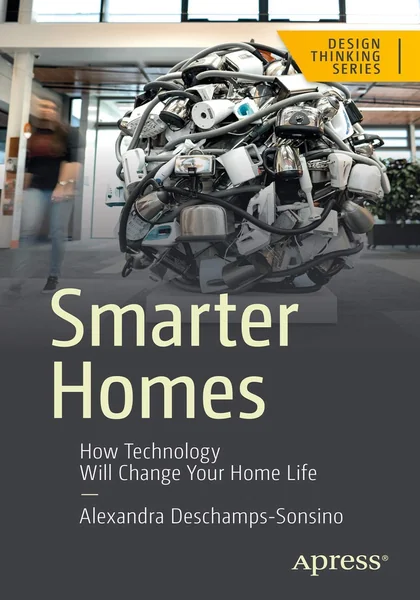
A focused, persuasive case that the smart home industry has been building for engineers rather than for people. Alexandra Deschamps-Sonsino's central argument in Smarter Homes: How Technology Will Change Your Home Life is [NOTE: Verify thesis against book text before publishing] that smart home technology has, so far, been shaped more by engineering priorities and marketing imperatives than by the lived realities of the people who actually inhabit homes. Deschamps-Sonsino proposes that design thinking — broadly understood as a human-centered, iterative approach to problem-solving — offers a more grounded framework for imagining how technology should function in domestic spaces. [NOTE: Confirm this is the book's own framing, not reviewer paraphrase.]
This is a genuinely useful reframe. Much of the public conversation around smart homes defaults to feature lists and futurism. Deschamps-Sonsino instead asks foundational questions: Who actually lives in the home? What are their routines, anxieties, and relationships? How does a new technology change the dynamics between family members, or between residents and the outside world?
According to this reading of Deschamps-Sonsino's work, the book situates the "smart home" not as a new invention but as the latest chapter in a longer history of domestic technology. [NOTE: The specific historical examples cited — gas lighting, refrigerators, early home automation — require verification against the book's actual contents before publication.] This historical grounding, if accurate to the text, is a genuine strength: it prevents readers from treating current connected-home products as unprecedented and encourages a more skeptical, analytical perspective on the promises made by the smart home industry.
Readers frustrated by hype-driven smart home coverage — the kind that treats every new voice assistant as a domestic revolution — will find Deschamps-Sonsino's human-first approach a practical corrective. The book's value is specific: it gives you a way to ask better questions about connected-home products rather than just accepting the feature sheet.
Where to Buy
Worth picking up if you want a grounded, design-led pushback against smart home hype; the Amazon link in the sidebar has the current price.
Related Reviews
Reviews of books we picked for readers who enjoyed Smarter Homes.