
5 min read
Share This Review
SPQR by Mary Beard Review: Ancient Rome History Made Accessible
Beard's <em>SPQR</em> transforms Roman history through scholarly rigor and accessible prose, emphasizing ordinary voices and archaeological evidence to create a nuanced portrait of empire that challenges traditional narratives while remaining engaging for general readers.
In This Review
- Beard's Scholarly Approach Without Academic Jargon
- Key Figures in Rome's Rise
- Rome's Political Evolution and Social Dynamics
- Archaeological Evidence Meets Literary Sources
- Where Academic Rigor Meets Readable Prose
- A Fresh Perspective on Familiar Territory
Beard's Scholarly Approach Without Academic Jargon
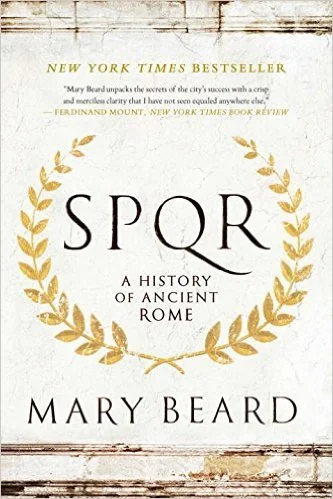
The rare popular history that earns its reputation through argument, not anecdote. What sets SPQR apart from other Roman histories is Mary Beard's commitment to making complex historical arguments accessible without dumbing them down. She wrestles with genuine scholarly debates—the reliability of ancient sources, the mechanics of Roman expansion, the evolution of political institutions—while keeping her prose clear and engaging. Rather than presenting Rome as a series of inevitable triumphs, Mary Beard emphasizes the messiness and contingency of historical change.
Her treatment of Roman expansion particularly demonstrates this nuanced approach. Instead of celebrating military conquest, she examines how Rome absorbed and adapted to the cultures it encountered, creating a complex imperial identity that defied simple categories. The writing maintains scholarly precision while remaining conversational, a balance that many academic historians struggle to achieve.
Key Figures in Rome's Rise
Mary Beard populates her narrative with both famous and forgotten Romans, bringing equal attention to emperors and ordinary citizens. She gives substantial space to figures like Cicero, whose letters provide invaluable insights into Republican politics, and Caesar, whose own writings offer a general's perspective on conquest and governance. But she's equally interested in the anonymous voices preserved in graffiti, tombstones, and legal documents.
Beard's treatment of women in Roman society deserves particular mention. Rather than relegating them to brief sidebars, Beard integrates female experiences throughout the narrative, examining how women navigated legal restrictions, wielded informal power, and left their mark on Roman culture. She brings Livia into sharp focus as a political actor rather than a mere imperial accessory.
Rome's Political Evolution and Social Dynamics
SPQR excels in its analysis of Roman political institutions and their gradual transformation from monarchy through republic to empire. Mary Beard demonstrates how Roman political culture developed through crisis and adaptation, with each constitutional change reflecting deeper social tensions. Her discussion of the Late Republic's collapse is particularly compelling, showing how personal ambition and systemic dysfunction combined to destroy centuries of constitutional tradition.
SPQR's treatment of social hierarchy and citizenship offers insights that resonate with contemporary debates about inclusion and belonging. Beard examines how Rome's relatively flexible approach to citizenship—unusual in the ancient world—both strengthened the empire and created new forms of inequality and tension.
Archaeological Evidence Meets Literary Sources
One of SPQR's greatest strengths lies in Beard's integration of archaeological and textual evidence. She uses material culture—coins, buildings, inscriptions—to test and complicate the stories told by ancient authors. This archaeological perspective reveals aspects of Roman life that literary sources often ignore or distort, particularly the experiences of non-elite Romans.
Her analysis of Pompeii is especially effective, using the preserved city to illustrate broader patterns of Roman urban life, commerce, and social organization. These archaeological insights ground her broader historical arguments in tangible evidence while revealing the limitations of traditional textual sources.
Where Academic Rigor Meets Readable Prose
SPQR succeeds admirably in its primary goal of making serious Roman history accessible to general readers. Beard's prose is clear and engaging, her arguments well-structured, and her use of primary sources extensive without being overwhelming. The book assumes no prior knowledge of Roman history while respecting readers' intelligence and curiosity.
However, the book's broad chronological scope occasionally works against narrative cohesion. Some sections feel more like connected essays than chapters in a unified story, and certain periods receive more thorough treatment than others. Readers seeking detailed military history or comprehensive coverage of the later empire may find the book's approach somewhat selective.
A Fresh Perspective on Familiar Territory
For readers familiar with other Roman histories, SPQR offers a distinctly modern perspective that challenges traditional narratives about Roman exceptionalism and decline. Beard's feminist sensibility and post-colonial awareness inform her analysis without overwhelming it, resulting in a more complete and honest portrait of Roman civilization than many earlier works provide.
The book works well for readers new to Roman history and for specialists alike. Newcomers get a solid foundation for further study; those already familiar with the field get fresh interpretive frameworks — particularly the focus on ordinary Romans and material culture as a way of understanding empire as a lived experience, not just a political one.
If you want a Roman history that takes seriously both the graffiti on Pompeii's walls and the speeches in the Senate, SPQR belongs on your shelf.
Frequently Asked Questions
Related Reviews
Reviews of books we picked for readers who enjoyed SPQR.


Reader Comments
No comments yet
Be the first to share your thoughts!