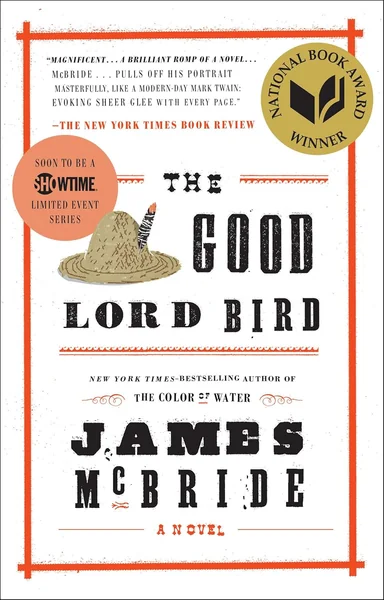
The Good Lord Bird Review: History Through Fresh Eyes
Is The Good Lord Bird worth reading? James McBride's National Book Award-winning novel takes one of America's most polarizing historical figures—abolitionist John Brown—and filters his story through the eyes of a young enslaved boy masquerading as a girl. The result is a work that's both historically grounded and wildly imaginative, offering a fresh perspective on the violent prelude to the Civil War.
McBride constructs his narrative around Henry "Onion" Shackleford, a fictional character whose voice carries the entire novel. When Brown's raid on a Kansas saloon frees the young Henry, a case of mistaken identity forces him to pose as a girl to stay with Brown's ragtag militia. This premise allows McBride to explore themes of identity, survival, and the complex moral landscape of pre-Civil War America. Readers familiar with Cold Mountain or The March will recognize similar terrain, but McBride's approach is distinctly his own—more irreverent, more immediate, and anchored by a narrator whose youth provides both innocence and sharp observation.
McBride's Masterful Voice and Approach
McBride writes with a vernacular authenticity that never feels forced or theatrical. Henry's narration captures the rhythms of 19th-century speech without becoming a linguistic obstacle course for modern readers. The prose moves with natural momentum, balancing moments of brutal violence with unexpected humor. McBride doesn't shy away from the contradictions in his characters—Brown emerges as simultaneously prophetic and delusional, heroic and destructive.
The author's background as a journalist serves him well here. He grounds the fantastical elements of Henry's story in meticulously researched historical detail. The bleeding Kansas setting feels lived-in rather than researched, from the dust-choked towns to the political tensions that made everyday life dangerous.
Henry Shackleford and John Brown's Complex Dynamic
At the novel's heart lies the relationship between Henry and John Brown. McBride presents Brown not as the simplified martyr or madman of history textbooks, but as a complex figure whose religious fervor drives both noble and questionable actions. Through Henry's eyes, readers see Brown's genuine commitment to abolition alongside his stunning capacity for self-deception and his treatment of his followers as expendable tools in God's plan.
Henry himself emerges as one of literature's more memorable narrators. His survival depends on reading people and situations with precision, making him an ideal guide through the moral complexities of his world. The gender disguise that initially seems like narrative gimmickry becomes a powerful metaphor for the multiple identities people must adopt to survive in hostile environments.
Themes of Identity and Moral Complexity
The Good Lord Bird operates on multiple thematic levels. Most obviously, it's about the violent birth pangs of American racial consciousness. But McBride digs deeper into questions of identity, performance, and survival. Henry's gender masquerade becomes a lens for examining how all the characters perform versions of themselves—Brown as God's warrior, his followers as committed revolutionaries, even historical figures like Frederick Douglass, who appears briefly but memorably.
The novel refuses easy moral categories. Brown's cause is unquestionably just, but his methods are often horrifying. Henry's deception is born of necessity, but it also grants him a unique freedom to move between worlds. McBride's genius lies in presenting these contradictions without resolving them into comfortable lessons.
Where Historical Fiction Meets Powerful Storytelling
Is The Good Lord Bird historically accurate? McBride takes considerable liberties with historical fact, but his fictional additions illuminate larger truths about the period. The novel captures the chaos and moral confusion of bleeding Kansas better than many strictly factual accounts. Henry's presence at key historical moments—including the climactic raid on Harpers Ferry—provides an intimate perspective on events usually viewed from a distance.
Some readers may find the novel's irreverent tone jarring when applied to such serious subject matter. McBride occasionally pushes his humor too far, risking trivializing the real suffering his story depicts. The pacing also flags in the middle sections, where episodic adventures sometimes feel disconnected from the larger narrative arc.
A National Book Award Winner That Earns Its Recognition
The Good Lord Bird succeeds because McBride understands that historical fiction works best when it illuminates the present as much as the past. His portrayal of American racial violence feels uncomfortably contemporary, while his exploration of religious extremism resonates beyond its 1850s setting.
The novel is perfect for readers who appreciate literary fiction that tackles serious themes without abandoning entertainment value. High school students studying the Civil War era will find it more engaging than most textbook accounts, though teachers should be prepared to discuss its mature content and complex moral questions.
You can find The Good Lord Bird at Amazon, your local bookstore, or through most library systems.