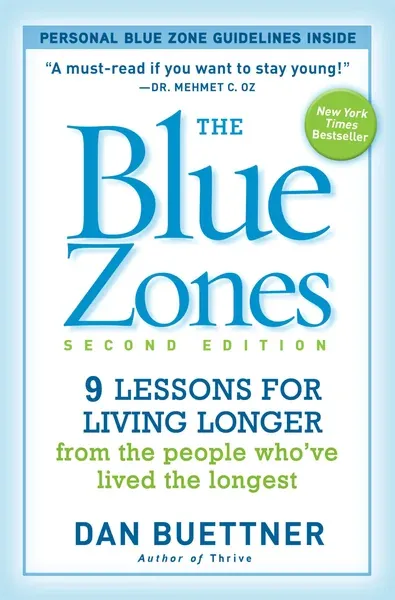
Is The Blue Zones worth reading for longevity advice in today's wellness-obsessed world? Dan Buettner's exploration of the world's longest-lived populations promises insights that could add years to your life, but does his research deliver practical wisdom or just feel-good platitudes about Mediterranean living?
The Blue Zones concept has become synonymous with longevity research, identifying five regions where people routinely live to 100: Okinawa, Japan; Sardinia, Italy; Nicoya, Costa Rica; Ikaria, Greece; and Loma Linda, California. Dan Buettner's work presents findings with updated research and refined lessons for modern readers seeking to understand what separates centenarians from the rest of us.
Unlike generic wellness books that recycle familiar advice, Buettner grounds his recommendations in demographic data and anthropological observation. Readers familiar with Atomic Habits by James Clear will appreciate the practical framework, while those drawn to The Mediterranean Diet will find deeper cultural context behind familiar dietary patterns.
The Foundation: Research That Holds Water
Dan Buettner's methodology sets this health book apart from typical longevity literature. Working with National Geographic and demographers, he identified regions with the highest concentrations of centenarians and lowest rates of middle-age mortality. The research approach combines statistical analysis with ethnographic observation, creating a foundation that feels more substantial than anecdotal wellness advice.
The demographic data reveals striking patterns across cultures: Okinawan women live longer than any other population on Earth, while Sardinian men achieve exceptional longevity in a culture known for machismo and heavy drinking. These contradictions force readers to look beyond simple cause-and-effect relationships and consider complex interactions between genetics, environment, and lifestyle.
However, the research isn't without limitations. The book acknowledges but doesn't fully address the "healthy survivor bias" – the possibility that genetic factors, rather than lifestyle choices, primarily determine who reaches 100. The correlation versus causation problem lurks throughout, though Buettner makes reasonable attempts to isolate environmental factors from genetic advantages.
Nine Lessons That Challenge Conventional Wisdom
The core lessons emerging from Blue Zones research often contradict popular fitness and nutrition advice. The Power 9 principles include moderate physical activity rather than intense exercise, eating until 80% full, and prioritizing plant-based foods without completely eliminating meat. These recommendations feel refreshingly moderate compared to extreme wellness protocols.
Most intriguing is the emphasis on social connections and purpose. Blue Zones inhabitants maintain strong family bonds, participate in faith communities, and possess what Okinawans call "ikigai" – a reason for being. The wellness guide argues these psychological factors may be as crucial as diet and exercise for longevity, a thesis that challenges the mechanistic view of aging prevalent in American wellness culture.
The wine consumption findings particularly challenge health orthodoxy. Sardinian men consume significant amounts of red wine daily, yet live longer than their abstaining American counterparts. Dan Buettner presents this not as license for heavy drinking, but as evidence that social context matters more than individual substances – the wine comes with community, ritual, and moderation learned over generations.
Where the Analysis Gets Murky
The book's greatest weakness lies in oversimplifying complex cultural systems. Presenting Okinawan sweet potatoes or Sardinian sourdough bread as longevity secrets misses the broader food security, social inequality, and historical factors that shape these populations. The recommendations often extract individual practices from their cultural context, creating a kind of longevity tourism that may miss the essential elements.
Buettner also struggles with the selection bias inherent in his approach. By studying only the longest-lived populations, he may be identifying statistical outliers rather than replicable patterns. The book doesn't adequately address whether Blue Zones represent optimal conditions for longevity or simply fortunate combinations of geography, genetics, and historical circumstance.
The practical applications section feels particularly thin. While the book identifies patterns clearly enough, translating "strong social connections" or "natural movement" into actionable steps for isolated suburban Americans requires more cultural bridge-building than Buettner provides. The lifestyle recommendations often assume social and economic privileges not available to most readers.
The Science Behind the Stories
What elevates this longevity research above typical wellness literature is Dan Buettner's collaboration with legitimate researchers and his transparency about methodology. The demographic work with Michel Poulain and the dietary analysis with nutrition scientists lend credibility to findings that might otherwise seem cherry-picked from travel observations.
The cardiovascular research proves particularly compelling. Blue Zones populations show remarkably low rates of heart disease, stroke, and diabetes – the chronic conditions that kill most Americans. The book effectively demonstrates that these aren't inevitable consequences of aging but largely preventable through lifestyle modifications, though it doesn't fully account for healthcare access and environmental factors.
However, the genetic component receives insufficient attention. While Buettner acknowledges hereditary factors, he doesn't adequately explore how genetic advantages in isolated populations might limit the applicability of Blue Zones lessons to genetically diverse modern societies.
A Practical Guide or Inspiration Porn?
The Blue Zones concept has spawned a cottage industry of longevity products, community programs, and lifestyle brands. This commercial success raises questions about whether the book offers practical guidance or simply packages exotic lifestyles for American consumption. The emphasis on Mediterranean and Japanese cultures particularly appeals to Western romanticization of "simpler" traditional societies.
That said, the core recommendations remain sound even if the cultural packaging feels oversimplified. Eating more plants, staying physically active through daily tasks rather than gym sessions, maintaining social connections, and finding purpose beyond work represent evidence-based approaches to healthy aging. The book's value lies less in discovering revolutionary secrets than in validating common-sense practices often abandoned in modern life.
The book includes research on telomeres, inflammation, and cellular aging mechanisms, though these additions feel somewhat grafted onto the original ethnographic framework rather than integrated organically.
Who Should Invest Their Time
This health book works best for readers seeking evidence-based approaches to healthy aging without extreme interventions. Those drawn to fad diets or biohacking protocols may find the recommendations insufficiently dramatic, while readers preferring rigorous scientific analysis might want more acknowledgment of the research limitations.
The Blue Zones framework particularly appeals to people interested in community-based approaches to wellness rather than individual optimization strategies. The emphasis on social connections and cultural practices offers a refreshing alternative to the isolation inherent in much American fitness culture.
Where to Buy
You can find The Blue Zones, Second Edition at Amazon, Barnes & Noble, or your local bookstore, with both print and digital editions widely available.