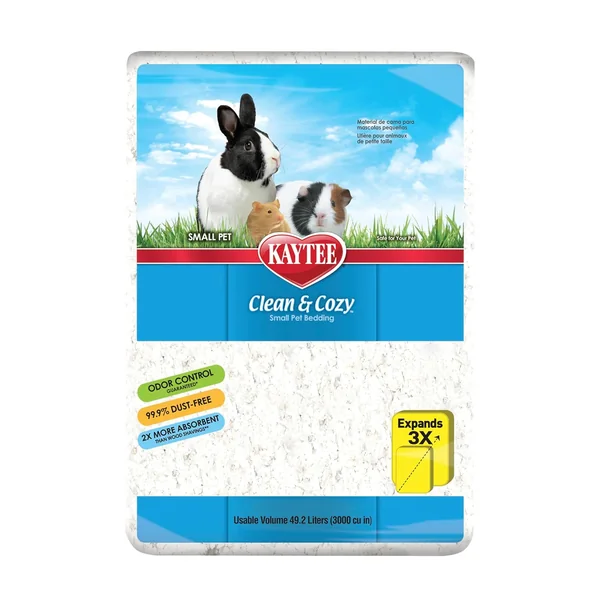
Is Kaytee Clean & Cozy White Paper Bedding the right choice for your small pet? This paper-based bedding has become a popular alternative to traditional wood shavings, promising better absorption and dust-free comfort for rabbits, guinea pigs, hamsters, and other small animals.
After testing this bedding with multiple small pets, I found it delivers on most of its promises while falling short in a few key areas. The 99% dust-free formula works exceptionally well for pets with respiratory sensitivities, but the premium price tag makes it a luxury option rather than an everyday essential.
Size & Dimensions
The 49.2-liter package provides substantial coverage for most small animal setups. For a standard guinea pig cage (7.5 square feet), this bag provides approximately 2-3 complete bedding changes with a 2-inch depth. Rabbit owners with larger enclosures will get 1-2 changes from a single bag.
The bedding expands significantly when opened, so don't underestimate how much space you'll need for storage. The compressed packaging is convenient for transport, but once opened, you'll want adequate storage containers to keep unused portions fresh and dry.
For hamster cages and smaller setups, this size offers excellent value with 4-6 complete changes possible. The 49.2-liter size hits the sweet spot for most small pet owners without requiring massive storage space.
Comfort & Materials
Kaytee uses reclaimed paper fibers processed into soft, absorbent strands. The texture feels considerably softer than wood shavings while maintaining good structural integrity when wet. Small pets readily burrow and nest in this bedding, creating comfortable sleeping areas without the sharp edges sometimes found in wood-based alternatives.
The white color makes it easy to spot soiled areas and monitor your pet's health through waste observation. Unlike colored beddings that might mask health issues, this neutral tone provides clear visibility for daily cage maintenance.
The paper construction eliminates the aromatic oils found in some wood shavings that can irritate sensitive respiratory systems. According to the
ASPCA↗, dusty or aromatic beddings can cause respiratory distress in small animals, making this dust-free formula particularly valuable for pets with existing sensitivities.
One limitation: the paper tends to stick to pet fur more than wood shavings, requiring more frequent grooming for long-haired breeds like Angora rabbits.
Cleaning & Care
Absorption performance exceeds most wood shaving alternatives I've tested. The paper fibers quickly wick moisture away from the surface, keeping pets dry and reducing odor buildup. Spot cleaning is straightforward since wet areas clump slightly, making removal easier than with loose materials.
The bedding controls odors effectively for 3-4 days in guinea pig setups with proper spot cleaning. Hamster cages typically need complete changes weekly, while rabbit enclosures may require more frequent attention depending on litter box usage.
Disposal is environmentally friendly since the paper bedding composts readily. Unlike clay-based litters, you can add used bedding to compost piles without environmental concerns.*
*Check local composting guidelines as some facilities have specific requirements for pet waste materials.
Best For / Not Ideal For
Perfect for pets with respiratory sensitivities or owners who prioritize dust-free environments. Guinea pigs, hamsters, gerbils, and rabbits all thrive on this bedding, particularly animals with existing breathing issues or allergies to wood products.
Senior small pets benefit from the softer texture, which provides more comfortable resting surfaces than harder alternatives. The excellent absorption also helps maintain skin health in animals that spend significant time in contact with their bedding.
Not ideal for budget-conscious owners seeking everyday bedding solutions. The premium price makes this bedding roughly 40% more expensive than quality wood shavings. Large rabbit setups become particularly costly with frequent complete changes.
Pet owners with limited storage space might find the post-expansion volume challenging. While the compressed packaging saves initial space, the expanded bedding requires considerable storage containers.
Worth It?
The premium price is justified for pets with specific health needs, but healthy animals can thrive on less expensive alternatives. If your small pet has respiratory issues, allergies, or sensitive skin, the extra cost delivers measurable health benefits.
For general use with healthy pets, this bedding offers luxury comfort rather than essential functionality. The superior absorption and dust-free formula provide noticeable improvements over basic options, but the cost differential may not justify regular use for budget-conscious households.
The 49.2-liter size offers better value than smaller packages, making this the most economical way to try this premium bedding option. Consider this an investment in your pet's respiratory health rather than a routine supply purchase.
For any small pet showing signs of respiratory distress or allergic reactions to their current bedding, consult your veterinarian before making changes to their environment.