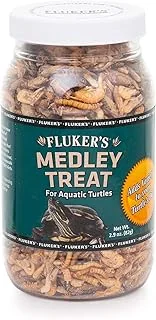
Should you feed Fluker's Aquatic Turtle Food as your turtle's main diet? This freeze-dried medley of river shrimp, mealworms, and crickets makes an appealing treat, but understanding its proper role in turtle nutrition is crucial for your pet's health.
This 2.9 oz container delivers variety that mimics what aquatic turtles would hunt in the wild. The freeze-drying process preserves nutritional value while creating shelf-stable protein sources that turtles find irresistible. The jar's clear design showcases the individual components - whole dried shrimp, recognizable mealworms, and cricket pieces that maintain their natural texture.
Ingredients & Nutrition
The ingredient list stays refreshingly simple: freeze-dried river shrimp, mealworms, and crickets, enhanced with added vitamins. This transparency beats many commercial turtle foods loaded with fillers and artificial preservatives.
River shrimp provide high-quality protein and natural calcium, supporting shell development. Mealworms deliver protein and fat, while crickets add protein with essential amino acids. The vitamin enrichment includes vitamin D3, critical for calcium absorption and shell health in aquatic turtles.
However,
this product lacks the complete nutritional profile turtles need for daily feeding. It's missing the balanced calcium-to-phosphorus ratio, plant matter, and comprehensive vitamin complex that commercial turtle pellets provide. The
AAFCO↗ doesn't regulate reptile food as strictly as dog and cat food, making balanced nutrition even more important to monitor yourself.
The high protein content (approximately 45-50%) makes this unsuitable as a staple food for most aquatic turtle species, who require more varied nutrition including plant matter as they mature.
Who It's Best For
Perfect for turtle owners seeking high-quality treats to supplement a balanced pellet-based diet. This works exceptionally well for:
- Adult aquatic turtles (red-eared sliders, painted turtles, map turtles) who enjoy hunting-style feeding
- Picky eaters who've lost interest in pellets and need feeding motivation
- Training and enrichment activities that encourage natural foraging behaviors
- Turtle keepers wanting to provide species-appropriate variety
Not suitable for baby turtles under 6 months, who need consistent, balanced nutrition from quality pellets for proper development. The irregular protein levels could interfere with healthy shell and bone growth during this critical period.
Skip this if your turtle has kidney issues - the high protein content puts additional strain on kidney function. Overweight turtles should also avoid these calorie-dense treats until they reach a healthy weight.
Feeding Guidelines
Treat these components as supplements, not meal replacements. Feed 2-3 pieces per turtle, 2-3 times weekly maximum. A good rule: treats should never exceed 10% of your turtle's total diet.
The individual pieces vary significantly in size. Large river shrimp work well for adult turtles 4+ inches, while smaller mealworms suit younger turtles. Always match treat size to your turtle's mouth to prevent choking.
Feed treats after your turtle has eaten their regular pellets, not before. This prevents them from filling up on treats and skipping balanced nutrition. Remove any uneaten pieces after 2-3 hours to maintain water quality.
Supervision during feeding is essential - some turtles get overly excited by these treats and may attempt to swallow pieces too large for them.*
*Monitor your turtle's eating behavior closely, especially when introducing new treat sizes.
The Bottom Line
Excellent as occasional treats, but don't mistake this for complete nutrition. The quality of ingredients impresses, and most turtles show genuine enthusiasm for the variety. At around $8-12 for 2.9 oz, the value is reasonable for the protein quality, though it won't last long with multiple turtles.
The biggest limitation is what this product doesn't contain - the balanced nutrition turtles need daily. Use it to add excitement and variety to a solid foundation of quality turtle pellets and appropriate vegetables.
The verdict: highly recommended as a supplemental treat, but maintain realistic expectations about its role in turtle nutrition. Your turtle will love the hunt-and-eat experience, and you'll appreciate the quality ingredients.
As with any dietary changes or new foods, consult your reptile veterinarian before adding treats to ensure they fit your turtle's specific health needs and life stage.