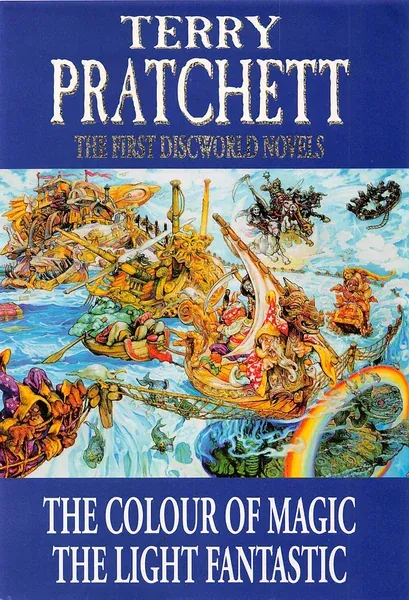
Terry Pratchett's The First Discworld Novels: The Colour of Magic and The Light Fantastic presents a fascinating dilemma for newcomers to the Discworld series. Published together in 1993, these early works showcase an author still finding his voice—and the result is both charming and occasionally frustrating for modern readers expecting the sophisticated wit of later Pratchett novels.
These opening adventures follow the incompetent wizard Rincewind and Twoflower, the Disc's first tourist, through a series of episodic encounters that read more like elaborate sketches than the tightly plotted narratives Pratchett would later master. While fans of Good Omens or The Wee Free Men might expect the author's trademark blend of philosophy and humor, these early books lean heavily toward pure parody.
A World Still Taking Shape
The Discworld of these first novels feels markedly different from the rich, lived-in universe readers know from later books. Pratchett's Ankh-Morpork is barely sketched, Death appears only briefly, and the complex social commentary that defines the series remains largely absent. Instead, we get a fantasy world that serves primarily as a vehicle for jokes about sword-and-sorcery tropes.
The Colour of Magic reads like a series of connected vignettes rather than a cohesive narrative. The story lurches from the burning of Ankh-Morpork to encounters with various fantasy clichés, held together mainly by Rincewind's perpetual cowardice and Twoflower's naive enthusiasm. The Light Fantastic, while slightly more focused, still feels episodic as our heroes journey toward the ancient city of Krull.
Rincewind and Twoflower's Reluctant Partnership
The dynamic between Rincewind—a wizard who knows only one spell and is too frightened to use it—and Twoflower—an insurance clerk turned tourist—provides the books' strongest moments. Rincewind's desperate attempts to avoid adventure while being constantly thrust into it creates genuine comedy, even if the execution feels rougher than Pratchett's later character work.
Twoflower's innocent fascination with what he sees as exotic adventures, while Rincewind recognizes them as life-threatening disasters, establishes a pattern Pratchett would refine throughout the series. The Luggage, Twoflower's faithful and homicidal travel chest, emerges as perhaps the most memorable creation from these early books.
Pratchett's Developing Voice
Reading these novels after experiencing Pratchett's mature work reveals an author still discovering his strengths. The humor relies heavily on direct parody of Fritz Leiber, Robert E. Howard, and other fantasy authors, rather than the more subtle social satire that would define later Discworld novels. The jokes come fast but don't always land with the precision readers expect from the author of Night Watch or Small Gods.
The philosophical depth that makes Pratchett's later work so rewarding appears only in glimpses here. We see hints of the author's interest in belief, reality, and human nature, but these themes remain underdeveloped compared to their treatment in subsequent books.
The Great Beginning Debate
For readers new to Discworld, these books present a genuine conundrum. They're chronologically first, but they're not representative of why Pratchett became beloved by millions. The author himself acknowledged that his early work differed significantly from what the series became, often recommending that newcomers start with later, more polished entries.
Starting here means witnessing Pratchett's creative evolution, but it also means struggling through his learning curve. The books that follow—particularly Equal Rites and Mort—show marked improvement in plotting, character development, and thematic sophistication.
Who Should Read These Early Adventures
Die-hard Pratchett completists will find these books essential for understanding the series' development. Readers who enjoy literary archaeology—observing how a master's voice develops—will appreciate seeing the seeds of future brilliance. The books also work reasonably well as light fantasy parodies, provided you adjust expectations accordingly.
However, readers seeking an introduction to Pratchett's genius might be better served starting with Guards! Guards! or Mort, then returning to these origins later. The humor feels dated in places, and the pacing lacks the momentum that drives the best Discworld novels.
Where to Buy
The First Discworld Novels is widely available through Amazon, independent bookstores, and directly from the publisher, making it easy to begin your journey through Terry Pratchett's beloved fantasy universe.