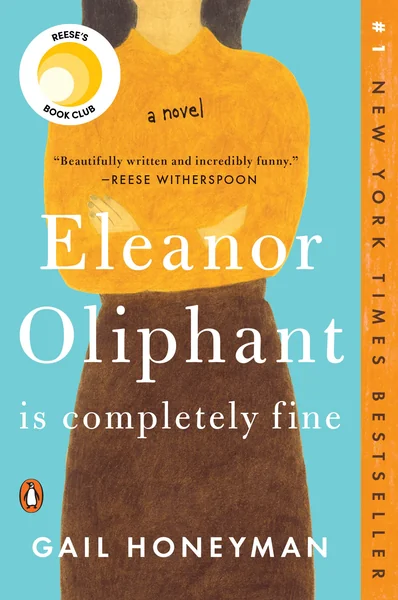
Is Eleanor Oliphant Is Completely Fine worth reading? Gail Honeyman's debut novel has captured millions of readers worldwide, but beneath its quirky surface lies a profound exploration of trauma, healing, and human connection. This isn't just another feel-good story about an awkward protagonist—it's a carefully crafted examination of how childhood abuse shapes adult behavior and how genuine friendship can begin to heal deep wounds.
Readers who appreciated A Man Called Ove or The Midnight Library will find similar themes of isolation and redemption here, though Honeyman's approach feels distinctly contemporary and unflinchingly honest about mental health struggles.
A Portrait of Functional Dysfunction
Eleanor Oliphant presents herself as completely fine, thank you very much. She follows rigid routines, speaks with formal precision, and maintains careful distance from her colleagues at a Glasgow graphic design firm. Honeyman creates a character whose quirks initially seem charming—Eleanor's literal interpretations, her weekend vodka binges, her complete social obliviousness—but gradually reveal themselves as defensive mechanisms built around profound trauma.
The novel's strength lies in how it peels back Eleanor's carefully constructed facade. Her obsessive routines, her inability to read social cues, and her fierce independence aren't endearing character traits but survival strategies developed by someone who learned early that people couldn't be trusted. Honeyman avoids the trap of making Eleanor's oddities seem cute or aspirational.
Honeyman's Delicate Touch
For a debut novelist, Honeyman demonstrates remarkable restraint in her storytelling. Rather than rushing toward revelation, she allows Eleanor's backstory to emerge gradually through small details and careful observation. The prose style matches Eleanor's voice—precise, controlled, occasionally naive—without ever mocking the character or inviting readers to laugh at her expense.
The author's background in social work becomes evident in her nuanced portrayal of trauma responses. Eleanor's hypervigilance, her difficulty with physical touch, and her tendency to dissociate during stressful moments ring psychologically true. Honeyman never explains too much or provides easy answers, trusting readers to understand the connections between past and present behavior.
Eleanor and Raymond's Unlikely Bond
The heart of the novel lies in Eleanor's friendship with Raymond, a slightly hapless IT technician who shows her simple, uncomplicated kindness. Their relationship develops organically—not as a romance, but as something rarer in contemporary fiction: a genuine platonic friendship between a man and woman that changes both characters.
Raymond's acceptance of Eleanor's eccentricities without trying to fix or change her provides the foundation for her gradual healing. He introduces her to his family, includes her in social activities, and demonstrates through consistent action that relationships don't have to be conditional or painful. Their dynamic feels authentic rather than contrived, avoiding both the manic pixie dream girl trope and the magical healing power of love cliché.
Confronting the Past's Shadow
The novel's most powerful sections deal with Eleanor's memories of childhood abuse and her relationship with her mother. Honeyman handles these sequences with appropriate gravity, never sensationalizing trauma or suggesting that recovery follows a neat timeline. Eleanor's therapy sessions feel realistic in their messiness and incremental progress.
The revelation of Eleanor's past comes in carefully measured doses, allowing readers to piece together the full picture alongside the character herself. Some readers may find the pacing slow, particularly in the novel's middle section, but this deliberate approach serves the story's psychological realism.
Where the Story Stumbles
While Eleanor's character development feels authentic, some supporting characters remain underdeveloped. Eleanor's colleagues at work serve primarily as plot devices rather than fully realized people, and certain scenes—particularly those involving Eleanor's social missteps—occasionally venture into cringe comedy territory that undermines the novel's more serious themes.
The ending, while satisfying, ties up loose ends perhaps too neatly for a story that otherwise embraces psychological complexity. Eleanor's transformation feels earned, but the final chapters rush toward resolution in a way that doesn't quite match the careful pacing of the earlier sections.
A Thoughtful Exploration of Healing
Eleanor Oliphant succeeds as both an engaging character study and a sensitive portrayal of trauma recovery. Honeyman avoids the extremes of either demonizing or romanticizing mental health struggles, instead presenting Eleanor as a complex person whose healing happens gradually and imperfectly.
The novel works best when read as an exploration of how genuine human connection can begin to heal old wounds, rather than as a story about fixing broken people. Eleanor doesn't become neurotypical by the end—she becomes more authentically herself, which turns out to be enough.
For readers seeking contemporary fiction that tackles serious themes with humor and heart, Eleanor Oliphant delivers on its considerable reputation. While not perfect, it offers a rare combination of psychological insight and genuine warmth that explains its widespread appeal.
Where to Buy
You can find Eleanor Oliphant Is Completely Fine at Amazon, your local bookstore, or directly from Pamela Dorman Books.