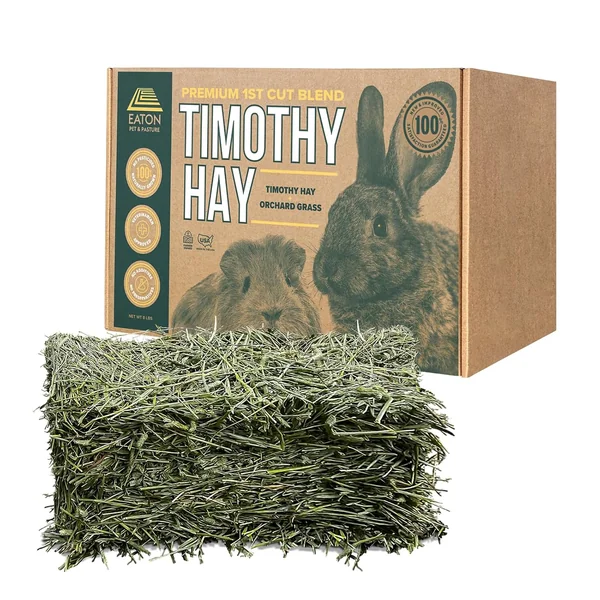
Is Eaton Pet and Pasture Western Timothy Hay worth the premium price? This farmer-owned brand delivers high-quality 1st cut timothy hay blended with orchard grass, targeting health-conscious small pet owners who want sustainable, naturally grown nutrition for their rabbits and guinea pigs.
The standout feature here is the farmer-owned sourcing and eco-friendly approach. Unlike mass-produced hay that often sits in warehouses for months, Eaton Pet and Pasture focuses on freshness and sustainability. The 6-pound box provides a generous supply while maintaining quality through proper packaging.
The hay blend combines Western Timothy with orchard grass, creating a varied texture that encourages natural foraging behaviors. The green color and fresh aroma visible on the packaging suggest proper harvesting and storage - critical factors that cheaper alternatives often compromise.
Ingredients & Nutrition
This premium blend uses 100% naturally grown Western Timothy hay mixed with orchard grass. The 1st cut designation means longer, coarser stems that provide essential fiber for dental health and digestive function.
Timothy hay should constitute 75-80% of a rabbit's diet and unlimited amounts for guinea pigs, according to small animal nutritionists. The high fiber content (typically 32-34% crude fiber in quality 1st cut) supports proper digestion and prevents gastrointestinal stasis - a serious condition in rabbits.
The orchard grass component adds palatability and nutritional variety. This blend approach works well for picky eaters who might reject straight timothy hay. No artificial additives, preservatives, or dust-reducing chemicals are used, maintaining the natural nutritional profile.
Who It's Best For
Perfect for health-conscious owners of adult rabbits and guinea pigs who prioritize quality over price. The premium positioning makes sense for:
- Rabbit owners dealing with selective eating habits
- Guinea pig parents wanting varied texture and taste
- Pet owners committed to sustainable, eco-friendly products
- Those with multiple small pets needing bulk quantities
Not ideal for budget-conscious buyers or owners of young rabbits under 6 months (who need unlimited alfalfa hay instead). The premium price point may deter casual buyers, especially when local feed stores offer adequate timothy hay at lower costs.
Chinchilla owners should exercise caution - while timothy hay works for chinchillas, the orchard grass blend might be too rich for their sensitive digestive systems.
Feeding Guidelines
Provide unlimited access to this hay for both rabbits and guinea pigs. Fresh hay should be available 24/7, with soiled portions removed daily to prevent mold and bacterial growth.
For rabbits weighing 5-10 pounds, expect to use roughly 1-2 cups daily, though individual consumption varies significantly. Guinea pigs typically consume smaller amounts but need constant access for proper digestion and dental wear.
Store opened hay in a cool, dry location away from direct sunlight. The 6-pound box should last a single rabbit 2-3 weeks or a pair of guinea pigs about the same timeframe, depending on waste and consumption patterns.
Replace hay that appears brown, dusty, or develops an off odor. Quality hay smells fresh and sweet - any musty or sour scents indicate spoilage that could harm your pet's health.
The Bottom Line
Eaton Pet and Pasture delivers genuinely premium timothy hay with excellent color, aroma, and texture. The farmer-owned sourcing and sustainable practices justify the higher cost for environmentally conscious pet owners.
The 6-pound quantity offers good value compared to smaller premium packages, though it still costs more than basic feed store alternatives. Worth the investment if hay quality matters more than budget constraints.
Where it falls short: the premium pricing limits accessibility, and some pets show no preference between this and standard timothy hay. The orchard grass blend might be unnecessary for pets already eating varied diets.
This hay works best for discerning small pet owners who notice quality differences and value sustainable sourcing. For basic nutrition needs, less expensive options provide adequate nutrition without the premium cost.
Consult your veterinarian before making significant dietary changes, especially if your pet has digestive sensitivities or health conditions.