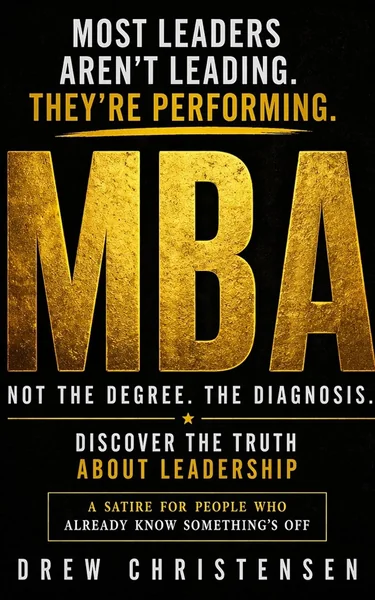
Is M.B.A. Discover the truth about leadership worth reading for managers seeking authentic leadership development? In a marketplace saturated with leadership advice, D.M. Christensen's approach promises to cut through conventional wisdom and reveal fundamental truths about effective leadership. The book's stark cover design with gold lettering against a dark background suggests serious, no-nonsense content—but does the substance match the presentation?
Unlike popular leadership books that rely heavily on anecdotal success stories, this work takes a more analytical approach to dissecting what actually makes leaders effective. Readers familiar with Good to Great or The Leadership Challenge will find Christensen's perspective refreshingly direct, though considerably more challenging to digest.
Breaking Down Leadership Mythology
Christensen's central thesis revolves around dismantling what he considers pervasive myths about leadership that M.B.A. programs and corporate training often perpetuate. Rather than reinforcing feel-good leadership platitudes, the author systematically examines why traditional leadership development frequently fails to produce genuinely effective leaders.
The book argues that authentic leadership emerges from understanding power dynamics rather than inspirational rhetoric. This perspective challenges readers accustomed to leadership literature that emphasizes charisma and vision over practical organizational realities. Christensen contends that most leadership failures stem from misunderstanding the fundamental nature of authority and influence within complex organizational structures.
The analytical framework presented here draws from both classical management theory and contemporary organizational psychology. However, the author's interpretation often conflicts with mainstream M.B.A. curriculum, creating tension that runs throughout the book.
Practical Applications for Real-World Leaders
Where many leadership books remain theoretical, this work attempts to bridge the gap between academic concepts and daily management challenges. The author presents actionable frameworks for decision-making that acknowledge the messy realities of corporate politics and resource constraints.
Christensen's approach to conflict resolution particularly stands out, offering strategies that move beyond standard diplomatic solutions toward more direct problem-solving methods. The book suggests that effective leaders must be comfortable with necessary friction rather than constantly seeking consensus.
For executives dealing with underperforming teams or organizational resistance, the book provides specific techniques for addressing these challenges without resorting to traditional motivational approaches. The emphasis on systemic thinking over individual inspiration marks a significant departure from popular leadership philosophy.
The Evidence Behind the Arguments
The book's strength lies in its attempt to ground leadership advice in observable organizational behavior rather than success story cherry-picking. Christensen references research from organizational psychology and management science, though the presentation sometimes feels more assertive than the evidence fully supports.
The research foundation appears solid but selective, focusing primarily on studies that support the author's contrarian viewpoints while giving less attention to contradictory findings. This approach strengthens the book's narrative coherence but may leave readers wanting more balanced analysis.
The case studies presented draw from various industries and organizational contexts, providing practical examples of the principles in action. However, the anonymization of many examples makes verification difficult and occasionally undermines the book's credibility claims.
Where the Approach Falls Short
Despite its ambitious scope, the book struggles with several significant limitations. The writing style, while authoritative, can feel unnecessarily confrontational when challenging established leadership wisdom. The tone may alienate readers who aren't prepared for such direct criticism of conventional M.B.A. thinking.
The book's rejection of emotional intelligence concepts feels particularly dated, dismissing research that has gained substantial empirical support since its emergence. This stubborn contrarianism occasionally undermines otherwise valid points about leadership effectiveness.
Additionally, the practical applications, while numerous, sometimes lack the nuanced context necessary for implementation across different organizational cultures. The one-size-fits-all approach to leadership challenges doesn't adequately account for industry-specific or cultural variations that significantly impact leadership effectiveness.
Who Should Engage with This Material
This book works best for experienced managers who have observed the gap between leadership theory and organizational reality firsthand. Readers with several years of management experience will likely appreciate Christensen's willingness to challenge comfortable assumptions about leadership development.
New managers or those early in their careers might find the approach too cynical or overwhelming, particularly if they haven't yet encountered the leadership challenges the book addresses. The content assumes familiarity with corporate dynamics that comes only through direct experience.
MBA students and recent graduates represent the ideal audience, especially those questioning whether their academic preparation adequately prepares them for real leadership responsibilities. The book serves as a useful counterpoint to traditional M.B.A. leadership curriculum, though it shouldn't be considered a complete replacement for foundational leadership concepts.
Where to Buy
You can find M.B.A.: Discover the truth about leadership at Amazon, Barnes & Noble, or through professional development book retailers specializing in business leadership resources.