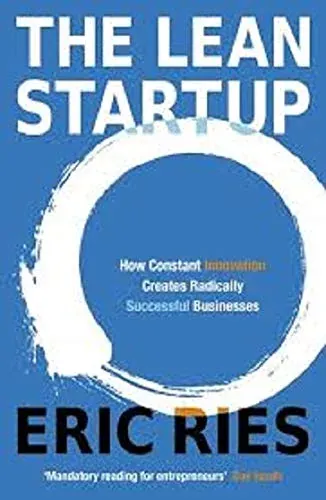
Eric Ries's The Lean Startup promises to revolutionize how entrepreneurs build businesses, but is The Lean Startup worth reading for entrepreneurs facing today's rapidly changing market? This business methodology guide has influenced countless startups since it was written, yet its core principles deserve scrutiny beyond the Silicon Valley hype. While Ries presents compelling frameworks for reducing startup failure rates, the book's emphasis on constant pivoting and minimal planning may not suit every business model or entrepreneurial temperament.
For readers familiar with Zero to One by Peter Thiel, The Lean Startup takes a markedly different approach. Where Thiel advocates for monopolistic thinking and bold vision, Ries champions iterative development and customer feedback loops. This fundamental tension reflects broader debates within entrepreneurship circles about the balance between vision and validation.
The Core Methodology Explained
Ries builds his approach around three fundamental concepts: validated learning, the Build-Measure-Learn feedback loop, and the minimum viable product (MVP). Validated learning replaces traditional business planning with experimentation, encouraging entrepreneurs to test hypotheses about their market rather than developing elaborate business plans in isolation. The Build-Measure-Learn cycle demands rapid prototyping, data collection, and decision-making based on actual customer behavior rather than assumptions.
The minimum viable product concept has perhaps gained the widest adoption, though often misunderstood in practice. Ries defines an MVP as the version of a product that enables maximum validated learning with the least effort—not simply a bare-bones version of a full product. This distinction matters because many entrepreneurs create MVPs that test nothing meaningful about their core business hypothesis.
The author's background at IMVU provides the primary case study throughout the book, though he supplements this with examples from other technology companies. The methodology emerged from Eric Ries's frustration with traditional software development cycles that produced elaborate products nobody wanted.
Practical Applications and Limitations
This business book review reveals that the methodology excels in providing actionable frameworks for early-stage technology startups, particularly those building digital products where rapid iteration is feasible. The concept of "innovation accounting"—measuring progress in the uncertain environment of a startup—offers genuine value for entrepreneurs struggling to demonstrate progress to investors or themselves.
However, the methodology shows significant limitations when applied beyond software and digital services. Manufacturing businesses, restaurants, or service companies often cannot "pivot" as easily as a web application. The book acknowledges this challenge but doesn't adequately address how traditional businesses might adapt these principles. The emphasis on constant measurement and data-driven decisions may also stifle the kind of bold, visionary thinking that creates breakthrough innovations.
The lean methodology's focus on customer feedback can lead to incremental improvements rather than revolutionary products. While this reduces risk, it may also prevent entrepreneurs from pursuing ideas that customers cannot yet articulate or understand—the kind of innovations that create entirely new markets.
The Evidence and Research Foundation
Eric Ries draws heavily on lean manufacturing principles from Toyota, customer development concepts from Steve Blank, and agile software development methodologies. This synthesis creates a coherent framework, though the evidence base relies more on case studies and anecdotal examples than rigorous research. The startup methodology book would benefit from more quantitative analysis of startup success rates using lean methods versus traditional approaches.
The author's writing style remains accessible throughout, avoiding jargon while explaining complex business concepts. However, the repetitive nature of the examples and the somewhat evangelical tone may frustrate readers seeking nuanced analysis of when and why the methodology works best.
Where the Approach Falls Short
The book's most significant weakness lies in its assumption that all successful businesses follow the lean methodology, even when evidence suggests otherwise. Many successful companies, from Apple to Tesla, succeeded through vision-driven approaches that contradict lean principles. Ries addresses this concern but dismisses it too quickly, missing an opportunity to explore when traditional planning and bold vision might outperform iterative development.
The emphasis on metrics and measurement can also create its own problems. Entrepreneurs may become so focused on optimizing current metrics that they miss opportunities for dramatic improvements or entirely new approaches. The methodology works best for businesses where customer needs are relatively clear but the solution remains uncertain—a more limited scope than the book suggests.
Additionally, the lean approach may not suit all personality types or business cultures. Some entrepreneurs thrive on long-term vision and deep planning, while others excel at rapid experimentation. The book presents lean methodology as universally applicable when it may be most effective for specific types of people building specific types of businesses.
Who Should Tackle This Business Guide
The Lean Startup provides genuine value for first-time entrepreneurs building technology products, particularly mobile apps, web services, or software platforms. The methodology offers a structured approach to the chaotic early stages of startup development and helps prevent common mistakes like building products without market validation.
Experienced entrepreneurs may find the concepts useful as one tool among many, though they should resist treating it as the only valid approach to building businesses. Corporate innovators working within established companies will discover applicable frameworks for testing new products or services, though the cultural challenges of implementing lean methodology within large organizations require additional consideration.
Readers seeking a comprehensive business education should supplement this book with works like Good to Great by Jim Collins or The Hard Thing About Hard Things by Ben Horowitz, which offer different perspectives on building successful companies. The lean methodology represents one powerful approach among many, most effective when combined with other business insights and adapted to specific circumstances rather than followed as rigid doctrine.
Where to Buy
You can find The Lean Startup at Amazon, Barnes & Noble, your local bookstore, or directly from the publisher in both paperback and digital formats.