Is Radical Candor worth reading for managers seeking to transform their leadership communication? Kim Scott's business philosophy has sparked countless workplace conversations since its initial publication, positioning itself as a counterpoint to the typical corporate feedback culture. While books like Crucial Conversations focus on dialogue techniques, Scott's approach centers on a deceptively simple two-by-two matrix that challenges managers to care personally while challenging directly.
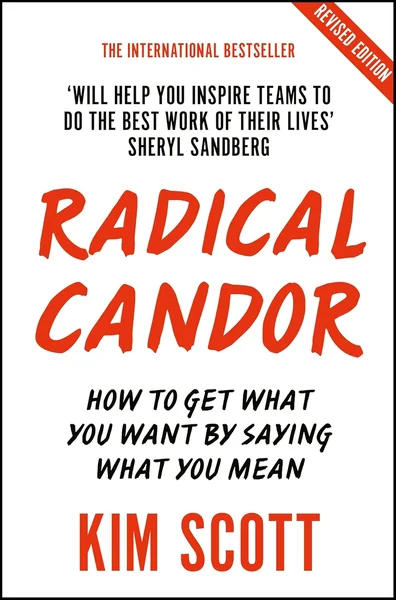
The orange and white cover design reflects the book's straightforward aesthetic—no corporate imagery or business clichés, just clean typography that promises practical substance over marketing flash. This visual simplicity mirrors Scott's communication philosophy: clarity trumps complexity.
The Framework That Changed Corporate Feedback
Scott's radical candor framework operates on two axes: caring personally and challenging directly. When leaders excel at both dimensions, they achieve what Scott terms "radical candor"—feedback that is both honest and compassionate. The alternative quadrants—ruinous empathy, obnoxious aggression, and manipulative insincerity—provide a diagnostic tool for understanding why most workplace feedback fails spectacularly.
The practical exercises throughout the revised edition help managers identify their default feedback style and recognize when they're slipping into less effective quadrants. Scott doesn't merely present theory; she provides specific language patterns and conversation frameworks that managers can implement immediately. The revision includes updated examples reflecting remote work challenges and contemporary workplace dynamics that weren't prevalent in the original edition.
Scott's Silicon Valley Credentials Meet Real-World Application
Drawing from her experience at Google and Apple, Scott brings research-backed strategies from high-performance tech environments. Her anecdotes about working with teams at these companies provide concrete illustrations of radical candor in action, though some examples feel distinctly Silicon Valley-centric. The book acknowledges this limitation in the revised edition, incorporating feedback from readers across different industries and organizational cultures.
Scott's writing style balances accessibility with depth, avoiding both academic jargon and oversimplified business-speak. She presents complex interpersonal dynamics through clear frameworks without reducing human behavior to mere formulas. For managers struggling with giving honest feedback without damaging relationships, Scott's approach offers a structured yet flexible methodology.
Where Theory Meets Workplace Reality
The book's greatest strength lies in its treatment of feedback as a skill requiring both emotional intelligence and systematic practice. Scott demonstrates how radical candor differs from brutal honesty—the former requires genuine care for the recipient's growth, while the latter often masks self-serving behavior as directness.
However, the main weakness emerges in Scott's assumption that organizational culture supports radical candor. Many managers operate within hierarchical structures or political environments where direct feedback carries career risks. The revised edition addresses this challenge more thoroughly than the original, but the solutions remain somewhat idealistic for deeply dysfunctional workplace cultures.
The book also excels at addressing power dynamics in feedback relationships, particularly between managers and direct reports. Scott provides specific guidance for soliciting upward feedback and creating psychological safety for team members to practice radical candor themselves.
Implementation Challenges and Cultural Considerations
While Scott acknowledges cultural differences in communication styles, the framework skews toward Western, direct communication preferences. Managers leading diverse teams may need to adapt the approach significantly, and the book could benefit from more extensive treatment of cross-cultural feedback dynamics.
The revised edition strengthens its treatment of remote work feedback, addressing how to maintain personal connection and direct challenge through digital communication channels. These updates feel essential rather than supplementary, reflecting how significantly workplace dynamics have shifted.
Unlike most leadership books that focus on inspirational messaging, Radical Candor provides a diagnostic framework that helps managers understand their feedback failures in real-time. This practical utility distinguishes it from more theoretical leadership literature.
The Bottom Line for Busy Managers
Highly recommended for managers who struggle with the tension between being liked and being effective. Scott's framework provides a sustainable approach to difficult conversations that strengthens rather than damages professional relationships. The book works best for experienced managers who have already learned basic leadership skills but want to refine their feedback delivery.
New managers may find the framework overwhelming initially, as it requires significant emotional maturity and organizational awareness to implement effectively. However, the systematic approach helps leaders develop these capabilities over time rather than expecting innate talent.
Where to Buy
You can find Radical Candor at Amazon, Barnes & Noble, or your local bookstore, with the revised edition available in both print and digital formats.