The Customer-First Philosophy
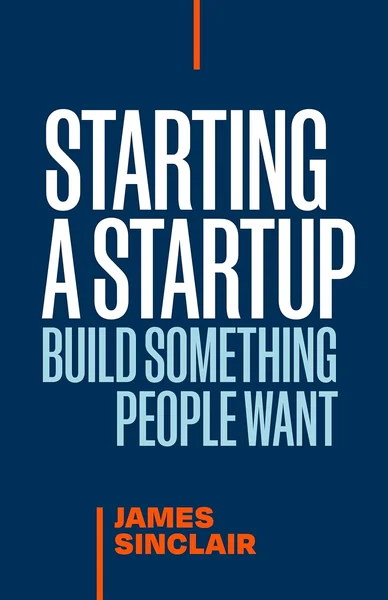
Sinclair builds his entire framework around a deceptively simple premise: most startups fail because they build products nobody wants. Rather than starting with technology or clever business models, he advocates beginning with genuine customer problems and working backward to solutions. This approach challenges the common entrepreneur trap of falling in love with ideas rather than markets.
The author's methodology emphasizes systematic customer discovery before any significant product development. Perfect for beginners, this approach prevents the costly mistake of building elaborate solutions for problems that don't exist or aren't worth solving. Sinclair provides specific techniques for identifying real customer pain points and validating demand before committing resources.
What sets this guide apart from academic business texts is its focus on execution over theory. Sinclair acknowledges that most first-time founders lack extensive business backgrounds, so he structures his advice around achievable steps rather than complex strategic frameworks.
Practical Implementation Over Theory
The main strength of Sinclair's approach lies in its actionable nature. Rather than abstract principles, he provides specific tools for customer interviews, market validation, and early product development. The frameworks feel designed for solo founders and small teams rather than corporate innovation labs.
Sinclair's writing style maintains clarity without sacrificing depth. He explains complex concepts like product-market fit and customer development in terms that non-business readers can immediately apply. For readers who want concrete steps rather than inspirational stories, this practical focus delivers genuine value.
The book includes real-world examples that illustrate common founder mistakes and how to avoid them. These case studies feel authentic rather than polished success stories, acknowledging the messy reality of early-stage entrepreneurship.
Market Validation Frameworks
The core methodology revolves around systematic market validation before product development. Sinclair presents a step-by-step process for testing assumptions, gathering customer feedback, and iterating based on real market signals rather than founder intuition.
Research-backed strategies guide readers through customer discovery interviews, competitive analysis, and early validation experiments. The author emphasizes low-cost testing methods that preserve cash flow while generating meaningful market insights.
This systematic approach appeals to analytical founders who prefer data-driven decision making over entrepreneurial gut feelings. Sinclair's frameworks provide structure for founders who feel overwhelmed by the ambiguity of early-stage business development.
Where the Framework Falls Short
The main weakness emerges in Sinclair's limited discussion of execution challenges beyond market validation. While his customer-first philosophy provides an excellent foundation, the book offers less guidance on scaling operations, building teams, or managing growth once product-market fit is achieved.
The examples skew heavily toward digital products and services, potentially limiting applicability for physical product entrepreneurs or service-based businesses. Not recommended for founders in manufacturing or complex regulated industries who face different validation challenges.
Some readers may find the methodology overly conservative, emphasizing validation over bold vision. Entrepreneurs drawn to disruptive innovation might feel constrained by Sinclair's systematic approach to customer discovery.
Perfect for First-Time Founders
Highly recommended for new entrepreneurs who want to avoid common startup pitfalls, particularly those without formal business training. Sinclair's customer-first methodology provides essential guardrails for founders prone to building products based on assumptions rather than market reality.
The book serves as an excellent complement to more technical startup guides, offering foundational principles that inform tactical execution. Best for experienced readers already familiar with basic business concepts who want to refine their approach to customer development.
The bottom line: Starting a StartUp delivers practical value for entrepreneurs committed to building sustainable businesses rather than chasing venture capital headlines. While it won't inspire visionary thinking, it provides the methodical foundation necessary for long-term success.