Ancient Strategy Meets Modern Challenges
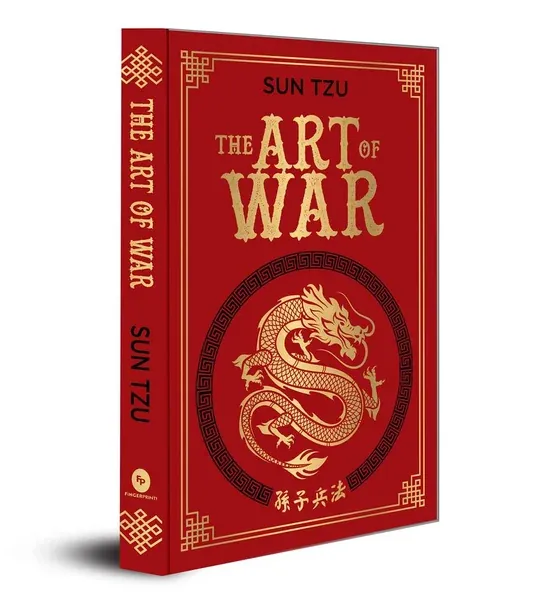
Sun Tzu's The Art of War remains one of history's most influential military treatises, written during China's Late Spring and Autumn Period. This Deluxe Hardbound Edition from Fingerprint! Classics presents the ancient text in an elegant format, but the real question for modern readers is whether Sun Tzu's strategic wisdom transcends its military origins. The answer is both yes and no—while the core principles of strategic thinking remain brilliant, the text requires careful interpretation to avoid oversimplification.
The treatise emerged from Sun Tzu's experience as a general and military theorist, offering concentrated wisdom on conflict, leadership, and strategic planning. Unlike many ancient texts that feel distant from contemporary concerns, The Art of War speaks directly to anyone navigating competitive environments, from corporate boardrooms to personal challenges.
Sun Tzu's approach to strategy emphasizes intelligence over brute force, preparation over improvisation, and adaptability over rigid planning. The famous maxim "supreme excellence consists of breaking the enemy's resistance without fighting" encapsulates his preference for winning through superior positioning rather than direct confrontation.
The text's brevity works both for and against it. The Art of War by Sun Tzu packs tremendous insight into a compact form. Each section focuses on specific aspects of warfare—terrain, espionage, tactical variations, use of fire—but the principles extend far beyond military applications. The emphasis on knowing yourself and your opponent, the importance of timing, and the value of flexible response remain relevant across contexts.
However, this compression also creates challenges. Sun Tzu writes in aphoristic style, offering principles without extensive elaboration. Modern readers often struggle to bridge the gap between ancient Chinese military concepts and contemporary applications without additional commentary or interpretation.
Strategic Philosophy That Transcends Warfare
The genius of The Art of War lies in its recognition that conflict is fundamentally about information, psychology, and resource management rather than pure aggression. Sun Tzu advocates for victory through superior knowledge and positioning, making actual combat unnecessary whenever possible.
His emphasis on adaptability particularly resonates with modern strategic thinking. The text repeatedly stresses that rigid adherence to any single approach leads to defeat. Instead, successful strategists must remain fluid, responding to changing circumstances while maintaining clear objectives. This principle applies equally to business competition, negotiation, and personal goal-setting.
The treatise also pioneers concepts that modern strategists recognize as fundamental: the importance of intelligence gathering, the value of speed and surprise, the need to understand environmental factors, and the psychology of both allies and opponents. These insights feel remarkably contemporary despite their ancient origins.
Where Ancient Wisdom Shows Its Age
While The Art of War offers enduring strategic principles, uncritical application of its lessons can lead to problematic interpretations. The text emerges from a specific cultural and historical context—ancient Chinese warfare involving professional armies, clear territorial boundaries, and hierarchical command structures—that differs significantly from modern organizational and competitive environments.
The treatise's focus on deception and manipulation, while strategically sound in military contexts, requires careful ethical consideration when applied to business or personal relationships. Sun Tzu's advocacy for spying, misdirection, and exploiting opponent weaknesses makes perfect sense for military commanders but becomes morally ambiguous in civilian contexts.
Additionally, the text's compressed style invites over-interpretation. Modern readers, particularly in business settings, sometimes extract principles that extend well beyond Sun Tzu's original intent. The treatise works best as a framework for strategic thinking rather than a detailed playbook for specific situations.
The Fingerprint! Classics Presentation
This Deluxe Hardbound Edition presents the text in an accessible format suitable for both serious study and casual reading. The physical presentation reflects the enduring appeal of Sun Tzu's work, with quality binding and clear typography that honors the text's classical status.
For readers new to The Art of War, this edition provides the core text without extensive commentary, allowing direct engagement with Sun Tzu's ideas. More serious students may want to supplement this reading with annotated editions that provide historical context and interpretive guidance, but this version serves well as an introduction or reference text.
Strategic Thinking for the Modern Reader
The Art of War succeeds best when readers approach it as a foundation for strategic thinking rather than a collection of specific tactics. The text's greatest value lies in its systematic approach to analyzing competitive situations, understanding the importance of preparation and intelligence, and recognizing that the best victories often come through superior positioning rather than direct confrontation.
Business leaders find particular value in Sun Tzu's emphasis on knowing both your capabilities and your competition, the importance of timing in competitive moves, and the recognition that sustainable success requires long-term strategic thinking rather than short-term tactical gains. Personal development readers can apply the principles to goal-setting, relationship navigation, and career planning.
However, effective application requires thoughtful interpretation. Sun Tzu's principles work best as analytical tools and strategic frameworks rather than specific instructions for particular situations. So is The Art of War still relevant today? Absolutely, when approached with proper context and careful application.
You can find The Art of War (Deluxe Hardbound Edition) at Amazon, Barnes & Noble, or directly from Fingerprint! Publishing for readers seeking an elegant presentation of this strategic classic.