
8 Essential Books for Trauma Recovery and Mental Health Healing
Curated recommendations for Adults struggling with mental health and chronic stress seeking evidence-based healing approaches
8 books
Perfect for: Adults struggling with mental health and chronic stress seeking evidence-based healing approaches
Mental health struggles and chronic stress can feel overwhelming, but evidence-based approaches offer genuine paths to healing. This curated collection brings together groundbreaking trauma research, practical mindfulness techniques, and proven strategies for building emotional resilience. From understanding how trauma lives in the body to developing daily habits that support recovery, these books provide both scientific insights and actionable tools. Whether you're dealing with depression, anxiety, PTSD, or chronic illness, this reading list offers multiple approaches to healing—combining ancient wisdom with modern psychology, breathwork with cognitive strategies, and personal stories with professional guidance. Each book has been selected for its practical value and evidence-based foundation, creating a comprehensive toolkit for anyone committed to their mental health journey.
#1
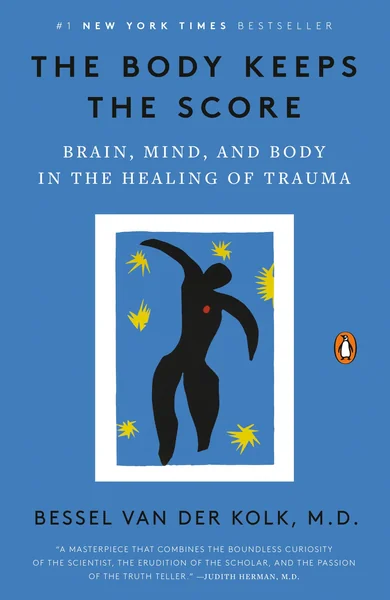
The Body Keeps the Score: Brain, Mind, and Body in the Healing of Trauma by Bessel van der Kolk
4.2
Van der Kolk's landmark work fundamentally changed how we understand trauma by proving what survivors always knew—the body remembers what the mind tries to forget. Drawing from four decades of clinical practice, he demonstrates how traditional talk therapy often fails because it ignores the physical storage of traumatic memories. The book seamlessly weaves neuroscience discoveries with unconventional treatments like yoga, EMDR, and theater therapy. While occasionally overwhelming in scope and sometimes overly optimistic about newer interventions, this comprehensive guide offers hope for those who haven't found relief through conventional approaches. Van der Kolk's willingness to embrace alternative healing modalities may challenge readers accustomed to purely pharmaceutical or cognitive treatments, but his evidence-based approach makes even skeptics reconsider what healing looks like.
"Traditional therapy often fails because it ignores the body's role in storing traumatic memories."
#2
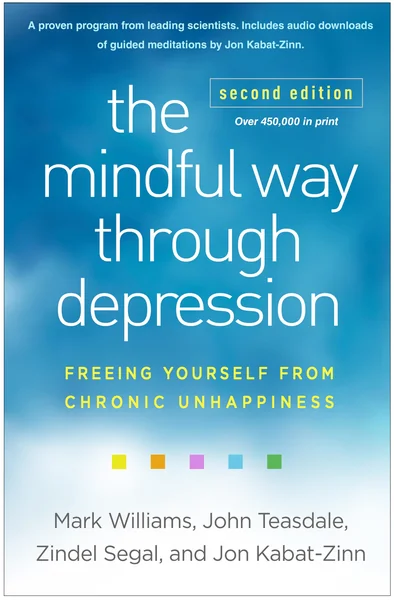
The Mindful Way through Depression: Freeing Yourself from Chronic Unhappiness by Mark Williams and John Teasdale and Zindel Segal and Jon Kabat-Zinn
4.2
Four leading researchers tackle depression's most insidious trap: the rumination cycles that keep sufferers stuck in chronic unhappiness. Unlike typical "think positive" approaches, Williams, Teasdale, Segal, and Kabat-Zinn present Mindfulness-Based Cognitive Therapy as a way to change your relationship with depressive thoughts rather than fighting them. Their counterintuitive strategy—backed by clinical research showing reduced relapse rates—involves accepting rather than battling negative thinking patterns. The book requires genuine commitment to an eight-week program that includes guided meditations and daily practice. Best suited for mild to moderate depression, it may not provide sufficient support for severe episodes requiring professional intervention.
"Trying to solve depression through thinking can create more depression."
#3
Breath: The New Science of a Lost Art by James Nestor
3.8
Nestor transforms the simple act of breathing into a fascinating journey through both ancient wisdom and cutting-edge science. Through participatory journalism—including deliberately mouth-breathing for weeks while under medical monitoring—he builds a compelling case that most of us breathe incorrectly to our detriment. The book covers everything from how breathing affects facial structure to its impact on sleep quality and athletic performance. While engaging and packed with practical techniques like the 4-7-8 method and box breathing, Nestor occasionally overstates breathing's transformative power. His accessible writing style makes complex respiratory science digestible, though readers seeking quick fixes may be disappointed by the emphasis on consistent practice. The blend of personal experimentation with expert interviews creates an entertaining read that doubles as a practical manual for stress reduction.
"Most of us are doing it wrong."
#4
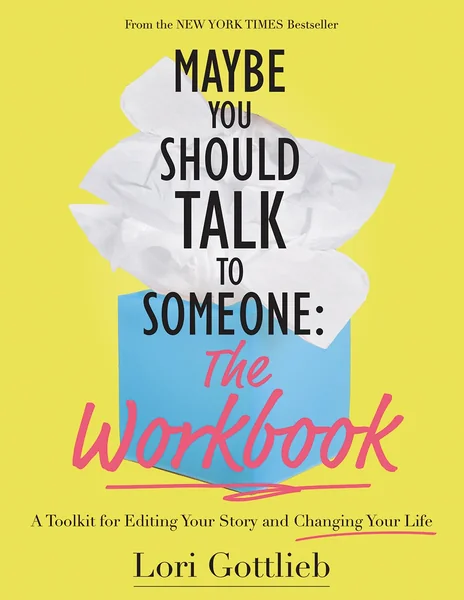
Maybe You Should Talk to Someone: The Workbook by Lori Gottlieb
3.8
When reading about therapy feels safer than actually going, Gottlieb's workbook offers a middle ground that's more substantial than typical self-help exercises. Drawing from her dual experience as both therapist and patient, she creates activities that mirror genuine therapeutic work—examining the stories we tell ourselves about failure, identifying relationship patterns, and reconstructing personal narratives. The conversational tone prevents the workbook from feeling like emotional homework. However, this requires significant emotional readiness and honest self-reflection; it's not a substitute for professional help when trauma runs deep. Best suited for those already engaged in their healing journey who want structured tools for continued growth.
"Unlike workbooks that feel like homework assignments dressed up as healing, Gottlieb's approach mirrors the conversational, non-judgmental tone that made her memoir so compelling."
#5
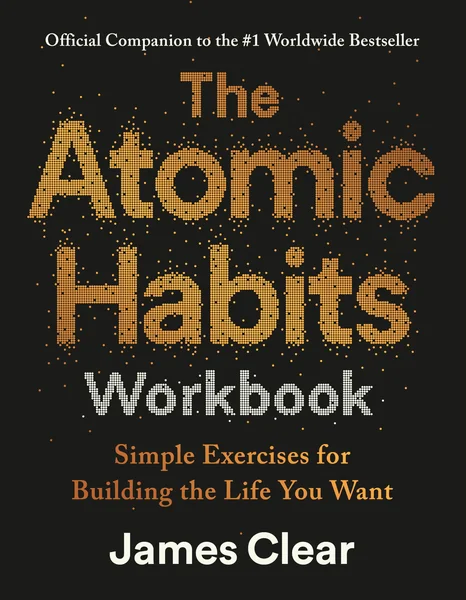
The Atomic Habits Workbook by James Clear
3.8
Clear's companion transforms his popular habit framework into guided implementation rather than simple recap. The workbook builds systematically on the four-step habit loop with practical exercises that force deeper engagement than passive reading. Particularly strong for establishing straightforward behavioral changes through techniques like habit stacking and the two-minute rule. The clean design and step-by-step approach make it accessible even when stress affects concentration. That said, it works better for concrete habits (exercise, meditation) than complex emotional patterns or trauma responses. Those seeking behavioral stability as foundation for deeper healing will find this most useful.
"The workbook doesn't assume you've memorized every principle from the original—it reintroduces key concepts before asking you to apply them."
#6
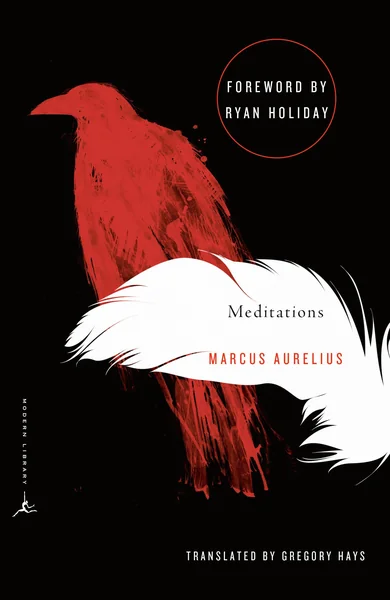
Meditations by Marcus Aurelius
4.0
Marcus Aurelius never intended these private notes for publication, which explains their startling authenticity. Written while commanding legions on the frontier, his reflections wrestle with mortality, duty, and meaning—concerns that resonate powerfully with modern readers facing chronic stress. Unlike formal philosophical treatises, these feel like overhearing someone's honest internal dialogue about staying grounded amid chaos. His perspective as someone wielding ultimate power while trying to live by Stoic principles creates unique insights about responsibility and resilience. The unsystematic structure can feel scattered, and some concepts require patience to unpack. Ancient examples may not immediately connect with contemporary life, but the core wisdom about controlling our responses to circumstances remains profoundly relevant for those rebuilding emotional stability.
"Marcus writes to Marcus, creating an authenticity that more polished philosophical texts often lack."
#7
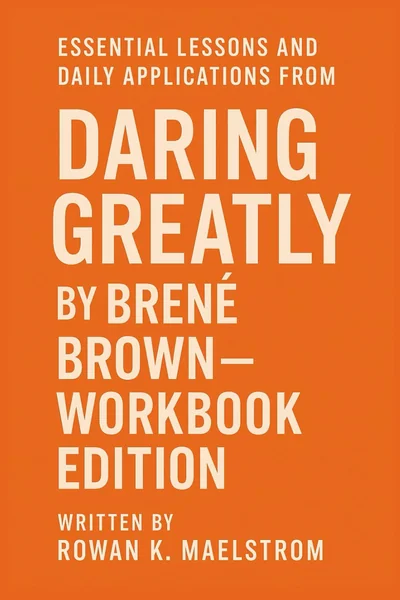
Essential Lessons and Daily Applications from Daring Greatly by Rowan K. Maelstrom
3.7
Moving beyond inspirational platitudes about vulnerability, Maelstrom transforms abstract concepts into concrete exercises through behavioral psychology principles. The workbook breaks down shame resilience and emotional courage into measurable skills developed through systematic practice scenarios and assessment tools. Where other vulnerability-focused books leave readers inspired but directionless, this provides structured frameworks for building comfort with emotional exposure in manageable increments. The rigid methodology appeals to those who struggled implementing previous insights, though the systematic approach may feel constraining to readers preferring organic emotional growth. Requires sustained commitment—this isn't quick-fix territory, but rather a comprehensive toolkit for those ready to do the deeper work of trauma recovery.
"Rather than abstract discussions about shame resilience, Rowan K. Maelstrom provides assessment tools and practice scenarios."
#8
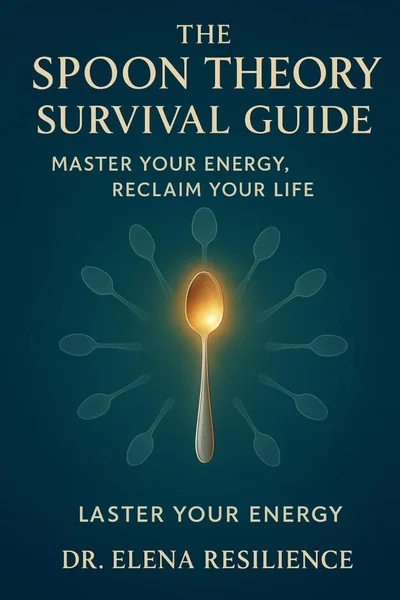
The Spoon Theory Survival Guide: A Comprehensive Daily Planning System for Chronic Illness Energy Management by Dr. Elena Resilience
3.5
Dr. Elena Resilience revolutionizes chronic illness management through "energy archaeology"—mapping personal energy patterns, triggers, and recovery needs with scientific precision. Unlike conventional productivity systems that assume limitless reserves, her framework acknowledges the unpredictable reality where yesterday's capabilities vanish overnight. The three-component system covers energy forecasting, symptom-based task prioritization, and "preemptive rest" scheduling that treats recovery as essential rather than earned. Modular templates adapt to fluctuating abilities through spoon budgets and symptom correlation charts that feel genuinely practical. However, the extensive setup requirements demand significant initial investment that may overwhelm those seeking immediate relief. Best suited for chronic illness warriors ready to completely restructure their relationship with energy management rather than seeking quick productivity hacks.
"This represents a fundamental shift from traditional productivity approaches that view rest as earned through output."
Final Thoughts
Recovery is rarely linear, and different approaches work for different people at different times. This collection offers multiple entry points and complementary strategies for healing trauma and building resilience. Start with whichever book resonates most strongly with your current needs—whether that's understanding trauma's impact on your body, learning mindfulness techniques, or developing sustainable daily habits. Remember that reading about healing is just the first step; the real transformation happens when you apply these evidence-based tools consistently in your daily life. Consider working with a mental health professional as you explore these approaches, as they can provide personalized guidance for your unique healing journey.
Frequently Asked Questions
Which book should I start with if I'm new to trauma recovery?
"The Body Keeps the Score" provides excellent foundational understanding, while "The Mindful Way through Depression" offers immediate practical tools if you need actionable strategies right away.
Are these books a replacement for therapy?
No, these books complement but cannot replace professional mental health treatment. Several authors, like Lori Gottlieb, specifically emphasize the importance of working with trained therapists.
Which books focus on practical daily techniques rather than theory?
"The Atomic Habits Workbook," "Maybe You Should Talk to Someone: The Workbook," and "Breath" offer the most hands-on, immediately applicable techniques for daily practice.
Do any of these books address chronic illness and mental health together?
"The Spoon Theory Survival Guide" specifically addresses energy management for chronic illness, while "The Body Keeps the Score" explores the connection between physical and mental health.
Are these approaches backed by scientific research?
Yes, all books were selected for their evidence-based foundations. Authors like van der Kolk, Williams, and Kabat-Zinn are respected researchers in their fields.
Which book is best for someone dealing with anxiety and overthinking?
"The Mindful Way through Depression" offers excellent techniques for breaking cycles of rumination, while "Meditations" provides philosophical tools for managing anxious thoughts.
Reader Comments
MindfulHealer23
3 weeks agoThe Body Keeps the Score completely changed how I understand my PTSD. Van der Kolk's research on how trauma literally lives in our bodies was eye-opening. I finally understood why talk therapy alone wasn't enough for me. Started incorporating somatic practices and it's been a game-changer. Highly recommend starting with this one if you want to understand the 'why' behind trauma responses.
breathwork_journey
2 weeks agoloved the breath book! nestor makes the science super accessible and the techniques actually work. been doing the 4-7-8 breathing for anxiety and it helps so much more than i expected
ChronicWarriorMom
2 weeks agoSo glad to see "The Spoon Theory Survival Guide" included! As someone with fibromyalgia and depression, energy management is crucial but often overlooked in mental health discussions. Dr. Resilience really gets how chronic illness and mental health intertwine. The planning system is intensive but worth it.
SkepticalButHopeful
1 week agoSurprised not to see "Trauma and Recovery" by Judith Herman on this list. It's considered foundational in trauma studies. That said, appreciate the mix of scientific and practical approaches here. The workbooks especially look useful for someone who needs concrete exercises rather than just theory.
LuvemBooks
Great point about Judith Herman! Her work is absolutely foundational. We focused on books that combine research with highly practical applications for daily use. Herman's book is excellent for deeper understanding, while these selections emphasize actionable techniques alongside the science.
midlife_mindfulness
6 days agoThe Mindful Way through Depression saved my life during a particularly dark period. The combination of cognitive therapy and mindfulness is powerful. Fair warning though - it requires consistent practice. Not a quick fix, but genuinely transformative if you stick with it.
BookTherapy101
5 days agoWorking through Lori Gottlieb's workbook right now. Love how she uses real therapy examples to illustrate concepts. Makes it feel less intimidating than traditional self-help. Anyone know if there are discussion groups for this book? Would love to connect with others using it.
ancient_wisdom_modern_life
4 days agoMarcus Aurelius in a mental health reading list is brilliant! Meditations taught me more about accepting what I can't control than years of therapy. Sometimes ancient wisdom hits different than modern psychology. The Stoic approach to emotional resilience is incredibly practical.
overwhelmed_reader
3 days agothis list feels overwhelming tbh... where do you even start with 8 books when you can barely focus on one page? any suggestions for the easiest entry point?
LuvemBooks
Totally understand that feeling! When focus is challenging, try "Breath" by James Nestor - it's engaging and you can practice the techniques immediately. Or start with just 10 minutes of "The Mindful Way through Depression" daily. Small steps count!
HabitsAndHealing
2 days agoThe Atomic Habits Workbook paired with mental health recovery is genius. I used Clear's system to build a morning routine that includes meditation, journaling, and breathwork. Took months to stick but now it's automatic. Habit stacking really works for building sustainable healing practices.
TraumaInformedTeacher
1 day agoUsing several of these in my work with students. Van der Kolk's research should be required reading for anyone working in education or helping professions. The impact of trauma on learning and behavior is profound. These books help bridge the gap between understanding and practical intervention.
budget_book_hunter
1 day agoPSA: most of these are available at libraries! Don't let cost be a barrier to healing resources. Also found free guided meditations that go with "The Mindful Way through Depression" online. Recovery doesn't have to be expensive.
LuvemBooks
Excellent point about library resources! Many libraries also offer digital copies and audiobooks. Some have even started lending therapy workbooks. Healing resources should be accessible to everyone.
somatic_explorer
12 hours agoLove seeing breathwork included alongside traditional therapy approaches. Western psychology is finally catching up to what yogis and indigenous cultures have known forever - the body holds the keys to healing. These books create a nice bridge between somatic and cognitive approaches.