
In This Article
- What the study found
- Who and what is involved
- Why this matters for early childhood education
- What to watch
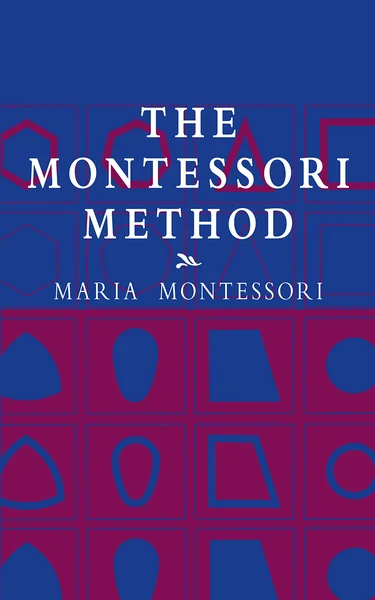
A first-of-its-kind national randomized controlled trial of public Montessori preschools found that participating students entered kindergarten outperforming peers in conventional programs on reading, memory, and executive function, according to ScienceDaily. The study, whose results were published in late December 2025, represents the most rigorous large-scale scientific evaluation the Montessori method has to date received — and it arrives more than a century after Maria Montessori first published her foundational text, The Montessori Method, in 1912.
What the study found
The trial is notable for its scale and its methodology. Previous evaluations of Montessori education have been limited in scope: a review published in npj Science of Learning noted that earlier landmark studies drew criticism precisely because they relied on a single school, raising questions about whether results could be generalised. The new national trial addresses that limitation directly by spanning public preschool settings across the United States, making its randomized design significantly harder to dismiss.
The findings align with, and extend, earlier controlled research. A 2025 study in Scientific Reports that tracked French children five years after a randomized Montessori intervention found that while early reading gains had faded by ages ten to eleven, children who received Montessori instruction outperformed peers on math problem-solving (effect size d = 0.58) — an advantage that had not even been detectable at the kindergarten stage. That longitudinal result complicates simple "fadeout" narratives and points to delayed as well as immediate effects.
Who and what is involved
The new trial focuses specifically on public Montessori preschools — a detail that matters. As The New Yorker has documented, private Montessori schooling has long been associated with high tuition costs that place it beyond reach for many families, meaning the method's benefits have historically accrued unevenly. Studying public programs removes the confound of family wealth and tests whether the pedagogy itself — rather than the socioeconomic profile of its typical participants — drives outcomes.
The research field now engaging with Montessori spans cognitive science, developmental psychology, and education policy. The npj Science of Learning review noted that Montessori's approach to early literacy and numeracy aligns with evidence-based findings from cognitive science, and that its key elements — including self-directed activity, mixed-age groupings, and hands-on materials — have independent empirical support beyond studies explicitly labelled "Montessori."
Why this matters for early childhood education
The broader stakes involve one of the most persistent debates in education research: whether early childhood interventions produce durable gains or fade out once children enter conventional schooling. The Scientific Reports study framed the problem plainly — many interventions show strong initial effects that dissolve within a few years, partly because earlier studies compared intervention children to peers who lacked access to any quality early education, inflating apparent effect sizes.
The new national RCT sidesteps that critique by using a proper randomized design against genuine comparison groups in a public-school context. Meanwhile, a meta-analysis summarised by The Conversation found significant positive effects of Montessori methods on both social skills and academic outcomes — adding a dimension to the new trial's cognitive-skills findings.
The results also reopen scrutiny of The Montessori Method itself. Montessori developed her pedagogy first with children with intellectual disabilities, then with non-disabled children at her 1907 Casa dei Bambini in Rome, arguing on the basis of observation and experimentation that children pass through sensitive periods for learning, according to the npj Science of Learning review. Those theoretical claims, over a century old, now have substantially more empirical weight behind them. For readers wanting to assess the book's continuing relevance, LuvemBooks' full review of The Montessori Method is available separately.
What to watch
Researchers and policymakers will be watching whether the gains documented in this national trial hold up at follow-up — the French longitudinal data suggests the picture may shift, with some early advantages fading and others emerging later. The equity dimension will also draw attention: if public Montessori programs reliably close measurable skills gaps at kindergarten entry, the case for expanding public funding becomes a live policy question rather than a theoretical one. The Scientific Reports authors flagged early childhood education's potential to narrow the income achievement gap as a core motivation for this line of research — a framing the new national trial is now positioned to test at scale.
Frequently Asked Questions
Is The Montessori Method by Maria Montessori worth reading in 2025?
Yes, particularly in light of new scientific validation of the Montessori approach. While the text is dated in places, it remains the most authoritative account of Montessori's educational philosophy and provides essential context for understanding why the method works. We rate it 3.8 out of 5 stars at LuvemBooks — valuable for parents and educators willing to read it as a foundational philosophical text rather than a practical how-to guide.
What is the main message of The Montessori Method?
Maria Montessori's central argument is that children have an innate drive to learn and that educators should design prepared environments that allow natural development to unfold rather than imposing top-down instruction. The book emphasizes self-directed activity, hands-on materials, mixed-age groupings, and the cultivation of concentration and independence as the foundations of effective education.
Who should read The Montessori Method?
The Montessori Method is best suited for parents curious about the philosophical underpinnings of child-centered education, teachers working in or considering Montessori settings, and education policy thinkers. It is less useful for those seeking immediate classroom strategies or a quick parenting read — the language and structure require patience and a genuine interest in educational theory.
What did the new Montessori research study find?
According to results published by ScienceDaily, the first nationwide randomized study of public Montessori preschools found that Montessori students outperformed peers in reading, memory, and executive function by kindergarten. The study is significant because it used a randomized design and focused on public — not private elite — schools, making its findings widely applicable.
Does scientific research support the Montessori method?
Yes, increasingly so. The most recent and rigorous evidence comes from a nationwide randomized study whose results were published in late December 2025, showing Montessori preschool students had measurably stronger outcomes in reading, working memory, and executive function. This builds on earlier smaller-scale studies and represents the strongest scientific endorsement of the method to date.
How does The Montessori Method compare to modern parenting books?
The Montessori Method is a foundational philosophical text, not a contemporary parenting guide, so the comparison is somewhat apples-to-oranges. Unlike modern books focused on practical tips, Montessori's work builds a comprehensive theoretical framework for understanding child development. Readers looking for immediate, actionable advice may want to pair it with more recent titles in the child development space.
Reader Discussion
No comments yet
Be the first to share your thoughts!