

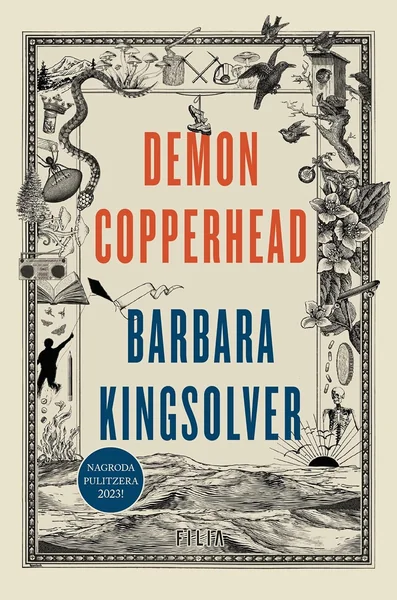
Four years after Barbara Kingsolver won the Pulitzer Prize for Fiction with Demon Copperhead, her follow-up novel is almost here. Partita is set to publish on October 6, 2026, and the literary world has taken notice: The New Yorker ran a major profile of Kingsolver on September 28, 2026, the same week the New York Times listed Partita among its most anticipated books of October. Good Housekeeping and E! Online also named it a standout fall 2026 release — a rare convergence of prestige and popular press attention that signals just how much is riding on this new work.
What Demon Copperhead Established — And Why the Stakes for Partita Are So High
Demon Copperhead is a Dickens-inspired novel set in the opioid-ravaged hills of Appalachian Virginia, following a red-haired boy named Damon Fields from the poverty of the foster system into the devastating grip of addiction. It was a co-recipient of the 2023 Pulitzer Prize for Fiction and also won the 2023 Women's Prize for Fiction — making Kingsolver one of the rare American novelists to claim both prizes for the same book. Notably, the Pulitzer marked Kingsolver's second time winning the prize, having previously taken it for The Lacuna in 2010, according to Wikipedia's record of the award. For readers who want a deeper look at what made Demon Copperhead so affecting, our full review covers the novel's ambitions and execution in detail.
The scale of that achievement explains why Partita is being watched so closely. Pulitzer follow-ups carry an almost unreasonable weight of expectation — and the literary press has positioned Kingsolver's new novel as one of the defining releases of autumn 2026. Reports from multiple outlets, as confirmed in the New Yorker profile published this past week, indicate that Partita draws on a subject Kingsolver rarely discussed publicly while growing up in a small Kentucky town — a meaningful biographical dimension that distinguishes this project from her earlier work.
Kingsolver's Place in American Literary Fiction — and What Partita Signals Next
The breadth of coverage Partita is receiving before publication reflects something genuine about Kingsolver's standing in American letters. She is not simply a critically decorated novelist; she commands a popular readership large enough to make Demon Copperhead an instant New York Times bestseller and an Oprah's Book Club selection simultaneously. That crossover reach — serious literary ambition meeting mass readership — is genuinely rare, and it gives Kingsolver's releases a cultural weight that few authors working in literary fiction today can match. The convergence of The New Yorker, the NYT, and mainstream lifestyle outlets covering Partita in the same week suggests publishers and editors see this as one of the autumn season's most significant events.
What's also worth noting is the four-year gap between novels. Kingsolver has never been a rapid-release author — her career has been defined by books that demand significant research and structural ambition — but the interval since Demon Copperhead is longer than usual. That pause, combined with the personal subject matter Partita apparently explores, points toward a novel that is less a commercial calculation than a deliberate artistic statement. Whether it matches the formal and moral urgency that made Demon Copperhead a Pulitzer-winning work is the question the literary world will be answering from October 6 onward.
Want the full verdict on Kingsolver's Pulitzer-winning novel before Partita arrives? Read our review of Demon Copperhead for a complete assessment of what she achieved — and what the new book has to measure up to.
Survival
Coming of age
Justice
Dark
Melancholy
Propulsive
Frequently Asked Questions
Is Demon Copperhead by Barbara Kingsolver worth reading in 2026?
Demon Copperhead is widely regarded as one of the most significant American novels of recent years, co-winning the 2023 Pulitzer Prize for Fiction and the 2023 Women's Prize for Fiction. It's also an Oprah's Book Club selection and a New York Times bestseller, meaning it has earned both critical and popular validation. If you're curious about its specific strengths, our full review breaks down exactly what makes it worth your time.
What is Barbara Kingsolver's new novel Partita about?
Partita is Barbara Kingsolver's first novel since Demon Copperhead, releasing October 6, 2026. According to reports including a major New Yorker profile published September 28, 2026, the book draws on subject matter from Kingsolver's own Kentucky upbringing that she rarely discussed publicly — giving it a personal dimension distinct from her previous work.
When does Barbara Kingsolver's Partita come out?
Partita is scheduled to publish on October 6, 2026. It has already been named one of the most anticipated books of October 2026 by the New York Times and featured in major profiles and fall reading lists from outlets including The New Yorker, Good Housekeeping, and E! Online.
What prizes did Demon Copperhead by Barbara Kingsolver win?
Demon Copperhead was a co-recipient of the 2023 Pulitzer Prize for Fiction — Kingsolver's second Pulitzer, having previously won for The Lacuna in 2010 — and also won the 2023 Women's Prize for Fiction. It was additionally a New York Times instant bestseller and an Oprah's Book Club selection.
Who should read Demon Copperhead?
Demon Copperhead is a strong fit for readers interested in literary fiction with deep social and moral dimensions — particularly those drawn to stories about poverty, the American foster system, and the opioid crisis in rural communities. Fans of Charles Dickens' David Copperfield, which directly inspired the novel, will also find it a rewarding transatlantic echo.
How does Partita compare to Demon Copperhead?
It's too early to draw a definitive comparison — Partita publishes October 6, 2026 — but reporting ahead of its release suggests it takes Kingsolver into more personally autobiographical territory, drawing on her Kentucky upbringing. Whether it matches Demon Copperhead's Pulitzer-winning ambition is what critics and readers will be weighing from publication day onward.

Reader Discussion
No comments yet
Be the first to share your thoughts!