8 min read
Share This Review

Our review
Twilight
Twilight by Stephenie Meyer Review: A Generation-Defining Vampire Romance
Twilight, Stephenie Meyer's young adult novel, follows seventeen-year-old Bella Swan as she falls dangerously in love with Edward Cullen, a 103-year-old vampire living in the perpetually rainy town of Forks, Washington. Critics called it "a literary phenomenon," and its commercial record — bestselling book of 2008, translated into 37 languages, inspiration for a blockbuster film — makes its cultural weight impossible to dispute.


 Tap to enlarge
LuvemBooks Verdict
Best for
Readers aged fourteen and up who want a propulsive, emotionally immersive romance in which every ordinary teenage milestone — a new school, an awkward crush, prom night — is shadowed by genuine supernatural danger.
Worth it if
Worth reading if you want a high-stakes, fast-paced romance that makes themes of identity, risk, and first love feel viscerally real without demanding thematic complexity from the story.
Skip if
Skip it if you're looking for dense prose, layered social commentary, or morally ambiguous world-building — Twilight is deliberately and unapologetically thematically straightforward.
What readers & critics say
The Guardian praises Twilight for introducing real-life issues — identity, risk, first love — in a way that is accessible to younger readers without being heavy-handed, while acknowledging it is "lacking in complex scientific comments or an underlying message about the state of society." Kirkus Reviews notes the novel's romantic excesses but highlights its gothic set-pieces, such as an all-vampire baseball game, as a balancing element.
“Although lacking in complex scientific comments or an underlying message about the state of society, one of the best books that young adults should read.”
— The Guardian“It introduces real-life issues in a safe way, most of which will probably affect young readers at some point in their lives.”
— The Guardian“An all-vampire baseball game in a late-night thunderstorm — an amusing gothic take on American family togetherness that balances some of the tale's romantic excesses.”
— Kirkus ReviewsPreview the book

Ask LuvemBooks
Was this helpful?
- Is it worth reading?
- For readers drawn to propulsive romantic plotting, Twilight delivers at a level that proved commercially unmatched for its era — Booklist gave it a starred review, calling it 'gripping' and placing it in the tradition of Anne Rice, while The Guardian found it 'nigh on impossible to put down' thanks to its tense near-death sequences and relentless momentum. USA Today credited it with piling on 'suspense and romance,' and it reached number one on the New York Times bestseller list. The honest caveat: The Guardian also explicitly notes the novel is 'lacking in complex social commentary or an underlying message about the state of society,' so readers seeking thematic depth, dense prose, or subversive genre commentary are better served elsewhere — but that is a mismatch of expectation rather than a failure of craft.
- Similar books
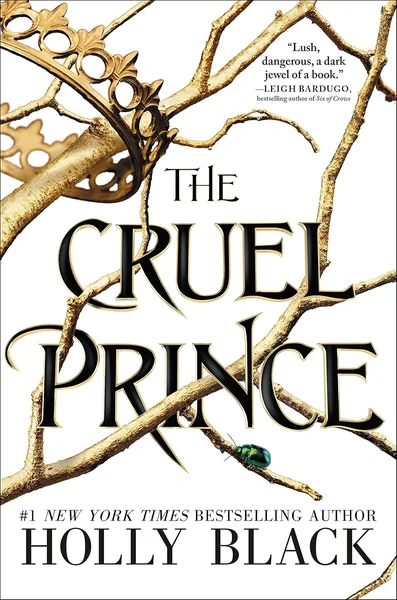
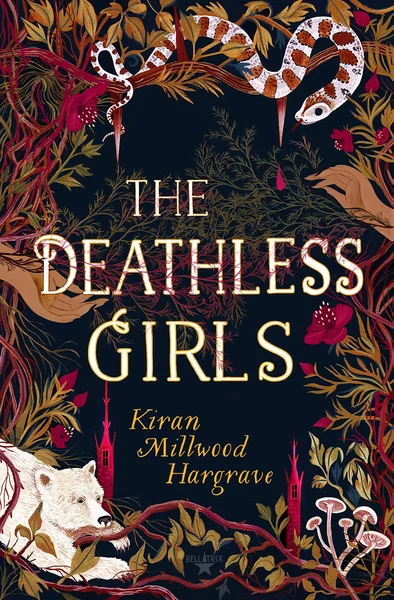
- Readers who loved Twilight's vampire romance and high-stakes supernatural tension will find strong companions in the curated picks below. Holly Black's The Cruel Prince offers fae courts in place of vampires but delivers the same dangerous attraction and forbidden-love intensity that defines Twilight. For a more directly vampire-adjacent read, Kiran Millwood Hargrave's The Deathless Girls — a dark, atmospheric YA novel — draws on Eastern European vampire mythology with literary flair, placing it firmly in the Anne Rice tradition that Booklist used to praise Meyer. Tracy Wolff's Crave and Richelle Mead's Vampire Academy are also closely related picks for fans of supernatural YA romance, each amplifying different aspects of the Twilight formula.
- Who should read this?
- Twilight is designed for readers aged fourteen and up who enjoy emotionally immersive romance with genuine danger woven into every chapter — a high-stakes love story in which even ordinary teenage milestones like a new school, an awkward crush, and prom night are shadowed by life-threatening peril. It is an ideal pick for fans of supernatural YA romance, propulsive plotting, and the tragic-romantic literary tradition — the novel consciously echoes Wuthering Heights, Romeo and Juliet, and The Merchant of Venice, all of which appear on Bella's own reading list. Readers who want dense prose, layered social commentary, or ensemble character dynamics are likely a poor match.
- What age is it for?
- Best for ages 14 and up. The review explicitly identifies Twilight as designed for readers aged fourteen and up — the novel's combination of romantic intensity, life-threatening peril, and thematic engagement with identity and first love is calibrated to older teen readers with the reading comprehension and emotional maturity to engage with those stakes. Younger teens may enjoy it, but the novel's sustained tension and emotionally consuming central romance are most resonant from mid-adolescence onward.
- About Stephenie Meyer
- Stephenie Meyer is the author of the Twilight Saga, a massively popular young adult series centered on a romance between a human girl and a vampire. The series, beginning with Twilight in 2005, became a cultural phenomenon and was adapted into a major film franchise.
- Tell me about the adaptation
- The 2008 film adaptation of Twilight was a major commercial success, grossing more than $392 million worldwide and launching a blockbuster franchise. The film starred Kristen Stewart as Bella Swan and Robert Pattinson as Edward Cullen, and its success was inseparable from the novel's own commercial peak — Twilight was the best-selling book of 2008, the same year the film was released. The franchise expanded to cover all the books in the Twilight Saga, cementing the story's status as one of the defining pop-culture phenomena of the late 2000s.
- What themes does the book explore?
- Twilight engages with identity, risk, and first love in a way The Guardian found accessible to younger readers 'without being obvious about it, allowing younger readers to subconsciously form opinions.' Meyer herself framed the novel's central question in The Twilight Saga: The Official Illustrated Guide as whether you will 'bite in and discover the frightening possibilities around you or refuse and stay safe in the comfortable world you know.' The novel also consciously situates itself within the tragic-romantic literary tradition — Bella's own reading list includes Wuthering Heights, Romeo and Juliet, and The Merchant of Venice. The honest limit: The Guardian explicitly notes the novel is 'lacking in complex social commentary or an underlying message about the state of society.'
- Where does this fit in the series?
- Twilight is the first book in the four-book Twilight Saga. It functions as the complete origin of Bella and Edward's relationship and stands as the essential starting point for the series — the sequels (New Moon, Eclipse, and Breaking Dawn) build directly on the events and relationships established here. The saga has sold over 100 million copies across more than 50 countries and inspired a five-film franchise.
Summarize this book
Follow up
Synthesized from verified book data & published reviews · How we review
What would you like to know about Twilight?
Answers come from our editorial notes on this book. If we haven't covered something, we'll say so.
Readers often ask
Our Review
What Twilight Actually Is
The Stakes: Desire, Danger, and Forbidden Love
Critical Reception and Cultural Footprint
What the Novel Does Well — and Where It Pulls Back
Who Twilight Is For
Sources & Further Reading
The key facts and claims in this review are grounded in the retrieved, verified sources listed below.
- Cited in this review
- 1
- 2
- 3
en.wikipedia.org
- Further reading
- 4
- 5
Open Library
- 6
en.wikipedia.org
- 7
- 8
smartbitchestrashybooks.com
- 9
fantasybookreview.co.uk
- 10
- 11
The Guardian
- 12
Kirkus Reviews
Age & Reading Level
Recommended age
Ages 14+
Reading level
Young adult
2 content notes · who it suits
Content to know about
Best for: Ages 14+ — the novel's sustained romantic intensity, life-threatening peril, and thematic engagement with identity and first love are calibrated to older teen readers.
Skip if you want morally complex world-building or layered social commentary in your supernatural fiction.
Reader reviews
Be one of the first readers to answer.
Read it? Was it right for you?
Books like Twilight
Curated picks for readers who enjoyed Twilight, with our reasoning for each match.

More by Stephenie Meyer

If you liked Twilight