BOOKS
Published
Read Time
5 min read
Our Rating
3.8
Reviewed by
LuvemBooks
Share This Review
Hollow City by Ransom Riggs Review: Is It Worth Reading?
Our Rating
3.8
Hollow City is a faster, darker sequel that expands Riggs's peculiar world with confidence, but its episodic middle and unresolved ending make it feel more like a bridge than a destination. Best experienced as part of the complete trilogy.
In This Review
- What Works & What Doesn't
- Escaping the Island, Entering the Dark
- Photographs, Prose, and Peculiar Atmosphere
- Jacob, Miss Peregrine, and the Peculiars
- Darkness, War, and What the Cover Promises
- Where the Sequel Stumbles
- A Worthy Addition to the Series
What Works & What Doesn't
What Works
- Pacing is noticeably tighter than the first book — action begins almost immediately
- Vintage photograph integration remains one of YA fiction's most distinctive narrative devices
- World War II setting adds genuine historical weight and thematic resonance
- The peculiar ensemble is entertaining and varied, with each character's gift feeling distinct
- Expands the series mythology in ways that deepen the first book's mysteries
What Doesn't
- Episodic middle section dilutes the urgency built in the opening chapters
- Peripheral peculiar characters function more as set-pieces than developed people
- The cliffhanger ending will frustrate readers not committed to the full trilogy
- Some emotional relationships between characters feel rushed given the fast pacing
Escaping the Island, Entering the Dark

Is Hollow City worth picking up the moment you finish the first book? A confident yes — it's a sharper, faster sequel that deepens the mythology without fully paying it off. Published in 2013 by Quirk Books, Hollow City is the direct sequel to Miss Peregrine's Home for Peculiar Children, and Ransom Riggs wastes no time getting into the action. Where the first novel earned its tension slowly — establishing the Welsh island loop and its strange inhabitants at a measured pace — this second installment launches forward almost immediately. Readers who struggled with the first book's slow-burn opening will find the pacing here noticeably sharper from the first pages.
The story picks up exactly where its predecessor left off. Jacob and the peculiars have fled their shattered 1940 loop and must cross war-torn England to reach London — described in the novel's mythology as the peculiar capital of the world. Their mission is urgent: Miss Peregrine is trapped in her bird form and needs help only other ymbrynes (the time-manipulating guardians of peculiar children) can provide. Fans of The City of Ember or A Series of Unfortunate Events will recognize the formula — a group of extraordinary children navigating a world that is both hostile and wondrous — but Ransom Riggs brings his own genuinely strange atmosphere to it.
Photographs, Prose, and Peculiar Atmosphere
One of the most distinctive features of the Miss Peregrine series is Riggs's use of real vintage photographs woven into the narrative. Hollow City continues this approach, and it remains one of the series' strongest creative choices. The photographs don't feel decorative. They function as unsettling evidence — visual proof that the peculiar world exists just underneath the surface of ordinary history. This technique blurs the line between fiction and documentary in a way that few YA novels attempt, and it gives the book a texture that is genuinely hard to replicate.
Ransom Riggs's prose style is clear and propulsive rather than literary. He isn't chasing lyrical complexity; he's building momentum. Sentences move fast. Descriptions are vivid without lingering too long. For a YA audience, this is a strength — the writing never gets in the way of the story. Occasionally, though, the speed works against the book. Some of the emotional beats between Jacob and the other peculiars feel rushed. The relationships planted carefully in the first book don't always get the room they deserve to develop here.
Jacob, Miss Peregrine, and the Peculiars
Jacob remains the anchor of the story — the outsider-turned-insider whose peculiar ability connects him to both the human and peculiar worlds in unexpected ways. His growth across this novel is incremental but real. He moves from a teenager defined largely by confusion and loyalty to someone beginning to understand the weight of his own capabilities.
Miss Peregrine herself spends much of the novel in a compromised state, which is a bold structural choice. Removing the group's most powerful protector forces the other peculiars to step up. The dynamic among the children — each with their own strange, often dangerous gifts — is where Hollow City is most entertaining. The ensemble feels lived-in, even when individual characters don't receive much solo development. Some of the younger or more peripheral peculiars function more as quirky set-pieces than fully realized people, which is the novel's main weakness and a criticism that applies to the series as a whole.
Darkness, War, and What the Cover Promises
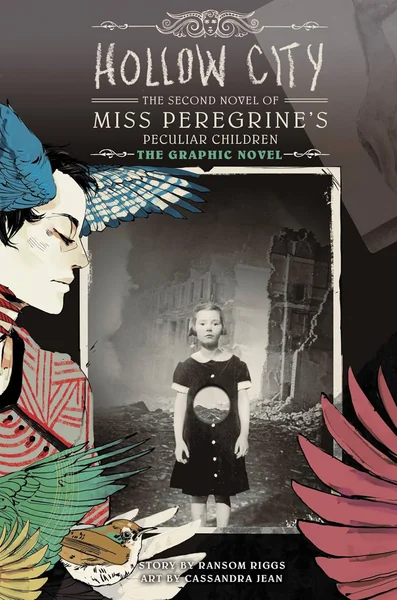
The cover of Hollow City — with its winged figures and vintage photograph aesthetic — signals exactly what's inside: something between fairy tale and war photograph, beautiful and unsettling in equal measure. The book is set against the backdrop of World War II London, and Ransom Riggs does use that setting to meaningful effect. The Blitz isn't just wallpaper. The destruction of the city mirrors the destruction of the peculiar world, and the novel draws a quiet parallel between ordinary human suffering and peculiar persecution.
Content warnings for parents are worth noting here. The book contains wartime violence, creature-based horror, and moments of genuine threat to child characters. Nothing is gratuitous, but it is dark. For most readers aged 12 and up, the tone should be manageable. Younger or more sensitive readers — particularly those who find horror imagery distressing — may want to wait a year or two. The reading level itself is solidly middle-to-upper middle grade: accessible vocabulary, complex plotting, and enough emotional nuance to reward older teen readers without losing younger ones.
Where the Sequel Stumbles
Hollow City is a strong sequel, but it carries the structural burden that many middle volumes do. It is fundamentally a bridge — propelling characters from the collapse of one safe world toward a destination that won't fully pay off until later in the series. The ending, in particular, is designed to provoke rather than satisfy. Readers hoping for resolution will find instead a sharp cliffhanger. Whether that's a flaw or a feature depends on your patience for serialized storytelling. If you're not already committed to continuing the series, this book may leave you frustrated rather than rewarded.
The new settings and peculiar loops Jacob and the group encounter along their journey are inventive and strange, but the narrative occasionally loses momentum in the middle stretch. The episodic structure — moving from one peculiar encounter to the next — keeps things visually interesting but can dilute the sense of urgency the opening chapters create.
A Worthy Addition to the Series
Hollow City deepens the mythology Riggs established in the first book and delivers a more confident, faster-paced adventure. The vintage photograph device remains fresh, the ensemble has genuine charm, and the World War II setting adds weight that prevents the story from feeling like mere fantasy escapism. Ideal for readers aged 12 and up who have already committed to the series, this book rewards patience with the original and expands its world in satisfying ways. Just don't start here — read Miss Peregrine's Home for Peculiar Children first, and come to this recommendation ready for a cliffhanger. If that's exactly where you are, the Amazon link in the sidebar has the current price.
Frequently Asked Questions
Is Hollow City worth reading if you enjoyed the first book?
Yes, but with caveats. The reviewer recommends it for readers already committed to the series, noting it delivers a more confident and faster-paced adventure than its predecessor while deepening the mythology Riggs established in Miss Peregrine's Home for Peculiar Children.
Can you start the series with Hollow City or do you need to read the first book?
The reviewer is clear that you should not start here. Hollow City picks up exactly where Miss Peregrine's Home for Peculiar Children left off, and the recommendation is to read the first book before approaching this sequel.
Is Hollow City worth the price at $14.27?
At a rating of 3.8 out of 5, the reviewer considers it a strong but imperfect sequel. Readers who are already invested in the series will find it a worthwhile purchase, though those not yet committed may feel frustrated by its cliffhanger ending.
What age group is Hollow City best suited for?
The reviewer identifies readers aged 12 and up as the ideal audience. The reading level is described as solidly middle-to-upper middle grade, with accessible vocabulary and enough emotional nuance to reward older teen readers without losing younger ones.
Are there any content warnings parents should know about for Hollow City?
Yes, the reviewer notes wartime violence, creature-based horror, and moments of genuine threat to child characters. Nothing is described as gratuitous, but younger or more sensitive readers who find horror imagery distressing may want to wait a year or two before reading it.
How does the pacing of Hollow City compare to the first book?
The pacing is noticeably sharper from the first pages compared to the slow-burn opening of the original novel. However, the reviewer notes the narrative occasionally loses momentum in the middle stretch due to an episodic structure that can dilute the sense of urgency established at the opening.
How does Riggs use the vintage photographs in Hollow City?
The reviewer calls this one of the series' strongest creative choices, noting the photographs function as unsettling evidence rather than mere decoration. They blur the line between fiction and documentary in a way that gives the book a texture that is genuinely hard to replicate, and the device remains fresh in this second installment.
What is Ransom Riggs's prose style like in Hollow City?
The reviewer describes it as clear and propulsive rather than literary, built for momentum rather than lyrical complexity. Sentences move fast and descriptions are vivid without lingering too long, which is identified as a strength for a YA audience, though it occasionally causes emotional beats to feel rushed.
How does Jacob develop as a character in Hollow City?
Jacob remains the anchor of the story, and his growth is described as incremental but real. He moves from a teenager defined largely by confusion and loyalty to someone beginning to understand the weight of his own capabilities across the course of the novel.
What role does Miss Peregrine play in Hollow City?
Miss Peregrine spends much of the novel in a compromised state, trapped in her bird form and in need of rescue from other ymbrynes. The reviewer calls this a bold structural choice, noting that removing the group's most powerful protector forces the other peculiars to step up and drives much of the plot.
Are the supporting peculiar characters well developed in Hollow City?
The reviewer finds the ensemble charming and lived-in overall, but identifies underdeveloped supporting characters as the novel's main weakness. Some of the younger or more peripheral peculiars function more as quirky set-pieces than fully realized people, a criticism the reviewer applies to the series as a whole.
How does the World War II setting affect the story in Hollow City?
The reviewer argues the Blitz is not merely wallpaper and is used to meaningful effect. The destruction of wartime London mirrors the destruction of the peculiar world, and the novel draws a quiet parallel between ordinary human suffering and peculiar persecution, adding weight that prevents the story from feeling like mere fantasy escapism.
What are the main themes of Hollow City?
The reviewer highlights persecution, the destruction of safe worlds, and the resilience of an extraordinary community navigating a hostile environment. The parallel drawn between wartime human suffering and the peculiars' own persecution is identified as one of the more meaningful thematic threads in the book.
Does Hollow City have a satisfying ending?
No, the reviewer is explicit that the ending is designed to provoke rather than satisfy and delivers a sharp cliffhanger. Whether that is a flaw or a feature is described as depending on the reader's patience for serialized storytelling, and those not committed to continuing the series may find it frustrating.
What structural role does Hollow City play in the overall series?
The reviewer describes it as fundamentally a bridge — a middle volume that carries the structural burden of propelling characters from the collapse of one safe world toward a destination that won't fully pay off until later in the series. This is identified as a significant caveat for readers expecting standalone resolution.
What books are similar to Hollow City for readers who enjoy this series?
The reviewer draws comparisons to The City of Ember and A Series of Unfortunate Events, noting all share a formula involving extraordinary children navigating a world that is both hostile and wondrous. However, the reviewer credits Riggs with bringing a genuinely strange atmosphere that is his own.
Does the relationship between Jacob and the other peculiars develop meaningfully in Hollow City?
Only partially, according to the reviewer. While the ensemble dynamic is described as entertaining and lived-in, the speed of the narrative works against some emotional beats, and the relationships planted carefully in the first book do not always get the room they deserve to develop here.
Is the episodic structure of Hollow City a strength or a weakness?
The reviewer presents it as a mixed quality. Moving from one peculiar encounter to the next keeps things visually interesting, but it can dilute the sense of urgency the opening chapters create and contributes to the novel losing momentum in its middle stretch.
What does the cover of Hollow City signal about the book's tone?
The reviewer notes the cover, with its winged figures and vintage photograph aesthetic, signals exactly what is inside: something between fairy tale and war photograph, described as beautiful and unsettling in equal measure. The reviewer suggests it accurately represents the book's atmosphere.
Related Reviews
Reviews of books we picked for readers who enjoyed Hollow City.


Reader Comments
No comments yet
Be the first to share your thoughts!