

BOOKS
Published

Read Time

9 min read

Reader rating

3.8

· 17,740 Amazon ratings
reader ratings, not a LuvemBooks score
Curated & edited by

LuvemBooks Editorial

How we create our reviews →
Share This Review

Bridget Jones: Mad About the Boy by Helen Fielding Review: Bridget Returns, Older, Widowed, Still Funny

Helen Fielding's third Bridget Jones novel brings her heroine back after fourteen years as a widowed mother of two, re-entering a dating world reshaped by Twitter and online dating. Outrageously comic and unexpectedly moving, though the series formula shows its seams.

LuvemBooks Verdict

Best for

Long-time Bridget Jones readers who grew up with the diaries and want the familiar voice and comic machinery back, now with the weight of widowhood and middle age behind the jokes — and book clubs, which the publisher's reading guide on grief, age, and "the boy" serves well.

Worth it if

You loved the first two books and are willing to accept Mark Darcy's off-page death as the price of a reunion that pairs Twitter-era dating farce with genuinely moving material about a mother rebuilding after loss.

Skip if

You are allergic to sentimentality, want Fielding to have reinvented rather than revived the self-help-and-hapless-romance formula, or will find the lurch between broad farce and child-centred bereavement calculated rather than poignant.

Critical reception was warm but not uncritical: The Guardian was openly wry about the narrative engineering needed to undo Bridget's happy ending and keep Mark "implausibly perfect in death," while Kirkus Reviews found "laugh-out-loud moments" alongside "a certain sadness" around loss and mortality. The Independent judged the book at its best as a poignant portrait of a 51-year-old widow raising children, and NPR struck a cooler note in a review titled "We're Not So Mad About This Girl," while the blog Austenprose urged readers to dive in despite Mark's fate.

By making her a widow, Fielding allows Mark Darcy to remain as implausibly perfect in death as he was in life.

The Guardian

There are laugh-out-loud moments throughout, but the writing is also characterized by a certain sadness around loss and mortality.

Kirkus Reviews

There are deeply funny flashes of classic Bridget Jones at various points throughout this book.

NPR
Sources: The Guardian, Kirkus Reviews, NPR, The Independent, Austenprose
3.8from 17,740 Amazon ratings— reader ratings, not a LuvemBooks score
Buy on Amazon

Age & Reading Level

Recommended age

Adult

Reading level

Adult

Content to know about

death of a spouse (widowhood is the core premise)
a parent explaining death to young children
sexual content and sexting played for comedy

Skip if you can't forgive the book for killing off Mark Darcy to undo The Edge of Reason's happy ending, or you're allergic to engineered sentimentality alongside the farce.

In This Review
  • What Works & What Doesn't
  • What the Book Is
  • The Comedy of a Rebuilt Dating World
  • Grief as Ballast
  • Reception and Cultural Standing
  • Who It's For

What Works & What Doesn't

What Works
  • The diary voice and comic machinery of the first two books survive the fourteen-year gap, updated with sharp satire of Twitter-era dating, sexting, and online romance
  • The widowhood storyline gives the comedy real emotional ballast, with moving material around Bridget and her two children
  • A national bestseller and Goodreads Reader's Choice title whose publisher page collects praise from Elle, Vogue, and the Dallas Morning News
  • Timely take on middle age and reinvention; the publisher's reading guide makes it a natural book-club pick
  • Adapted into a 2025 film, confirming the character's durable cultural pull
What Doesn't
  • The plot requires undoing The Edge of Reason's happy ending, and the off-page death of Mark Darcy will alienate some long-time fans
  • As critical coverage's review observed, the widowhood device keeps Mark 'implausibly perfect in death' and leans on engineered tear-jerking
  • The alternation of broad farce and bereavement can register as tonal whiplash
  • The self-help-and-hapless-romance formula is revived rather than reinvented, and can feel repetitive
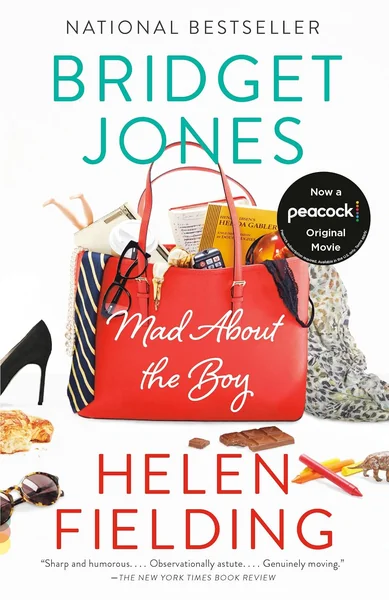
A sharp, funny, sometimes sentimental return for Britain's defining comic diarist — one that trades on real loss as much as laughs.
Bridget Jones: Mad About the Boy: A GoodReads Reader's Choice by Helen Fielding front cover

What the Book Is

Bridget Jones: Mad About the Boy is Helen Fielding's third Bridget Jones novel, published in the UK in 2013 and reissued in the US by Vintage in 2014, returning the character to print after a fourteen-year gap. It is written, like its predecessors, in Bridget's chaotic diary form, but the circumstances have changed radically: Mark Darcy is dead, killed by a landmine in Sudan while negotiating the release of aid workers, and the book opens four years after his death. Bridget is now a mother of two — Billy and Mabel — in her early fifties, a widow lurching out of the first raw shock of grief and back toward the dating scene, a scene that has been entirely rebuilt since she was last single.
timely, tender, touching, page-turning, witty, wise, outrageous, and bloody hilarious
The premise reverses the happy ending of The Edge of Reason, restoring Bridget to what critical coverage's review called her natural state of hapless relationships and self-help books. Alongside the romance plot, Bridget is attempting to adapt Hedda Gabler for the screen — a project the publisher's reading guide flags as a deliberate parallel about the perils of living through men — while juggling school-gate politics, her children, and the indignities of middle age.

The Comedy of a Rebuilt Dating World

The book's richest comic vein is technological. When Bridget was last single, there was no Twitter, no sexting, no online dating, and — as the Guardian review of the novel puts it — a cougar was just a big cat. Fielding milks all of it: rogue gadgets, a nascent Twitter feed, texting disasters, and an age-gap romance with Roxby "Roxster" McDuff, a much younger man who is the "boy" of the title in its most obvious sense. The publisher's copy describes the result as "timely, tender, touching, page-turning, witty, wise, outrageous, and bloody hilarious," and while that is jacket language rather than independent criticism, the broad shape of it — a comic novel about a woman from the pre-smartphone era drowning in the post-smartphone one — is corroborated by the Guardian's account of the book's comic machinery.
The diary format remains the engine: short entries, calorie-and-unit accounting, misread social cues, and set pieces built on Bridget's talent for turning a minor embarrassment into a catastrophe. Readers who loved the first two books for exactly this will find the machinery intact, updated for a new decade.

Grief as Ballast

What distinguishes this installment from the earlier books is its undertow. Critical coverage's critic noted that Fielding's choice to make Bridget a widow keeps Mark Darcy "implausibly perfect in death," avoiding a messy divorce while generating plenty of scope for tear-jerking moments with the children. That observation cuts both ways, and it is the book's defining tension: the grief storyline gives the comedy genuine emotional stakes — the publisher's copy promises a book "both outrageously comic and genuinely moving," and the reading-group materials foreground loss, age, and resilience as discussion themes — but it also means the novel asks readers to laugh at nits, texting mishaps, and toyboy escapades in one entry and sit with a mother explaining death to small children in the next.
For many readers that whiplash is the point: the book is about rediscovering joy after heartbreak, and Bridget's fumbles are funnier because they matter more. For others, the alternation of farce and bereavement will feel calculated. Either way, this is a substantially sadder book than its cover positioning as light comic fiction lets on.

Reception and Cultural Standing

The Guardian framed the book's arrival as a significant cultural event, arguing that Bridget Jones was, arguably, "the first truly modern comic heroine" — the character through whom Fielding identified the confusions of a generation of women in the mid-90s and allowed readers to laugh at them. That legacy is the backdrop against which the third book was received: the publisher's page bills it as a national bestseller and a Goodreads Reader's Choice title, and its marketing copy collects praise from outlets including Elle, Vogue, and the Dallas Morning News, the last of which is quoted calling the third romp as engaging and hilarious as the first two. The same critical conversation was not uncritical: the Guardian's review was openly wry about the narrative engineering required to undo Bridget's happy ending and return her to singlehood.
The book's afterlife has extended beyond the page. Penguin Random House's current listing promotes a Peacock original film tie-in, and the story reached cinemas as a 2025 film adaptation — a longevity that confirms the character's grip on the reading public nearly three decades after the first diary.

Who It's For

This is first and foremost a book for the converted: readers who grew up with Bridget, for whom Mark Darcy's fate will land as a genuine shock and the cameos of the old gang as a reunion. Newcomers can start here — the diary format is self-explanatory and the premise is established quickly — but the emotional payoff depends heavily on investment in the earlier books. It suits readers of commercial comic fiction who want their light reading to carry some weight, and book clubs will find the publisher's reading guide genuinely useful, with discussion questions on age, grief, and the identity of "the boy."
Those allergic to sentimentality, or who want Fielding to have reinvented rather than revived the formula, should moderate expectations. The book's pleasures are the pleasures of return: familiar voice, familiar structure, new wounds. On those terms, it delivers what its long-waiting audience came for.

Sources & Further Reading

The key facts and claims in this review are grounded in the retrieved, verified sources listed below.

  1. Cited in this review
  2. 1

    en.wikipedia.org

  3. 2
  4. Further reading
  5. 3

    Helen Fielding, Wikipedia