Skip to content
Reviewed

Read Time

8 min read

Our age bandAdult
Reader rating
4.2 · 1,236 Amazon ratings, as of Oct 2026
reader ratings, not a LuvemBooks score
Curated & edited by

LuvemBooks Editorial

How we create our reviews →
Share This Review
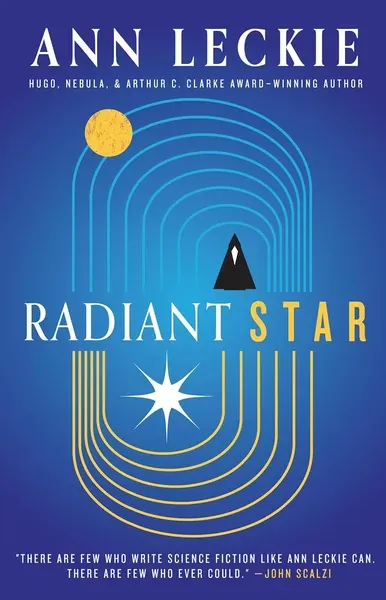
Radiant Star by Ann Leckie front cover

Our review

Radiant Star

Radiant Star by Ann Leckie Review: A Standalone Imperial Radch Story

Radiant Star, Ann Leckie's standalone return to the Imperial Radch, follows a cut-off colonised planet as famine, riots and a would-be saint strain its religious factions. Reviewers praise the worldbuilding and politics but split on its sprawling cast and distant narration.

Our age band: Adultfamine and food scarcity · colonial occupation

LuvemBooks Verdict

Best for

Readers who like stories where religious factions, clerical power-plays and a food shortage on a remote province drive the narrative more than a single protagonist does.

Worth it if

Worth reading if you value an intricately built society enough to be patient through a sprawling cast and a slow first half.

Skip if

Skip it if you need a driven protagonist, likeable characters or the epic sweep of the original trilogy, since reviewers fault the crowded cast, the unfocused plot and the detached narration that keeps readers at arm's length.

Where reviewers agree and split

Readers rate it 4.2 on Amazon. The reviews we read that discuss it in depth agree:

Only Tarvolon and Kara Reviews discuss its characters: both say the cast is crowded or hard to care about.

  • Characters

    2 say the cast is crowded or hard to care about

  • Plot

    2 say the plot is unfocused

Characters

Criticism

“It’s genuinely difficult to care about many of the major characters”

— Tarvolon · Book blog
Criticism

“Radiant Star lacks a sense of true danger because we never get close enough to any of the characters.”

— Kara Reviews · Book blog

Plot

Criticism

“It is let down by an overabundance of characters and an unfocused plot”

— Ancillary Review of Books · Book blog
Criticism

“There is no single plot.”

— Locus · Trade review
4 reviews weigh in (1 trade review, 3 book blogs); counts are per topic. A review counts only where we can quote it.

Reception leans positive but divided. Kirkus Reviews calls it a "skillfully rendered, thoughtful offshoot" and Locus is absorbed by the tangle of Ooioiaan sects, while the Ancillary Review of Books is let down by too many characters. The book blogger behind Tarvolon found it laborious, and the Kara Reviews blogger found it "fine" but distant.

“A skillfully rendered, thoughtful offshoot of the original story.”

— Kirkus Reviews
Sources: Kirkus Reviews, Locus, Ancillary Review of Books, Tarvolon, Kara Reviews
4.2from 1,236 Amazon ratings, as of Oct 2026— reader ratings, not a LuvemBooks score

Ask LuvemBooks

Was this helpful?

Radiant Star is a standalone Imperial Radch novel about a sunless rogue planet whose only city strains under famine, rival religious sects and a would-be living saint once the gates fall silent. It is admired as political and cultural worldbuilding but resisted as a story, with reviewers split on whether its sprawling cast and detached narrator are a feature or an obstacle.
Is it worth reading?
It is worth reading if the society itself is the draw. Tzer Island praised the worldbuilding, and Reading Reality noted how much turns on actual institutional power structures. But reviewers split on the storytelling: Tarvolon found the opening tedious with dislikable characters, while some reviewers found the tension satisfying. Prior affection for Leckie is what kept the Ancillary Review of Books' reviewer going, so goodwill toward her work helps.
Similar books
Readers who want more of Ann Leckie's universe will start with Ancillary Justice, which Tarvolon's reviewer places around the time of this book's events. For political maneuvering on the edge of an empire, A Memory Called Empire by Arkady Martine and The Mercy of Gods by James S. A. Corey are close in spirit. Dune is the classic of religion, power and scarcity on a hostile planet, though its sweep is far larger than this book's.
Who should read this?
This suits readers who enjoy stories told as anthropology, where factions and famine matter more than one hero. Reading Reality singled out the religious practices as rare in the genre. It suits less well anyone who needs sympathetic characters to stay engaged, a need Tarvolon's reviewer felt acutely, or who expects the epic scope of the trilogy, which Kara Reviews cautions against.
What age is it for?
Radiant Star is written for adults. The reviews we found flag no sexual content, though they do not address content in detail. The material is demanding in other ways: dense politics, a large cast and a ritual that ends in a preserving poison.
About Ann Leckie
Ann Leckie is an American author of science fiction and fantasy. Radiant Star returns to the Imperial Radch setting of her earlier novels.
Can I start the Imperial Radch here?
Yes. The Ancillary Review of Books' David Tierney agreed the earlier books are not essential and that Radiant Star works as a re-entry to the series, and the publisher presents it as an entry point for new readers. The sources suggest it is worth considering.
How central is the food shortage?
Quite central to the praise. The Ancillary Review of Books' Tierney judged that Leckie's detail pays off by showing what a culture loses when cut off from its food, and Kara Reviews singled out food as status and cultural symbol, reading the book as a quiet story of cultural decline seen from a distant province.
Summarize this book

Summarize this book

On Aaa, the city of Ooioiaa has spent thirty years under Radchaai occupation when the Radch civil war destroys the gates and food imports stop. Serque Tais, a wealthy man, is due to become a living saint at the Temporal Location of the Radiant Star, while the speaking savant Keemat doubts the vision that endorsed him, Tais's grandchild Elerit stands to inherit his holdings, and Jonr, bred to be sold off-world, is pressed into service at home. A narrator writing centuries later explains how these threads converge.

Follow up

Does the ending tie things up?
Who is the narrator?

Synthesized from verified book data & published reviews · How we review

Ask LuvemBooks

What would you like to know about Radiant Star?

Answers come from our editorial notes on this book. If we haven't covered something, we'll say so.

Readers often ask

Our Review

We review the evidence: published critics, reader verdicts and BookTube reviews, gathered and weighed with AI assistance and edited by LuvemBooks, rather than one reader's first-hand take.
Fans of Ann Leckie's worldbuilding will likely be rewarded; anyone wanting a tightly focused plot and characters to attach to may not be.
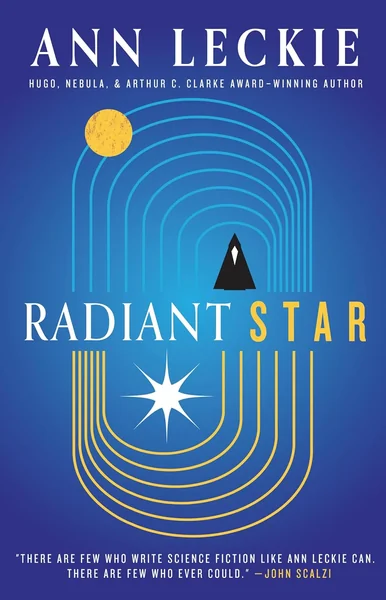
Radiant Star by Ann Leckie front cover

What happens in Radiant Star?

The story is set on Aaa, a sunless rogue planet whose only city, Ooioiaa, has chafed for thirty years under Radchaai occupation. When the Radch civil war destroys the gates that carried ships and information across space, Kirkus Reviews explains, food imports stop, local supplies run low, and religious and social unrest builds.
At the centre is a wealthy man, Serque Tais, who is to become a "living saint" at the Temporal Location of the Radiant Star, a process that ends in a preserving poison. The speaking savant Keemat, whose vision endorsed him, starts to wonder whether the vision was meant for someone else; Tais's grandchild Elerit stands to inherit his holdings, to his son's displeasure; and Jonr, a young man bred to be sold off-world as a servant, is pressed into service at home instead.
A narrator writing from centuries in the future explains how the threads converge.
It is a standalone, and the publisher presents it as an entry point for new readers. The Ancillary Review of Books' David Tierney agreed that the earlier books are not essential and that Radiant Star works as a re-entry to the series.

Where does Radiant Star sit in the Imperial Radch books?

Like Provenance and Translation State, Locus noted, it unfolds far from the main action of the Ancillary trilogy, though not beyond the reach of the Radchaai. Tarvolon's reviewer placed its events around the time of the end of Ancillary Justice.
That positioning shapes expectations. Kara Reviews warned that readers hoping for the epic scope of the trilogy or the alien-identity exploration of Translation State will probably be disappointed, but that it succeeds as a set of intersecting stories on the fringe of a crumbling empire.
Locus similarly stressed that the focus is the tangle of rival religious and political sects in Ooioiaa rather than the Radchaai themselves.

What did critics praise in Radiant Star?

The strongest enthusiasm is for the society Leckie builds. Locus described a planet whose religious factions generate social and economic rivalries, "heat" rather than light, and Tarvolon's reviewer said the worldbuilding would have held his interest even without a plot.
Reading Reality liked how much of the story turns on the actual religious practices and clerical power-plays of the Ooioiaans, which it said is rare in science fiction and fantasy.
On the food shortage, Tierney of the Ancillary Review of Books judged that Leckie's detail pays off by getting at what a culture loses when cut off from its food. Kara Reviews likewise singled out food as status and cultural symbol, and read the book as a quiet fall of empire seen from a distant province.
On the ending, Reading Reality called it a bright, hopeful conclusion that ties up the religious and political threads as well as the original trilogy, while Tzer Island said the stories knot together satisfyingly. Tarvolon agreed that most major threads get closure, with the possible exception of the big religious questions.

What are the problems with Radiant Star?

The cast is a recurring complaint among reviewers who discuss it. Tierney found an overabundance of characters and an unfocused plot, with storylines wrapped up in a few sentences at the close. Locus similarly observed that there is no single plot, only a sizeable cast pursuing individual paths until the crisis arrives in the last quarter.
The tone divides readers. Tarvolon's reviewer found many of the major characters dislikable and their motivations banal, called the first half a slog, and gave it 12 of 20, saying only prior affection for Leckie kept him reading.
Kara Reviews felt the omniscient narration keeps readers at arm's length, like a historical treatise, so the story lacks a sense of real danger. Kirkus Reviews added that an injured cousin of the Radchaai governor is set up as important but never pays off.
Reviewers split on how well the book holds together: Tzer Island found the tension satisfying while Reading Reality admired the machinery of power. The disagreement is mostly over whether a detached, ironic narrator is a feature or an obstacle.

Is Radiant Star worth reading?

Weighing these reviews, the tension they keep circling is between a book admired as political and cultural anthropology and a book resisted as a story. Reading Reality and Tarvolon and Kara Reviews prize the intricate systems of faith, power and famine, while Tarvolon and Kara Reviews say the distance from its characters costs it intensity.
That points the book towards readers who like their science fiction as fall-of-empire worldbuilding, where political agency and clerical maneuvering are the draw. It points away from those who want a driven protagonist or the trilogy's sweep, which Kara Reviews cautions against expecting, and from anyone who needs sympathetic characters to stay engaged, a need Tarvolon's reviewer felt acutely.
If you already like Leckie's Radch standalones, it is a reasonable bet; if you are new, the sources suggest it is worth considering.

Sources & Further Reading

The key facts and claims in this review are grounded in the retrieved, verified sources listed below.

  1. Cited in this review
  2. 1
  3. 2
  4. Further reading
  5. 3

    Ann Leckie, LuvemBooks

  6. 4
  7. 5
  8. 6
  9. 7
  10. 8
  11. 9

Age & Reading Level

Our age band

Adult

Our age band groups books for browsing; it isn't an age a review gave.

Content to know about

famine and food scarcity
colonial occupation
religious ritual ending in poisoning

Skip if you need a driven protagonist, sympathetic characters or the epic sweep of the original trilogy.

From our readers

Reader reviews

Be one of the first readers to answer.

Read it? Was it right for you?