BOOKS
Published

Read Time

8 min read

Reader rating

4.6

· 21 Amazon ratings
reader ratings, not a LuvemBooks score
Curated & edited by

LuvemBooks Editorial

How we create our reviews →
Share This Review

The Graham Effect by Elle Kennedy Review: A Hefty Hockey-Romance Spinoff

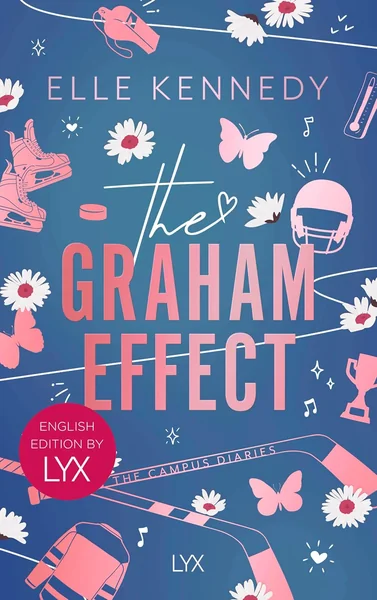
The Graham Effect opens Elle Kennedy's Campus Diaries series — a spinoff of Off-Campus and Briar U — pairing hockey golden girl Gigi Graham with bad boy Luke Ryder in an instant New York Times bestseller. A treat for franchise fans; its length and formula test newcomers.

Author photo of Elle Kennedy seated at a piano against a paneled wall.Tap to enlarge

LuvemBooks Verdict

Best for

Fans of Elle Kennedy's Off-Campus and Briar U novels — and BookTok hockey-romance readers generally — who want a big, immersive, banter-heavy college love story where the heroine's Olympic ambitions carry as much weight as the romance.

Worth it if

Worth it if you already love the Briar universe (or want an entry point into it) and enjoy a long, found-family sports romance that treats athletic stakes seriously — including for newcomers, whom German readers of this LYX edition say it sent back to the original series.

Skip if

Skip it if you're skeptical of hockey-romance conventions, adversaries-to-lovers arcs, or cheating-ex subplots — or if a 600-plus-page romance that sags in stretches sounds like a chore rather than an immersion.

Fan-facing review outlets received the book warmly: Subjectify Media said it "brings back all the best parts of the Off Campus and Briar U series" while reinvigorating the setting for a new generation, and The Gloss Book Club credited it with launching its reviewer's "BookTok hockey era." BookCLB praised Kennedy's ability to inject humor into emotionally heavy scenes and noted the book's reach into themes of identity, ambition, and legacy, while About That Story's reviewer admitted to blowing off making dinner to keep reading.

Sources: Subjectify Media, The Gloss Book Club, BookCLB, About That Story
4.6from 21 Amazon ratings— reader ratings, not a LuvemBooks score
Buy on Amazon

Age & Reading Level

Recommended age

Adult

Reading level

Adult

Content to know about

explicit sexual content
infidelity / cheating ex-boyfriend subplot

Best for: Adults 18+ — explicit sexual content and new adult relationship drama

Skip if you want a short, taut romance rather than a 600-plus-page college saga

In This Review
  • What Works & What Doesn't
  • What The Graham Effect Is
  • The Deal, the Ex, and the Father's Shadow

  • What It Does Well
  • Where It Falters
  • Who It Is For

What Works & What Doesn't

What Works
  • Instant New York Times bestseller continuing the beloved Off-Campus and Briar U universe
  • Gigi's Olympic ambitions and struggle with her father's legacy give the romance real thematic weight
  • Humor woven through heavier emotional scenes keeps the tone dynamic
  • Delivers the found-family, college-hockey combination its fanbase explicitly wants
  • Works as an entry point that draws new readers back to the original series
What Doesn't
  • 600-plus-page length sags in places, as readers of this edition have noted
  • The adversaries-to-lovers arc and cheating-ex subplot follow familiar genre beats
  • Rewards existing franchise fans far more than genre skeptics
Verdict: A fan-pleasing new adult hockey romance that opens Elle Kennedy's Campus Diaries spinoff with genuine charm, though its length and formula will not convert skeptics of the genre.

What The Graham Effect Is

The Graham Effect is the first book in Elle Kennedy's Campus Diaries series, a spinoff of her BookTok-famous Off-Campus and Briar U novels, and it arrived as an instant New York Times bestseller. The novel is a new adult hockey romance built around Gigi Graham, the daughter of Garrett Graham — the hero of the original Off-Campus series. Gigi has three stated goals: qualify for the women's national hockey team, win Olympic gold, and step out of her famous father's shadow. The marketing line frames the setup neatly: hockey's golden girl makes a deal with the bad boy, that bad boy being Luke Ryder, a talented but troubled player on the Briar men's team. Kennedy, a New York Times, USA Today, and Wall Street Journal bestselling author who studied English literature at New York University, has built a franchise on exactly this blend of college athletics and steamy romance, and this book extends that universe to the next generation.
This particular edition is the English-language paperback from LYX, the Cologne-based imprint of Bastei Lübbe, dated 2024; the novel itself first appeared in 2023 from Bloom Books.

The Deal, the Ex, and the Father's Shadow

According to SuperSummary's study guide, the plot threads more than the central pairing. Gigi is contending with Case, an ex-boyfriend who betrayed her trust through infidelity and wants to rekindle things, while a run of mishaps makes Ryder late for practice — an incident witnessed by Garrett Graham himself, who tears into him. That collision of Gigi's family legacy with Ryder's rougher edges drives the book's central tension: the two move from adversaries to something deeper while negotiating love, family dynamics, and legacy. The "deal" premise gives the romance a transactional spark that Kennedy's readership expects, and the Garrett Graham connection means long-time fans get meaningful callbacks rather than a bare cameo. Readers who loved the original series will recognize the machinery; readers meeting this world cold still get a self-contained love story, and some German readers reviewing this LYX edition noted the book actually made them want to go back and read Off-Campus for the backstory.
Author photo of Elle Kennedy seated at a piano against a paneled wall.

What It Does Well

The strongest material here is thematic. While The Graham Effect is unmistakably a romance, reviewers have noted that it reaches into identity, ambition, and the cost of growing up under a famous parent — Gigi's Olympic ambitions are treated as seriously as her love life, which gives the book more spine than a pure will-they-won't-they. Kennedy's ability to thread humor through emotionally heavy scenes has also been singled out as a strength, keeping banter and introspection in balance rather than letting the angst curdle. The return to the Briar universe delivers what reader reactions describe as a found-family, college-romance, hockey combination that feels deliberately written for the existing fanbase — and on that measure, the response from Kennedy's audience has been warm, with many treating the book as a welcome re-immersion in a world they already loved.

Where It Falters

The book's scale is its most common sticking point. It is a long novel, and at least one reader of this edition flags that its 600-plus pages sag in stretches — a fair structural observation for a romance whose central pairing follows a familiar adversaries-to-lovers arc. Readers allergic to hockey-romance conventions, or to spinoffs that lean on parent-generation goodwill, will find the book confirms their suspicions rather than challenges them. And while the Case subplot adds conflict, love-triangle friction built on a cheating ex is well-worn territory that the genre has worked many times before. None of this undermines the book for its intended audience, but it does mean the novel rewards the converted more than the curious.

Who It Is For

The Graham Effect is for readers of new adult sports romance — above all the Off-Campus and Briar U faithful, for whom Gigi's story is essentially a next-generation sequel. It also works as an entry point: hockey romance remains one of BookTok's dominant niches, and this sits squarely at its center. Readers who want a short, taut romance should look elsewhere; readers who want a big, immersive, banter-heavy college love story with genuine athletic stakes are precisely who this book was written for.

Sources & Further Reading

The key facts and claims in this review are grounded in the retrieved, verified sources listed below.

  1. Cited in this review
  2. 1
  3. 2
  4. 3
  5. Further reading
  6. 4
  7. 5
  8. 6
  9. 7
  10. 8