8 min read
4.6
· 4,634 Amazon ratingsShare This Review
Our review
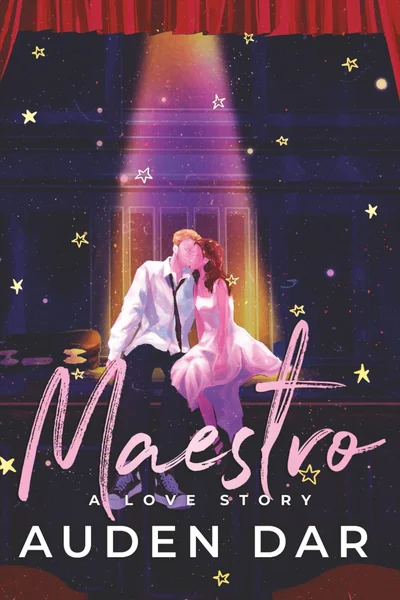
Maestro
Maestro: A Love Story by Auden Dar Review: Epic, Emotionally Devastating Classical Romance
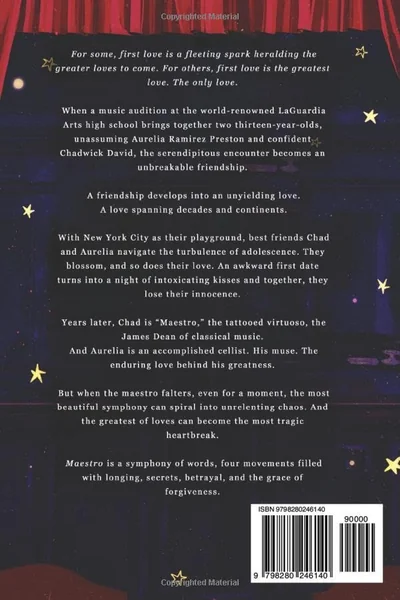
Maestro: A Love Story is a decades-spanning contemporary romance by Auden Dar, following childhood best friends Chad and Aurelia — a classical music virtuoso and an accomplished cellist — from their first love in New York City through the ambition, betrayal, and heartbreak that test them across a lifetime. Dar's background as a former A&R music executive gives the novel's classical music world authentic grounding that sets it apart in the genre.
LuvemBooks Verdict
Best for
Readers who love high-angst, decades-spanning romance where classical music is both metaphor and lived reality, and who want a deeply immersive, emotionally devastating love story built around the question of whether first love can also be the greatest.
Worth it if
Worth reading if you thrive on epic, soul-crushing love stories with ambitious narrative architecture, a richly authenticated classical music world, and don't mind investing in 600+ pages of longing, betrayal, and the slow possibility of forgiveness.
Skip if
Skip it if you prefer tight pacing, communicative protagonists, and plots that stay within strictly realistic bounds — the novel's length, recurring miscommunications, and melodramatic turns (including pregnancy manipulation) are persistent friction points flagged by critical readers.
What readers & critics say
According to sobrief.com, Maestro holds a 4.39 rating with polarised reception: enthusiastic readers call it emotionally devastating and praise its epic decades-spanning love story, musical elements, and character depth, while detractors find it exhausting, repetitive, and frustrating in its character choices. Romance blog smexybooks.com echoes the enthusiasm, warning readers it is "a lonnnng haul" they won't be able to put down.
Sources: sobrief.com, smexybooks.comAsk LuvemBooks
Was this helpful?
- Is it worth reading?
- For readers drawn to high-angst, emotionally maximalist romance with a genuine classical music backbone, Maestro: A Love Story delivers something rare in the genre — decades of longing, a structurally ambitious narrative, and world-building grounded in real industry knowledge. The enthusiastic reception among its core audience is substantial, with readers describing the story as "emotionally devastating" and praising its depth of character development. However, the novel's 614-page length, recurring miscommunication between Chad and Aurelia, plot points some find far-fetched (including pregnancy manipulation), and characters described as spineless at key moments are consistent friction points — readers with lower tolerance for melodrama or slow pacing may struggle to stay invested.
- Similar books
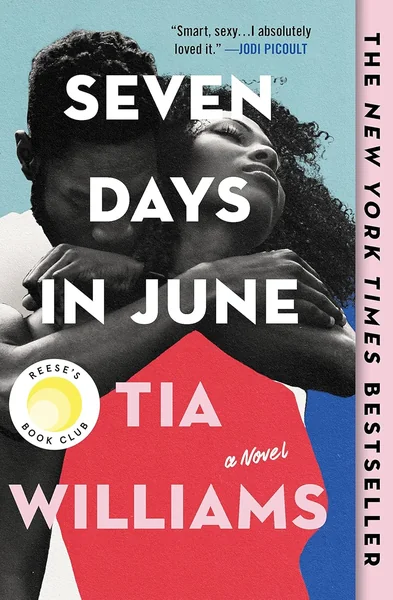
- Readers who respond to Maestro: A Love Story's decades-spanning, emotionally devastating love story with a music-world backdrop will find familiar pleasures in several titles. Tia Williams' Seven Days in June shares the high-emotional-stakes reunion romance between two creatively gifted protagonists. Taylor Jenkins Reid's Daisy Jones & The Six also centres on music, artistic ambition, and a compulsive on-again-off-again connection across years. David Nicholls' One Day traces two people across decades in a structurally distinctive, bittersweet way that echoes Maestro's multi-timeline architecture. Christina Lauren's Love and Other Words and Sally Thorne's The Hating Game round out the recommendations for readers who want emotionally charged romance with strong character focus.
- Who should read this?
- Maestro: A Love Story is squarely aimed at readers who love high-angst, emotionally maximalist contemporary romance — particularly those who appreciate epic, decades-spanning love stories where first love is tested across a lifetime. The novel's deep classical music world-building will resonate especially with readers who want music to function as genuine theme and structure rather than atmospheric backdrop. Readers who embrace genre conventions — including miscommunication, star-crossed longing, and melodramatic plot turns — and who are willing to commit to 614 pages will find the most to hold onto here.
- Any content warnings?
- Maestro: A Love Story contains pregnancy manipulation as a plot point, which some readers found both emotionally difficult and far-fetched. The novel is a high-angst adult romance with themes of betrayal, heartbreak, and the long-term consequences of secrets — readers sensitive to miscommunication-driven conflict sustained over a very long narrative should be aware that this is a recurring structural device throughout the book's 614 pages.
- Where should I start with Auden Dar?
- Maestro: A Love Story is Auden Dar's third novel, which means readers new to her work have earlier titles to explore before committing to this 614-page epic. For readers who want to sample Dar's voice and style at a potentially lower page-count investment, starting with one of her earlier novels would be a reasonable approach — though Maestro is her most structurally ambitious work to date and the one that has generated the most passionate reader response.
- Is this a good book club pick?
- Maestro: A Love Story offers rich discussion material — the ambitious flash-forward/flashback structure, the music-as-metaphor theme, the question of whether greatness and love can coexist, and the polarised reader reception all give a group a lot to unpack. The caveat is practical: at 614 pages, it is a significant ask for a monthly reading schedule, and the novel's divisive character choices — particularly the recurring miscommunication between Chad and Aurelia and the melodramatic plot turns — could generate lively but heated debate rather than consensus enjoyment.
Summarize this book
Follow up
Synthesized from verified book data & published reviews · How we review
Press Enter to ask. Answers come from our editorial Q&A — start typing to see related questions.
Our Review
What the Novel Is — and What It Sets Out to Do
Narrative Architecture: Time as Music
Dar's Music-Industry Credentials and Their Impact on the World-Building
Reader Reception: Devoted Fans and Real Frustrations
Who This Book Is For — and How Much It Asks
Sources & Further Reading
The key facts and claims in this review are grounded in the retrieved, verified sources listed below.
- Cited in this review
- 1
- 2
smexybooks.com
- Further reading
- 3
audendar.com
- 4
- 5
- 6
books.google.com
Age & Reading Level
Recommended age
Adult
Reading level
Adult
Heat level
Steamy · on-page romantic and intimate content within an adult contemporary romance
Tropes
From how readers and romance sites describe it, not our own reading.
3 content notes · who it suits
Content to know about
Best for: Adults — high-angst romantic melodrama with pregnancy manipulation and decades of emotionally devastating conflict suited to mature readers.
Skip if you prefer tightly paced plots, communicative protagonists, or romance that stays within strictly realistic bounds.
Reader reviews
Be one of the first readers to answer.
Read it? Was it right for you?
Books like Maestro
Curated picks for readers who enjoyed Maestro, with our reasoning for each match.
If you liked Maestro