7 min read
4.5
· 14,593 Amazon ratingsShare This Review
Our review
Four Thousand Weeks
Four Thousand Weeks by Oliver Burkeman Review: A Philosophical Antidote to Productivity Culture
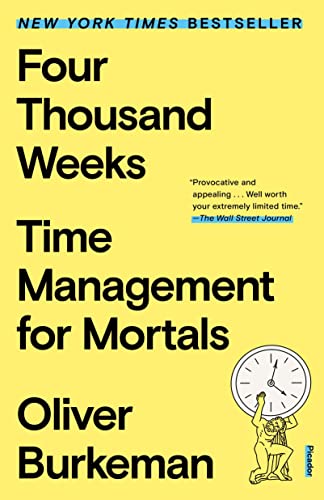
Four Thousand Weeks is a 2021 non-fiction book by English author Oliver Burkeman, built on the unsettling premise that the average human lifespan amounts to roughly four thousand weeks — and that no productivity system will ever change that. A New York Times bestseller, it earns attention by replacing the usual hustle-harder advice with a philosophical case for embracing finitude rather than racing against it.
LuvemBooks Verdict
Best for
Readers drawn to the intersection of philosophy and everyday life — particularly those who feel chronically overwhelmed by productivity culture and are open to a Heidegger-inflected argument that accepting life's finitude, rather than hacking it, is the path to meaning.
Worth it if
Worth reading if you are tired of conventional time-management advice and want a genuinely counter-intuitive, philosophically grounded case for why doing less — and accepting you never will do it all — might be the most honest response to a short human life.
Skip if
Skip it if you are looking for concrete, step-by-step productivity techniques such as task-batching or inbox-management systems, as Burkeman's tools are primarily attitudinal and the sustained engagement with Heideggerian finitude will frustrate readers with no appetite for continental philosophy.
What readers & critics say
The Guardian called the book "perfectly pitched somewhere between practical self-help book and philosophical quest," noting that Burkeman works toward the truth that time will almost never be one's own to spend efficiently. The Wall Street Journal, as quoted on the publisher's page at us.macmillan.com, described it as "provocative and appealing… well worth your extremely limited time," and the book landed on the New York Times Best Seller list.
“Perfectly pitched somewhere between practical self-help book and philosophical quest — Burkeman works toward the truth that most of the secret lay in embracing life's limits.”
— The GuardianAsk LuvemBooks
Was this helpful?
- Is it worth reading?
- For readers open to a philosophical reorientation rather than a new scheduling system, Four Thousand Weeks delivers something rare in the productivity genre: a genuinely counter-intuitive argument, grounded in thinkers from Heidegger to the Stoics, that challenges the very premise of time-management culture. Critics described it as 'perfectly pitched somewhere between practical self-help book and philosophical quest,' and Time magazine praised its 'levity and gentle wisdom.' The key caveat is audience fit — readers expecting actionable checklists or step-by-step techniques will find its tools primarily attitudinal and philosophical rather than procedural.
- Similar books
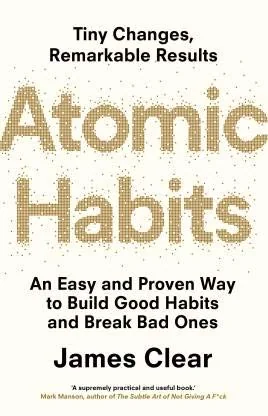
- Readers drawn to Four Thousand Weeks tend to gravitate toward books that interrogate productivity culture or question the modern relationship with time and attention. Jenny Odell's How to Do Nothing and Carl Honoré's In Praise of Slowness share Burkeman's scepticism of optimisation culture. For the philosophical underpinning, Ernest Becker's The Denial of Death explores mortality and meaning with comparable depth. Greg McKeown's Essentialism offers a more structured approach to doing less but more meaningfully. On the lighter, more actionable end of the spectrum, James Clear's Atomic Habits is a natural companion for readers who want practical habit-building alongside Burkeman's philosophical reframe — and it's available in the LuvemBooks catalogue.
- Who should read this?
- Four Thousand Weeks is best suited to adult readers who feel the pressure of modern overload and are open to a philosophical rather than procedural response to it. It will particularly resonate with those already drawn to thinkers like Heidegger, the Stoics, or writers who sit at the intersection of psychology and philosophy. Readers who want concrete scheduling systems, inbox-management tactics, or task-batching frameworks will need to look elsewhere — the book's tools are attitudinal and designed to shift how readers think about time, not hand them a fresh productivity protocol.
- About Oliver Burkeman
- Oliver Burkeman is a British author and journalist, formerly writing the weekly column This Column Will Change Your Life for the newspaper The Guardian.
- What are the main themes?
- The book's central theme is finitude — the confrontation with the fact that human time is radically limited and that no productivity system changes that constraint. From this foundation, Burkeman develops several related ideas: the efficiency trap (productivity gains attract new demands, producing no lasting sense of sufficiency); the joy of missing out (choosing what to forgo is what gives choices their meaning); and a historical critique of how modernity transformed time from an organic, task-oriented rhythm into a commodity to be optimised. Heidegger's concept of finitude runs through the book, framing limitation not as cause for despair but as the source of meaning itself.
- How was it received?
- Four Thousand Weeks received widespread acclaim across major outlets. Time magazine included it in its '100 Must-Read Books of 2021,' describing it as 'filled with levity and gentle wisdom' and crediting it with helping readers 'shift focus and values to encourage us to make the most of our time alive.' The Wall Street Journal called it 'provocative and appealing… well worth your extremely limited time,' and critics broadly praised it as 'perfectly pitched somewhere between practical self-help book and philosophical quest.' It also appeared in NPR, The Guardian, and The Atlantic, and became a New York Times bestseller.
- Is it practical or philosophical?
- Four Thousand Weeks sits firmly on the philosophical end of the productivity spectrum. Burkeman's tools are attitudinal rather than procedural — the book is designed to shift how readers think about time, not supply them with a fresh scheduling system or checklist. Critics noted it is 'perfectly pitched somewhere between practical self-help book and philosophical quest,' but readers should expect the balance to tilt toward the philosophical: Burkeman draws on Heidegger, the Stoics, and a history of time itself rather than offering inbox-management tactics or task-batching frameworks.
Summarize this book
Follow up
Synthesized from verified book data & published reviews · How we review
What would you like to know about Four Thousand Weeks?
Answers come from our editorial notes on this book. If we haven't covered something, we'll say so.
Readers often ask
Our Review
What the Book Actually Is
The Argument, Step by Step
Why It Stands Apart From Its Genre

How Critics and Readers Received It
Who It Is For — and Where It Asks Most of the Reader
Sources & Further Reading
The key facts and claims in this review are grounded in the retrieved, verified sources listed below.
- Cited in this review
- 1
en.wikipedia.org
- 2
- Further reading
- 3
Oliver Burkeman, LuvemBooks
- 4
oliverburkeman.com
- 5
accidentallyretired.com
- 6
fromthegreennotebook.com
- 7
- 8
- 9
us.pigletinbed.com
- 10
- 11
graceful.substack.com
- 12
schuetzler.net
- 13
mattswain.com
- 14
- 15
us.macmillan.com
Age & Reading Level
Recommended age
Adult
who it suits
Skip if you're looking for concrete, step-by-step productivity techniques rather than a philosophical reorientation.
Reader reviews
Be one of the first readers to answer.
Read it? Was it right for you?
Books like Four Thousand Weeks
Curated picks for readers who enjoyed Four Thousand Weeks, with our reasoning for each match.

If you liked Four Thousand Weeks