8 min read
4.4
· 58,973 Amazon ratingsShare This Review

Our review
And Then There Were None
And Then There Were None by Agatha Christie Review: The Bestselling Crime Novel of All Time
And Then There Were None by Agatha Christie follows ten strangers lured to an isolated island, where they are killed one by one according to a sinister nursery rhyme — a premise Christie herself called her most difficult to construct. With over 100 million copies sold worldwide, it remains the bestselling crime novel ever written.


 Tap to enlarge
LuvemBooks Verdict
Best for
Readers drawn to classic crime fiction who want a self-contained, psychologically intense mystery — whether they are new to Christie or returning to her most structurally daring standalone novel.
Worth it if
Worth reading if you enjoy tightly plotted, closed-circle mysteries in which every character is both suspect and potential victim, and where questions of guilt, justice, and moral culpability outlast the puzzle itself.
Skip if
Skip it if you prefer the lighter, detective-led comfort of Christie's Poirot or Marple series, or if the novel's unrelenting darkness — a body count that eliminates every character — is not the kind of tension you seek from crime fiction.
What readers & critics say
Kirkus Reviews, in its original 1939 notice, called it "a honey" and praised its "grand suspense" and "unique trick, expertly handled." Britannica records Christie herself saying no critic understood better than she did how difficult the book had been to write — and that she was more pleased with it than anyone.
“Grand suspense, a unique trick, expertly handled.”
— Kirkus ReviewsPreview the book

Ask LuvemBooks
Was this helpful?
- Is it worth reading?
- For anyone with even a passing interest in crime fiction, And Then There Were None is essential reading — critics called it 'the most baffling mystery Agatha Christie has ever written,' and a 2015 global vote named it the World's Favourite Christie. The novel works on two levels simultaneously: as a near-perfect puzzle that has rarely been equalled in the genre, and as a morally serious examination of guilt, warped justice, and psychological unravelling. The one caveat is tone — readers expecting the comparatively lighter, detective-led pleasures of the Poirot or Marple novels will find this considerably darker and more unsparing.
- Similar books
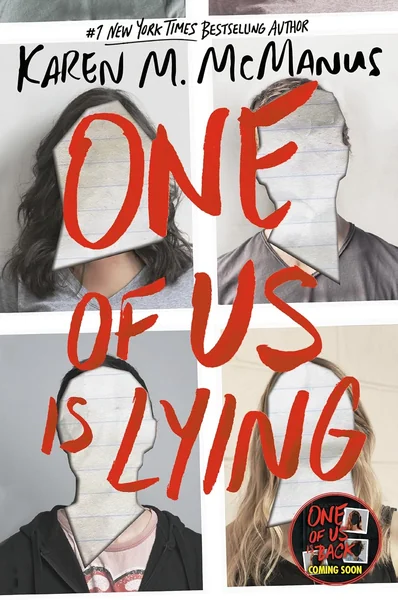
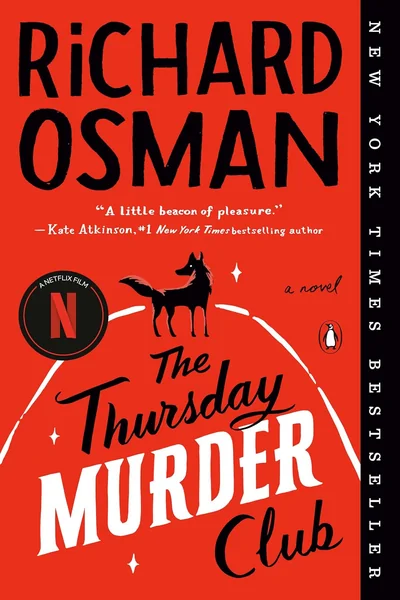
- Readers drawn to the island-isolation premise and the 'who among us is the killer?' suspense of And Then There Were None will find strong echoes in several of the curated titles below. Lucy Foley's The Guest List transplants the premise to a remote Irish island wedding with a modern psychological-thriller sensibility. Karen M. McManus's One of Us Is Lying brings a contemporary YA energy to the 'suspects among us' setup — five students enter detention and only four leave alive. Richard Osman's The Thursday Murder Club offers a lighter, more comedic take on amateur detection, while Anthony Horowitz's Magpie Murders pays explicit homage to the Golden Age tradition Christie defined. Agatha Christie's own Murder on the Orient Express is the natural companion read for those who want to stay in her universe.
- Who should read this?
- And Then There Were None is ideal for any reader who enjoys tightly constructed mystery plots with genuine moral and psychological weight — it is recommended for readers seventeen and older, in keeping with its dark treatment of guilt, death, and warped justice. It is an outstanding entry point for anyone curious about the Golden Age of Detective Fiction, and its self-contained structure means no prior Christie knowledge is required. Readers already familiar with Christie's Poirot and Marple novels will find this a markedly different, more unsettling register of her work. Collectors and gift-givers may find this 2019 HarperCollins hardcover edition particularly appealing as a presentation object.
- About Agatha Christie
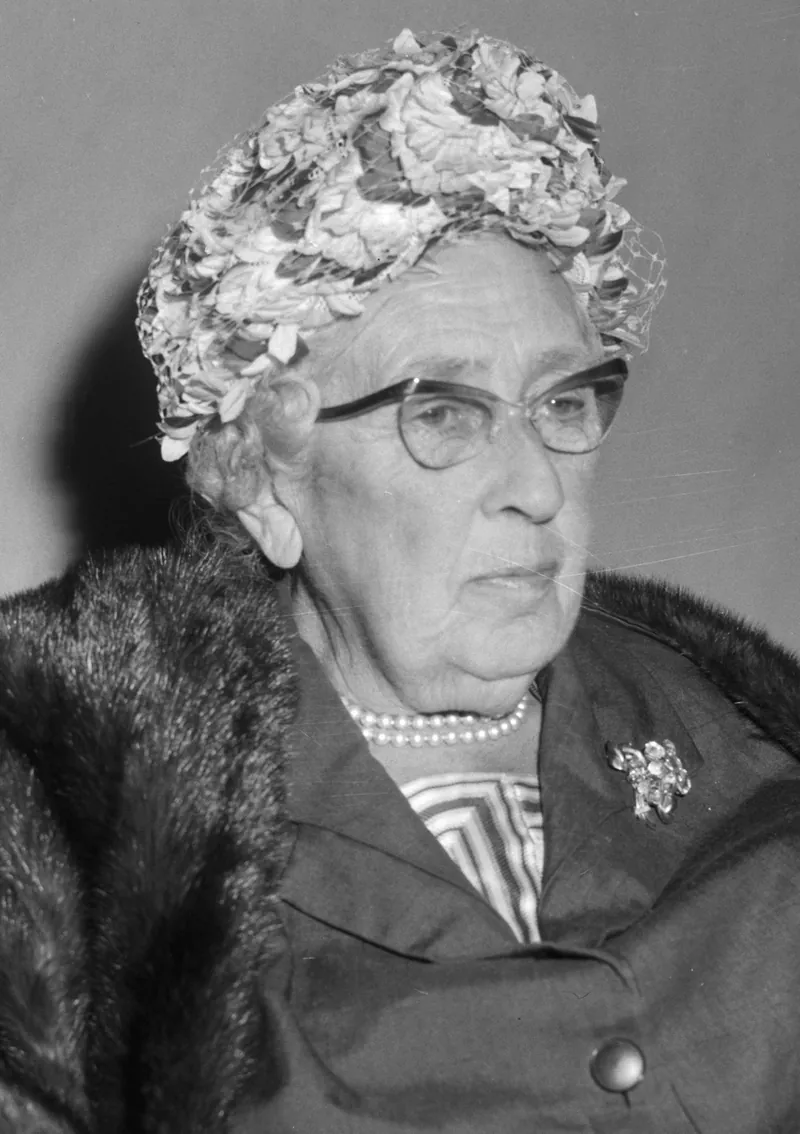
- Dame Agatha Mary Clarissa Mallowan, Lady Mallowan — usually known by her first married name, Agatha Christie — was an English author known for her 66 detective novels and 14 short-story collections, particularly those revolving around fictional detectives Hercule Poirot, Tommy and Tuppence, and Miss Marple.
- Tell me about the adaptations
- And Then There Were None has an extraordinarily rich adaptation history across multiple media. Christie herself adapted it for the stage, first performed in 1943 with an altered ending; a 2005 stage version by screenwriter Kevin Elyot restored the novel's original conclusion. A 2009 graphic novel and a 2010 BBC Radio 4 full-cast dramatisation followed. Its cultural reach also extends to parody: the 1976 film Murder by Death and a 2010 Family Guy episode both reflect how thoroughly the story has permeated popular culture.
- What are the book's main themes?
- Justice and morality sit at the centre of And Then There Were None. Judge Wargrave is consumed by a warped vision of justice — he believes no crime can be permanently concealed, yet the crimes he commits on the island are far graver than those of the guests he condemns. That tension between the letter of justice and its spirit gives the novel a moral depth that outlasts its puzzle mechanics. The characters' gradual psychological unravelling — as they suspect one another and are forced to confront their own culpability — adds a layer of moral drama to what might otherwise be a pure exercise in plotting.
- What makes this a 'locked room' mystery?
- And Then There Were None is regarded as a landmark of the 'locked room' mystery subgenre — stories in which a crime occurs in a setting from which no one can escape or enter. Here, the island off the Devon coast is cut off by weather and sea, making rescue or escape impossible once the killings begin. That physical isolation transforms the island into both a trap and a puzzle box: the murderer must be among the ten guests, yet every guest is a suspect and every guest ultimately dies. Christie's structural solution — concealing the killer's identity across a plot in which every character is eliminated — is the achievement that critics and readers have found so extraordinary.
- What edition is this review based on?
- The review is based on the HarperCollins special hardcover edition published on October 31, 2019, carrying customer age guidance of seventeen and older. The review notes that this edition's primary value for readers already familiar with the novel is as a collectible or gift object, since the verified facts do not indicate supplementary critical apparatus such as an introduction, annotations, or scholarly notes. Readers seeking contextual framing of Christie's life or the novel's composition history are advised to seek that material elsewhere.
Summarize this book
Follow up
Synthesized from verified book data & published reviews · How we review
What would you like to know about And Then There Were None?
Answers come from our editorial notes on this book. If we haven't covered something, we'll say so.
Readers often ask
Our Review
The Setup: Ten Strangers, One Island, No Escape
A "Locked Room" Structure That Changed the Genre
Themes of Justice and Moral Reckoning
Reception and Cultural Footprint
Who This Edition Is For
Sources & Further Reading
The key facts and claims in this review are grounded in the retrieved, verified sources listed below.
- Cited in this review
- 1
Open Library
- 2
bookbrowse.com
- 3
agathachristie.com
- Further reading
- 4
Agatha Christie, Wikipedia
- 5
Age & Reading Level
Recommended age
Ages 17+
Reading level
Adult
Heat level
No sex scenes · no sexual content
Tropes
From how readers and romance sites describe it, not our own reading.
3 content notes · who it suits
Content to know about
Best for: Ages 17+ — dark treatment of guilt, death, and a body count that eliminates every character makes this unsuitable for younger readers.
Skip if You want the lighter, detective-led comfort of Christie's Poirot or Miss Marple novels.
Reader reviews
Be one of the first readers to answer.
Read it? Was it right for you?
Books like And Then There Were None
Curated picks for readers who enjoyed And Then There Were None, with our reasoning for each match.

If you liked And Then There Were None