BOOKS
Published

Read Time

8 min read

Curated & edited by

LuvemBooks Editorial

How we create our reviews →
Share This Review

Our review

Jennette McCurdy 2-Book Collection Set: Half His Age & I'm Glad My Mom Died Review: A Powerful Pairing of Raw, Unflinching Voices

This paperback set pairs Jennette McCurdy's bestselling memoir I'm Glad My Mom Died with her debut novel Half His Age (Ballantine Books, January 2026), collecting two works united by themes of maternal damage, female rage, and the long shadow of generational trauma. Together they form a rare author retrospective that traces McCurdy's evolution from memoirist to novelist — and that arc alone makes the collection worth the attention.
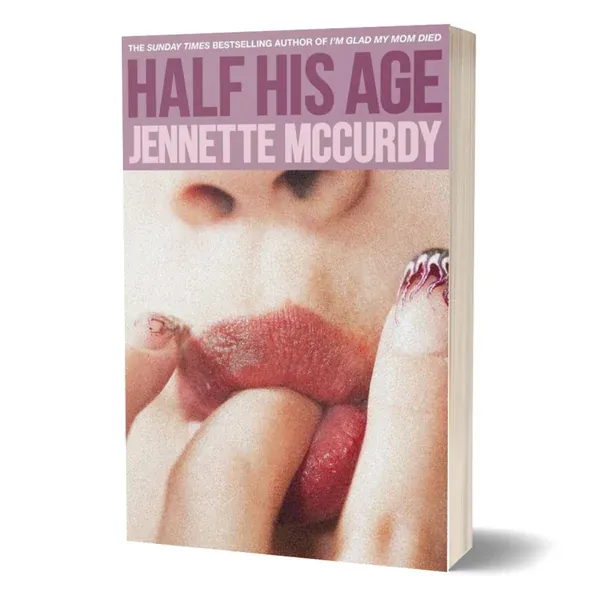
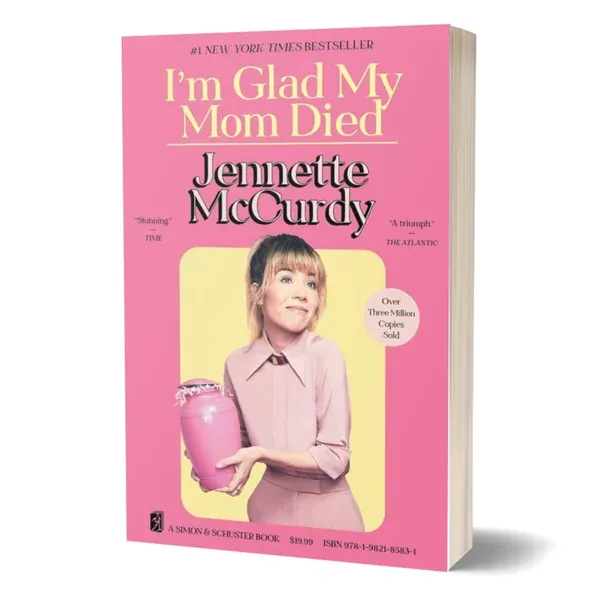
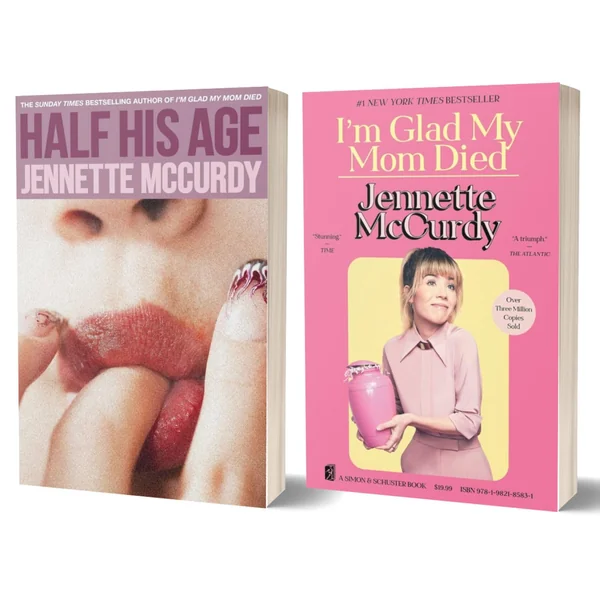
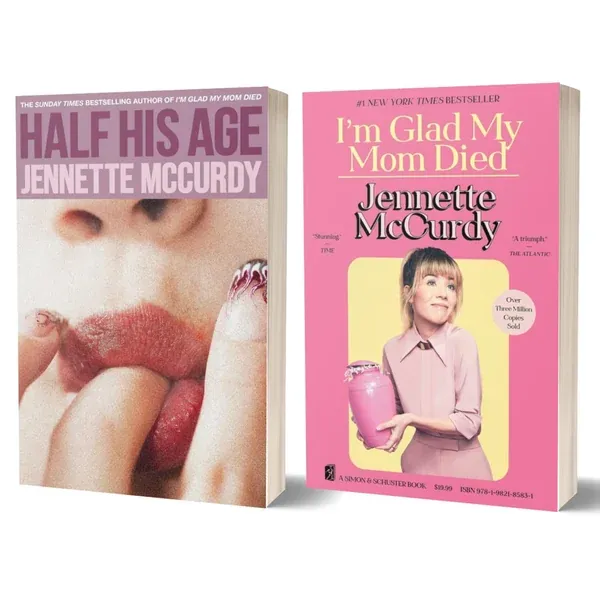
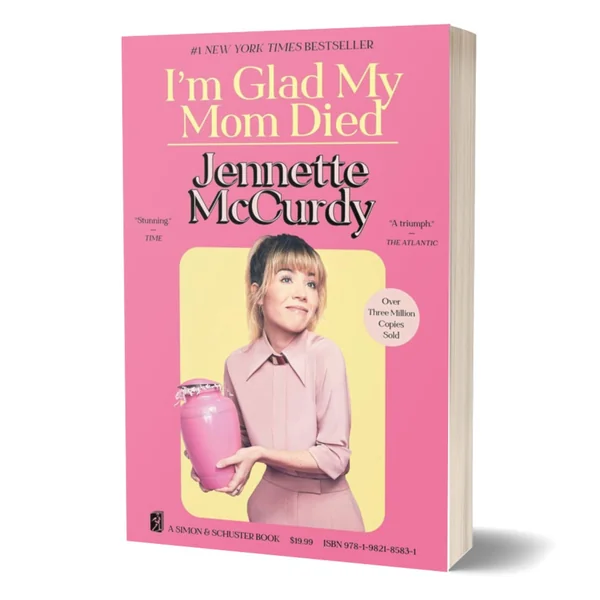
Front cover featuring close-up portrait of lips and fingers against neutral background with author name and title text.Front cover of memoir featuring author portrait holding pink object against yellow and pink background.Tap to enlarge

LuvemBooks Verdict

Best for

Readers already invested in Jennette McCurdy's voice who want to trace her authorial sensibility across both her landmark memoir and her fiction debut in a single, deliberate deep-dive.

Worth it if

Worth reading if you want to follow McCurdy's unflinching, darkly comic examination of trauma, power, and mother-daughter dysfunction from her acclaimed memoir into her debut novel — and are comfortable sitting with moral discomfort that is never tidied away.

Skip if

Skip it if you are new to McCurdy's work and hoping for a gentle entry point, are sensitive to frank depictions of sexual abuse, eating disorders, and grooming, or want Half His Age to resolve its moral tensions in a conventional way.

The Guardian described I'm Glad My Mom Died as having "lit a touchpaper to a nascent cultural conversation" and praised Half His Age for solid one-liners and McCurdy's dark comic register, while noting its unflinching exploration of blurred parent-child boundaries. The New York Times called the memoir "a staggering thing… somehow both haunting, tender and funny," and Elle declared that any doubt about whether McCurdy's narrative command would translate to fiction should "henceforth be put to rest."

“McCurdy continues to shake open a Pandora's box, with solid one-liners that feel straight out of a sitcom writers' room.”

— The Guardian

“I'm Glad My Mom Died is a staggering thing, a cleareyed account… somehow both haunting, tender and funny.”

— The New York Times

“A thorny examination of power, lust, shame and rage from a writer able to capture the darkest parts of human nature with unflinching honesty and devastating humor.”

— Los Angeles Times
Sources: The Guardian, The New York Times, Elle

Age & Reading Level

Recommended age

Adult

Reading level

Adult

Content to know about

sexual abuse (memoir and fiction)
detailed eating disorder content
grooming and underage sexual relationship
parental neglect and narcissistic abuse
graphic sexual content

Best for: Adults 18+ — both books deal frankly with sexual abuse, grooming, eating disorders, and parental neglect; the collection carries an 18-and-up rating.

Skip if you're looking for emotionally resolved storytelling or lighter fare that doesn't dwell on abuse, trauma, and moral ambiguity.

In This Review
  • What Works & What Doesn't
  • What the Collection Contains
  • The Memoir's Place in the Cultural Conversation
  • The Novel's Thematic and Tonal Ambitions
  • Strengths Across Both Works
  • Limitations and Who May Struggle

What Works & What Doesn't

What Works
  • Pairs McCurdy's landmark bestselling memoir with her debut novel, giving readers the full arc of her literary voice in one volume
  • The memoir received major critical acclaim, with the New York Times calling it 'a staggering thing' — haunting, tender, and funny
  • Half His Age debuted at number two on the Publishers Weekly bestseller lists with over 30,000 units sold in its first week, signalling broad readership
  • McCurdy's darkly comic register — noted by The Guardian for one-liners that feel drawn from a sitcom writers' room — carries across both works
  • Both books share a consistent refusal to moralize, presenting difficult, uncomfortable subject matter without softening or tidy resolution
What Doesn't
  • Critical coverage critic Fran Hoepfner noted that Half His Age can rely on repetitive sex scenes and shock value, potentially undercutting its dramatic range
  • The collection is rated 18 and up and deals unflinchingly with sexual abuse, eating disorders, grooming, and parental neglect — not suited to readers seeking lighter fare
  • Readers new to McCurdy's work may find the pairing an intense introduction, as neither book offers a gentle on-ramp to its subject matter
  • Those hoping Half His Age resolves its moral tensions conventionally will find McCurdy has deliberately designed the discomfort to remain unresolved
A two-book collection that earns its place on the shelf by proving Jennette McCurdy's debut novel and breakthrough memoir are stronger read side by side than apart.

What the Collection Contains

The set brings together two distinct works. I'm Glad My Mom Died is a memoir, first published in 2022, in which McCurdy recounts her childhood as a Nickelodeon child actor raised by her mother Debra, whom McCurdy describes as having narcissistic personality disorder. The book covers sexual abuse McCurdy suffered, her mother's role in the development of her eating disorder, and the broader realities of growing up inside a system of generational trauma. Half His Age, published by Ballantine Books on January 20, 2026, is McCurdy's fiction debut: a novel following Waldo, a 17-year-old high school senior in Anchorage, Alaska, who becomes involved in a sexual relationship with her creative writing teacher, Mr. Korgy. McCurdy signed both books under a two-book, seven-figure deal with Ballantine, reported by Publishers Weekly in 2022.
“play-acts through sexual encounters and disassociates at the school disco”

The Memoir's Place in the Cultural Conversation

When I'm Glad My Mom Died arrived in 2022, its impact was immediate and outsized. The Guardian described it as having "lit a touchpaper to a nascent cultural conversation," introducing Debra's narcissistic personality disorder to a public increasingly ready to discuss adult child and parent estrangement. Writing in critical coverage, the memoir was called "a staggering thing, a cleareyed account of her childhood as a Nickelodeon TV star with an abusive stage mom that is somehow both haunting, tender and funny." The book was a bestseller — a significant step for a former child performer who had been, as The Guardian put it, "the funny one" on Nickelodeon. That cultural weight gives the collection its gravity: the memoir is not simply a companion piece but the foundation on which McCurdy's entire literary identity rests.
Front cover featuring close-up portrait of lips and fingers against neutral background with author name and title text.

The Novel's Thematic and Tonal Ambitions

Half His Age picks up McCurdy's central preoccupations in fictional form. McCurdy has described it as an exploration of female rage, power, and desire, and has said in interviews that an age-gap relationship she experienced at 18 served as a "jumping-off point," though she has been explicit that the novel is not autobiographical. Waldo is rendered as a young woman whose dissociation and emotional detachment — she "play-acts through sexual encounters and disassociates at the school disco," per The Guardian — are shown to be the direct inheritance of her mother's instability. The mother-daughter dynamic shifts, as The Guardian notes, "uneasily between friends, siblings and caretaker." McCurdy has said she deliberately avoided a moralistic framing, having Waldo initiate the relationship and depicting her as "aggressive" and "bold," and she revised early drafts in which Mr. Korgy read as "too villainous" in order to preserve believability. The discomfort readers experience is, by McCurdy's own account, a designed effect rather than an oversight.

Strengths Across Both Works

The Guardian's review of Half His Age identifies genuine craft in McCurdy's dark comic register, noting "solid one-liners that feel straight out of a sitcom writers' room" alongside a final sequence that "tone-shifts effortlessly from body horror to French farce." The novel's depiction of Waldo's coping mechanisms — an online shopping compulsion rendered in staccato prose — channels the emotional emptiness at the book's core with precision. Across both works, McCurdy's willingness to resist tidying or moralizing is a consistent strength. She has described unprocessed anger from her own past as an emotional driver behind Half His Age, and that rawness distinguishes both books from more sanitized treatments of similar subject matter. Half His Age debuted at number two on the Publishers Weekly bestseller lists, selling 30,761 units in its first week, confirming that the readership built by the memoir followed McCurdy into fiction.
Front cover of memoir featuring author portrait holding pink object against yellow and pink background.

Limitations and Who May Struggle

The collection is rated for readers 18 and up, a designation that signals the frank and at times graphic nature of the material in both books. Vulture critic Fran Hoepfner, as noted in Wikipedia's reception summary, wrote that while McCurdy gives Waldo "depth and contradiction," the novel can fall back on repetitive sex scenes and shock value — a critique that suggests readers seeking varied dramatic tension across Half His Age's full arc may find the pacing uneven. The set is designed for readers already invested in McCurdy's voice and worldview; those coming cold to either title hoping for a gentler entry point will find neither book accommodating. The pairing works best as a deliberate deep-dive into a single authorial sensibility rather than as a casual introduction to either genre.

Sources & Further Reading

The key facts and claims in this review are grounded in the retrieved, verified sources listed below.

  1. Cited in this review
  2. 1

    en.wikipedia.org

  3. 2
  4. Further reading
  5. 3

    Jennette McCurdy, Wikipedia

  6. 4
  7. 5