8 min read
4.6
· 33 Amazon ratingsShare This Review

Our review
Inside Out
Inside Out: A Memoir of Entering by Alexandra Stein Review: A Gripping, Unflinching Cult Memoir
Alexandra Stein's Inside Out is a memoir documenting her recruitment into, life inside, and eventual escape from a secretive Minneapolis political cult known as the O — a rare firsthand account praised by major voices in both literary and academic circles for its passion, insight, and unflinching honesty.
LuvemBooks Verdict
Best for
Readers drawn to firsthand accounts of cult life and coercive control who want a memoir that operates simultaneously as personal testimony and analytical insight into how educated people get drawn into extremist political organizations.
Worth it if
You're interested in the psychology of radicalization, cult dynamics, or the history of the American far left — especially if you value raw, immersive narrative over detached academic treatment.
Skip if
You're looking for a straightforward sociological or political history rather than a deeply personal, inside-out testimony — the immersive structure demands emotional as well as intellectual engagement.
What readers & critics say
Alexandrastein.com reproduces praise from the Midwest Book Review (February 2003), which called it "the true, compelling, and personal testimony of Alexandra Stein, an intelligent, sensible woman who was lured into a secretive and exploitative political cult called the O," while the same page carries Christian Wolmar's New Statesman assessment (January 2003) that it is "that rare achievement — a book which is so unputdownable that those who buy it are likely to become addicts." Extremepolitics.blogspot.com noted that the book "does not only describe the inner workings of the cult, but also delves into Stein's personal experience, allowing the reader to understand how an intelligent and perceptive young woman could come to surrender herself to a political organization so completely."
Sources: alexandrastein.com, extremepolitics.blogspot.comAsk LuvemBooks
Was this helpful?
- Is it worth reading?
- For readers interested in cult psychology, political radicalization, or the sociology of coercive groups, Inside Out stands as one of the more substantive firsthand accounts available. The endorsements gathered around it are notably consistent and come from genuinely different registers: Nobel laureate Doris Lessing praised it as 'invaluable… honest… intelligent,' while Dennis Tourish of Aberdeen University — a specialist in organizational communication — praised it for unraveling 'with passion, insight, and wit' how the O operated, and Christian Wolmar in the New Statesman called it 'that rare achievement — a book which is so unputdownable that those who buy it are likely to become addicts.' The key caveat is structural: those expecting a detached sociological study rather than immersive personal testimony may find the approach demanding, as Stein renders the disorientation and opacity of cult life from the inside.
- Similar books
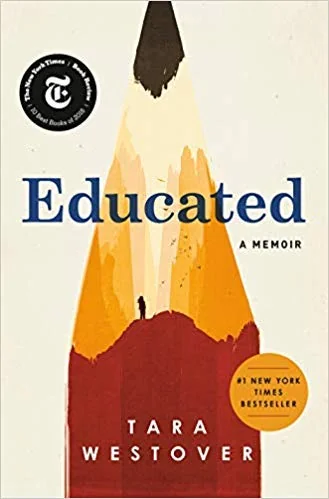
- Readers drawn to Inside Out will find natural companions in other memoirs of high-control environments and coercive systems. Tara Westover's Educated traces a similarly harrowing journey of psychological entrapment and hard-won self-determination, making it one of the closest memoir parallels in terms of emotional register. Leah Remini's Troublemaker: Surviving Hollywood and Scientology offers another firsthand insider account of a high-control organization with strong reader appeal, while Margaret Singer's Cults in Our Midst provides the more analytical, sociological perspective that complements Stein's testimony-driven approach. For readers drawn to the memoir's raw excavation of a difficult upbringing and community, Douglas Stuart's Shuggie Bain — though fiction — shares an intensity of immersive, unsparing witness.
- Who should read this?
- Inside Out is positioned squarely for readers interested in memoir, cult psychology, political history, and the sociology of coercive groups. It will resonate particularly strongly with those drawn to accounts of radicalization and recovery, or to the broader question of how educated, thoughtful people can be drawn into exploitative organizations. Readers with some familiarity with the history of the American far left in the 1970s and 1980s will gain the most from its political-historical texture, though the core human story of manipulation and escape carries independently. It has been catalogued by libraries and booksellers under biography, political science, and social sciences — a reflection of its genuine cross-genre appeal.
- What are the main themes?
- Inside Out explores psychological manipulation, communal control, and the mechanisms by which an ideologically framed organization can exploit its members' beliefs and identities. A central thread is the question of how educated, thoughtful people are seduced into — and held within — exploitative groups, a theme Stein traces through her own experience of entry into the O, the opaque internal life of the cult, and the wrenching process of exit. The memoir also engages with questions of political identity and the history of the American far left in the 1970s and 1980s, grounding individual psychology in a specific historical and ideological milieu. Dennis Tourish of Aberdeen University praised the book for unraveling, 'with passion, insight, and wit,' the mystery of how the O operated — capturing the dual register of personal testimony and analytical inquiry that defines the book's approach.
- How was it received by critics?
- The critical reception around Inside Out is strikingly consistent and comes from unusually varied quarters. The Midwest Book Review (February 2003) described it as 'the true, compelling, and personal testimony of Alexandra Stein, an intelligent, sensible woman who was lured into a secretive and exploitative political cult.' Christian Wolmar, writing in the New Statesman (January 6, 2003), called it 'that rare achievement — a book which is so unputdownable that those who buy it are likely to become addicts, resenting other intrusions on their time until it is finished.' Nobel laureate Doris Lessing is quoted calling it 'invaluable… honest… intelligent,' and Dennis Tourish of Aberdeen University — a specialist in organizational communication — praised it for unraveling 'with passion, insight, and wit' the mystery of how the O operated. The combination of a major literary figure and an academic specialist pointing to the same book signals that it succeeds on multiple levels simultaneously.
- What's the historical context?
- Inside Out is rooted in the specific milieu of the American far left in the 1970s and 1980s, a period that generated a number of fringe and extremist organizations on the margins of broader left-wing movements. The O is described as a group not unlike other extremist organizations that emerged from the U.S. Left in the 1970s. Stein's own background adds another layer: born in Johannesburg, South Africa, her family left the country in the late 1950s in what she describes as a semi-voluntary exile from apartheid, a formative experience that shapes the political and moral sensibility she brings to the memoir. The book's 2002 original publication date means it predates much of the mainstream cultural conversation about cult psychology and political radicalization, giving it what the review calls an 'early-witness quality.'
Summarize this book
Follow up
Synthesized from verified book data & published reviews · How we review
What would you like to know about Inside Out?
Answers come from our editorial notes on this book. If we haven't covered something, we'll say so.
Readers often ask
Our Review
This review covers the book's content, premise and published critical reception, not a first-hand reading.
What the Book Actually Is
Context and Significance
Strengths: Voice, Honesty, and Intellectual Engagement
What Makes It Challenging
Who This Book Is For
Sources & Further Reading
The key facts and claims in this review are grounded in the retrieved, verified sources listed below.
- Cited in this review
- 1
- 2
- Further reading
- 3
- 4
Age & Reading Level
Recommended age
Adult
3 content notes · who it suits
Content to know about
Best for: Adults — the memoir's immersive account of psychological manipulation, coercive communal control, and political extremism is best suited to adult readers.
Skip if you're looking for a detached sociological study of cult psychology rather than immersive personal testimony.
Reader reviews
Be one of the first readers to answer.
Read it? Was it right for you?
Books like Inside Out
Curated picks for readers who enjoyed Inside Out, with our reasoning for each match.
If you liked Inside Out