Skip to content
Reviewed

Read Time

7 min read

Our age bandAdult
Reader rating
3.8 · 919 Amazon ratings, as of Nov 2026
reader ratings, not a LuvemBooks score
Curated & edited by

LuvemBooks Editorial

How we create our reviews →
Share This Review
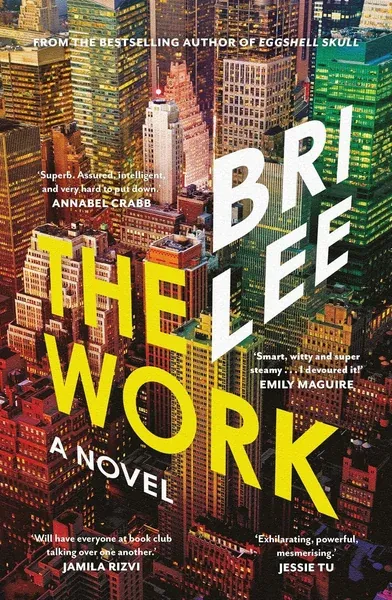
The Work by Bri Lee front cover

Our review

The Work

The Work Review: Torn Between Satire and Romance (Bri Lee)

Bri Lee's debut novel The Work follows Manhattan gallery owner Lally and Sydney antiquities appraiser Pat as their long-distance romance collides with art-world ambition. The Guardian found its satire half-hearted; Readings praised it as astonishing.

Our age band: Adulton-page sex scenes · historical allegations of coercion by an artist

LuvemBooks Verdict

Best for

Readers after a fast, explicit, character-driven long-distance love story set among galleries and auction rooms, who will treat the art-world commentary as flavour rather than the main event.

Worth it if

Worth reading if you want an easy, absorbing page-turner that nudges you to think about money, class and consent without demanding a heavy novel of ideas.

Skip if

Skip it if you want a sharp satire with art treated as backdrop, or if you tire of frequent explicit sex that ArtsHub found laboured.

Where reviewers agree and split

Readers rate it 3.8 on Amazon. The reviews we read that discuss it in depth split on some points:

  • Negative

    The Guardian · Press review: torn between satire and romance, ultimately defanged and clunky

  • Mixed

    ArtsHub · Press review: clever but flawed debut; many ideas left unresolved

  • Mixed

    Sydney Morning Herald · Press review: ambitious but clunky; unclear if sly satire or earnest mess

  • Mixed · 3.5/5

    The Modern Muse · Magazine: impressive debut but emotionally unresolved and lacking nuance

  • Mixed

    Good Reading Magazine · Magazine: complex and smart but lacking satire; writing saves the narrative

  • Positive

    Dan Kaufman · Book blog: well-written and intelligent, capturing love's complexities perfectly

  • Positive

    Readings · Book blog: impressive exploration of art, power and love with real depth

  • Positive

    Books n Review · Book blog: riveting examination of art, desire and privilege with authentic characters

Only Dan Kaufman and Good Reading Magazine discuss its characters: both find the characters real and complex.

  • Characters

    2 find the characters real and complex

  • Themes

    2 admire its handling of power and class

  • Prose

    2 praise the writing

Characters

Praise

“The characters are so real, right down to their many, many flaws”

— Dan Kaufman · Book blog
Praise

“I found these two characters to be both unique and complex”

— Good Reading Magazine · Book blog

Themes

Praise

“She explores power dynamics, consent, complicity, and appreciation with grace and confidence.”

— Good Reading Magazine · Book blog
Praise

“I found Lee’s exploration of class really impressive”

— The Modern Muse · Book blog

Prose

Praise

“This book sings because it’s so well written”

— Dan Kaufman · Book blog
Praise

“Lee knows how to capture an audience with her writing.”

— The Modern Muse · Book blog
Overall verdicts are our summary of each review we read, from its headline, rating and conclusion. Topic counts use only words we can quote (3 reviews: 3 book blogs).

The press was cool to mixed: the Guardian found it defanged and clunky, and ArtsHub, the Sydney Morning Herald, The Modern Muse and Good Reading Magazine were mixed, Good Reading finding the satire lacking. Readings and two book blogs were warmer.

“One is a half hearted interrogation of capital and power and their influence on art”

— theguardian.com
Sources: The Guardian, ArtsHub, Good Reading Magazine, Sydney Morning Herald
3.8from 919 Amazon ratings, as of Nov 2026— reader ratings, not a LuvemBooks score

Ask LuvemBooks

Was this helpful?

Bri Lee's debut novel follows Manhattan gallery owner Lally and Sydney antiquities appraiser Pat through an explicit romance spanning two countries. It reads fast and absorbs, but the satire is the weak link, and reviewers split on whether the couple convince. The Work suits readers who want a sexy, character-led novel more than a sharp novel of ideas.
Is it worth reading?
For pace and absorption, yes: the Modern Muse blogger finished nearly 400 pages in a few sittings and found it left her wanting more after each chapter, and the Dan Kaufman blog says it simply works. The caveat is depth. The Guardian's reviewer found the interrogation unsatisfying, so it is worth reading as an engrossing romance with some ideas rather than as a probing satire.
Similar books
For another view of the art world with an Australian slant, Heather Rose's The Museum of Modern Love is the closest named match in our related picks, and Steve Martin's An Object of Beauty and Hannah Rothschild's The Improbability of Love also take on the art trade. None of these is in our catalogue yet, so we can't link them. If it's Bri Lee herself you want more of, her nonfiction Who Gets to Be Smart is the other book in the set, though it is a very different read.
Who should read this?
It suits readers who want a fast, sexual romance set in the art world, and who will take the commentary as flavour rather than the main event. It also fits book clubs looking for something that provokes some thought on class and consent without being heavy going.
What age is it for?
It is written for adults and best suited to readers 18 and over. Reviewers describe frequent, explicit sex scenes, and the plot turns on allegations of coercion and on a junior appraiser sleeping with a client. No source we found gives an official age rating.
What are the main themes?
Books n Review credits it with exploring power dynamics and consent, and The Modern Muse found the exploration of class impressive. ArtsHub's reviewer noted that questions such as diversity in art are raised but left unresolved. Reviewers differ on whether the book digs deep enough into these themes.
How is the writing?
Opinion is divided. The Dan Kaufman blog praises the writing and the seamless switching of perspective between Lally and Pat, while the Modern Muse blogger says Lee knows how to capture an audience. The Guardian found the prose cleanly written if clunky, and ArtsHub's reviewer felt it shows its research.
How does the ending land?
Reviewers split. The Guardian called it an authentic depiction of a modern relationship but felt it defangs any claim the novel had as a barbed skewering. The Modern Muse blog found it too unresolved, so readers who want a tidy close may be left wanting.
Summarize this book

Summarize this book

Lally, a thirtysomething American running a contemporary gallery in Manhattan, and Patrick (Pat), a late-20s junior appraiser from regional Queensland working at a Sydney antiquities firm, meet through work and conduct a romance across continents. Alongside the romance run two career plots: Lally books the controversial artist Chuck Farr despite old allegations of coercion from several male models, while Pat ends up in a precarious spot after sleeping with his first major client, a divorcee selling her former husband's assets. The novel alternates between the two perspectives.

Follow up

Who is Chuck Farr?
Is it a standalone?

Synthesized from verified book data & published reviews · How we review

Ask LuvemBooks

What would you like to know about The Work?

Answers come from our editorial notes on this book. If we haven't covered something, we'll say so.

Readers often ask

Our Review

We review the evidence: published critics, reader verdicts and BookTube reviews, gathered and weighed with AI assistance and edited by LuvemBooks, rather than one reader's first-hand take.
The most consistent praise for Bri Lee's debut novel is its readability: the Dan Kaufman book blog says it "just works," and Readings calls it sexy, complex and astonishing. The Guardian's reviewer, though, found it torn between a half-hearted look at money and power in the art world and a modern romance.
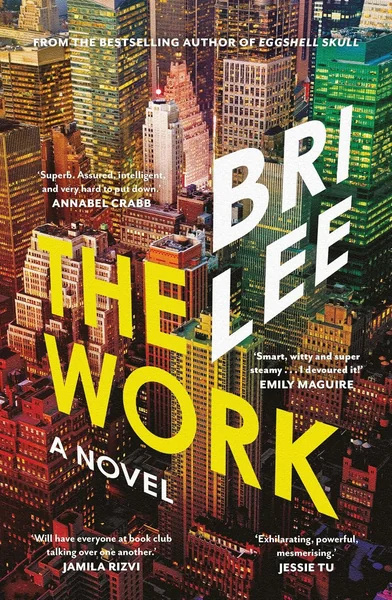
The Work by Bri Lee front cover

What is The Work about?

The Work alternates between two characters. Lally is a thirtysomething American who owns a contemporary gallery in Manhattan; Patrick, known as Pat, is a man in his late 20s from regional Queensland, working as a junior appraiser at a prestigious antiquities company in Sydney.
The two meet through work and trade flirty barbs, and their first meeting is at an art show in New York. After Pat returns home, the relationship has to survive an ocean between them while each chases a career.
It is a straight, long-distance, art-world romance, with sex described by several reviewers as frequent and explicit. Alongside it runs a career plot: Lally books the controversial artist Chuck Farr despite historical allegations of coercion from several male models, while Pat finds himself in a precarious position after sleeping with his first major client, a divorcee selling off her former husband's assets.

What did critics find in the art-world satire?

The Guardian's reviewer judged the interrogation of capital, power and art "half hearted," and found the book treats art as a backdrop rather than a subject. The same review argued that the ending, though an authentic depiction of a modern relationship, defangs any claim the novel had as a barbed skewering of money and power.
ArtsHub's reviewer reached a similar place from a gentler angle. The romantic plot keeps the reader interested, while the ideas around it often bog down the story, and issues such as diversity in art are raised and then left unresolved.
Readings and the Modern Muse blogger read the same material more warmly. Readings praised a front-row view into the mechanisms of the art world and the influence of money, while The Modern Muse found the treatment of class and of art against capitalism impressive and accessible rather than showy.

How do the romance and characters land?

On the central couple, the reviewers divide. The Dan Kaufman blogger found the characters real, flaws and all, and liked how the book shows the defensiveness and surrender of early love and hints at darker aspects ahead.
The Modern Muse reviewer was less convinced: she struggled to understand Lally and Pat as individuals or as a couple, felt their physical chemistry was most of the relationship, and rated the book 3.5 out of 5. She wanted more nuance and self-awareness about their morally grey choices, and found the ending too unresolved.
On the sex scenes, the verdicts split again. ArtsHub's reviewer found them laboured after each encounter, while Readings closed its review by praising them as excellent.

How does The Work read on the page?

Reviewers split on the prose. The Guardian's reviewer called it cleanly written if clunky, though also a romp aimed at giving the market what it wants, and found the handling of art limp.
The Dan Kaufman blogger singled out the seamless switching of perspective between Lally and Pat, and the Modern Muse blogger found it the kind of book that leaves you craving more after each chapter. That reviewer finished its nearly 400 pages in a few sittings.
ArtsHub's reviewer called it a provocative page-turner that moves between characters without lingering, while noting that it shows its research and is not quite as enjoyable as it could be. Lee's earlier books were nonfiction, including the acclaimed Eggshell Skull, and The Modern Muse read the novel as drawing on that knowledge.

Is The Work worth reading?

Weighing these reviews, the tension they keep circling is whether The Work is a novel of ideas or an escapist romance. Some reviewers wanted more bite from the satire; others enjoyed it as intelligent, easy reading that still provokes some thought.
That points the book towards readers who want a fast, sexual, character-driven love story set among galleries and auction rooms, and who will take the art-world commentary as flavour. Readings compares it to the truth-seeking novels of Donna Tartt, with an Australian accent, and calls it a good book-club pick.
It points away from readers hoping for a sharp satire of money and power, which is what the Guardian found missing. It also points away from anyone who needs the couple's emotional intimacy established early, or who finds frequent explicit sex tiring, as The Modern Muse did.
The paperback was published by Allen & Unwin in April 2024.

Sources & Further Reading

The key facts and claims in this review are grounded in the retrieved, verified sources listed below.

  1. Cited in this review
  2. 1
  3. 2
  4. Further reading
  5. 3
  6. 4

    themodernmusemagazine.com.au

  7. 5
  8. 6
  9. 7
  10. 8

    Good Reading Magazine

  11. 9

    Sydney Morning Herald

Age & Reading Level

Our age band

Adult

Our age band groups books for browsing; it isn't an age a review gave.

Heat level

Steamy · Publisher rates 3/5 spice; readers call it raunchy

From how readers describe it, not our own reading.

Content to know about

on-page sex scenes
historical allegations of coercion by an artist
a power imbalance between a junior appraiser and a client

Best for: Adults 18+ — explicit sex scenes and allegations of coercion

Skip if you want a sharp, biting satire of money and power or find frequent explicit sex tiring

From our readers

Reader reviews

Be one of the first readers to answer.

Read it? Was it right for you?

Discussion

Reader comments