9 min read
Share This Review
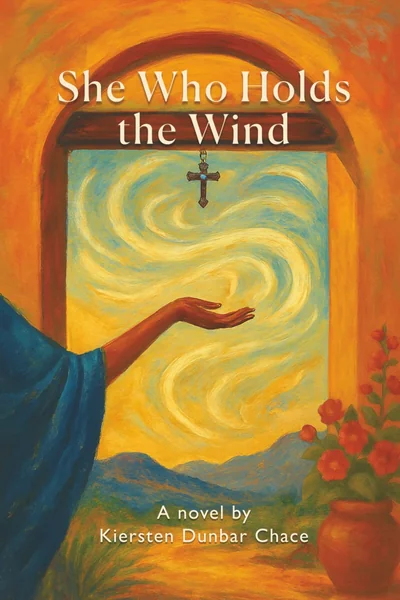
She Who Holds the Wind by Kiersten Dunbar Chace Review: A Debut Work from an Activist Filmmaker
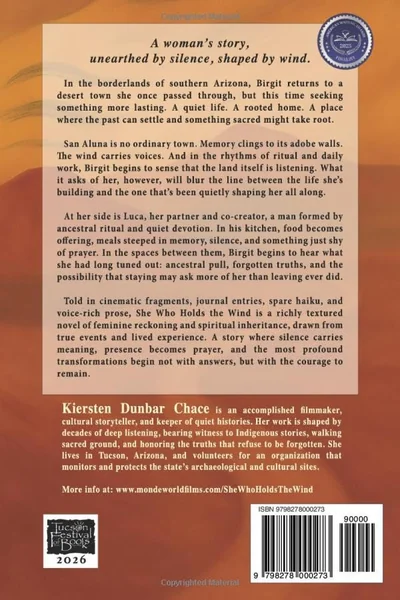
She Who Holds the Wind is a 362-page independently published book by Kiersten Dunbar Chace, a human rights activist and award-winning documentary filmmaker whose decades of work span South Africa, Indigenous Arizona history, and the African diaspora. This review is based on available publication records and background on the author from published sources, not hands-on reading.
 Tap to enlarge
LuvemBooks Verdict
Best for
Readers with a genuine interest in human rights, cultural archaeology, and underrepresented histories — particularly those connected to the African diaspora, Indigenous Southwestern heritage, and Saami American communities — who are drawn to author-driven work shaped by decades of documentary investigation and advocacy.
Worth it if
Worth pursuing if you are already engaged with documentary traditions surrounding the African diaspora or Indigenous history, or if an author's exceptional institutional credibility — 27 years of filmmaking, UN advocacy, and academic conference presence — is itself a compelling reason to follow a new body of work.
Skip if
Skip it for now if you rely on established critical reviews or substantial reader commentary before committing, or if independent distribution makes access through your library or preferred retail channel difficult.
Ask LuvemBooks
Was this helpful?
- Is it worth reading?
- For readers with an appetite for human rights advocacy, cultural archaeology, and the recovery of underrepresented histories, She Who Holds the Wind carries serious credentials. Chace's documentary work screened at over 70 universities, earned an Audience Choice award at the Africa World Documentary Film Festival in Bermuda, and was one of two films selected to present at the academic conference Migrating the Black Body: Visual Arts and the African Diaspora in Hanover, Germany in 2014 — institutional recognition that signals rigorous sourcing and scope. The honest caveat is that, as a late-2025 independent publication, no published critical reviews are yet available to assess the book's execution, so readers are making a decision based on Chace's track record rather than external critical consensus.
- Similar books
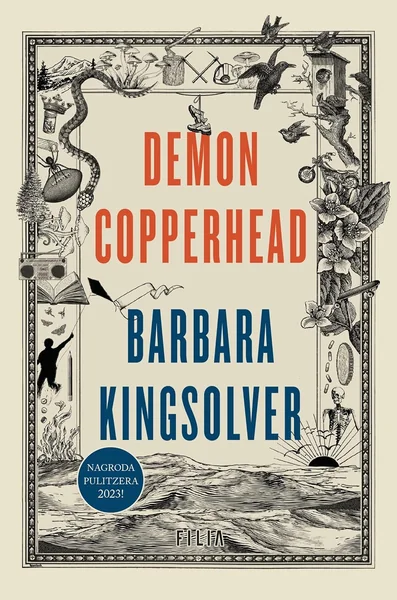
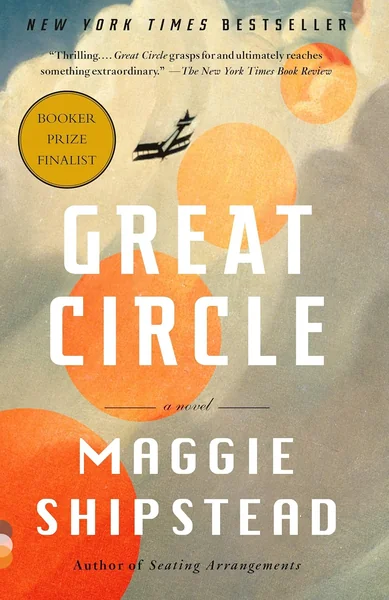
- Readers drawn to She Who Holds the Wind's blend of cultural history, place, and underrepresented communities may find kinship with several works on the LuvemBooks shelf. Wallace Stegner's Angle of Repose explores the American West through layered historical inquiry and a strong sense of landscape and inheritance. Maggie Shipstead's Great Circle follows a woman's life across continents and eras with the same attention to geography and marginalized experience that marks Chace's documentary work. Barbara Kingsolver's Demon Copperhead roots its narrative in a community whose history has been overlooked, while Olga Tokarczuk's Flights meditates on movement, diaspora, and human belonging in a fragmented, essayistic form that may appeal to readers comfortable with hybrid structures. Margaret Atwood's The Blind Assassin, with its intricate layering of story-within-story and recovered history, also resonates with the archival and investigative instincts Chace brings to her work.
- Who should read this?
- She Who Holds the Wind is positioned for readers with a genuine appetite for human rights, cultural archaeology, and the recovery of underrepresented histories — particularly those connected to African, African diasporic, and Indigenous Southwestern narratives. University readers, documentary enthusiasts, and those already engaged with the academic and advocacy traditions surrounding the African diaspora and Saami American communities will find the book particularly relevant. Given Chace's established presence in academic circles — with her work featured in conference proceedings and university curricula across more than 70 institutions — the book also carries strong appeal for scholars and practitioners in fields like visual anthropology, diaspora studies, and Indigenous history.
- About Kiersten Dunbar Chace
- Kiersten Dunbar Chace is the author of She Who Holds the Wind.
- What are the main themes?
- She Who Holds the Wind engages with underrepresented histories spanning the African diaspora, Indigenous Southwestern heritage, and Saami American communities — the same constellation of subjects that has defined Chace's 27-year documentary career. Themes of cultural recovery, human rights advocacy, and community-rooted storytelling run throughout, reflecting Chace's work documenting marginalized communities from South Africa to the Munguía homestead in Arizona, whose ancestry dates to the 18th century. The book also carries an implicit theme of archival investigation: Chace's background in documentary filmmaking shapes an attention to primary sources, place, and the testimony of individuals embedded in history.
- What does independent publishing mean for this book?
- She Who Holds the Wind was independently published on December 21, 2025, which means it is a direct expression of Chace's own vision without editorial compromise from a traditional publishing house. The trade-off is that independent distribution may limit how readily the book is available through libraries and retail channels compared to traditionally published titles. Additionally, because published critical reviews from major outlets take time to accumulate for any independent title — especially one released in late 2025 — readers making an early decision will have limited external guidance and will be relying primarily on Chace's established track record.
Summarize this book
Follow up
Synthesized from verified book data & published reviews · How we review
Press Enter to ask. Answers come from our editorial Q&A — start typing to see related questions.
Age & Reading Level
Recommended age
Adult
Reading level
Adult
Skip if you require substantial published critical consensus before committing to a title, or need wide library availability.
Our Review
Who Kiersten Dunbar Chace Is — and Why It Matters
What the Book Is and Where It Comes From
The Author's Distinctive Credentials
Limitations and Practical Considerations
Who This Book Is For
Sources & Further Reading
The key facts and claims in this review are grounded in the retrieved, verified sources listed below.
- Cited in this review
- 1
mondeworldfilms.com
- Further reading
- 2
instagram.com
- 3
app.thestorygraph.com
Books like She Who Holds the Wind
Curated picks for readers who enjoyed She Who Holds the Wind, with our reasoning for each match.
If you liked She Who Holds the Wind