8 min read
4.3
· 11,383 Amazon ratingsShare This Review

Our review
Atonement
Atonement by Ian McEwan Review: A Shattering Novel of Guilt and Time
Atonement is Ian McEwan's novel in which thirteen-year-old Briony Tallis makes a catastrophic misidentification that destroys the lives of her sister Cecilia and Cecilia's love, Robbie Turner — a crime whose shadow spans decades, continents, and war. Named one of the New York Times's 100 Best Books of the 21st Century and shortlisted for the Booker Prize, it is widely regarded as one of McEwan's finest works.
LuvemBooks Verdict
Best for
Readers drawn to formally ambitious literary fiction who want a novel that functions simultaneously as a love story, a war narrative, and a metafictional interrogation of how storytelling shapes — and distorts — memory and moral responsibility.
Worth it if
Worth reading if you are patient with slow-burn, densely observed prose and are interested in novels that question their own construction, tracing guilt and the limits of fiction's power to repair what it destroys across a sweeping four-decade canvas.
Skip if
Skip it if you need propulsive pacing from the outset, or if you find metafictional structural gambits — particularly a finale that radically reframes everything preceding it — emotionally distancing rather than devastating.
What readers & critics say
Kirkus Reviews calls it "both powerful and exquisite," praising McEwan's penetrating historical understanding and his portrait of the nascent artist set against "the late afternoon of an England soon to disappear." The New Republic judges it "certainly his finest and most complex novel," describing it as a radical break from McEwan's earlier work.
“Both powerful and exquisite — McEwan captures the inner lives of three characters in a moment in 1935 with penetrating historical understanding.”
— Kirkus ReviewsAsk LuvemBooks
Was this helpful?
- Is it worth reading?
- For readers drawn to formally ambitious literary fiction, Atonement is considered essential: it is shortlisted for the 2001 Booker Prize, named among the New York Times's 100 Best Books of the 21st Century, and praised by critics — including John Updike, who called it 'a beautiful and majestic fictional panorama' — as one of the finest British novels of its era. The Times noted that McEwan's 'trademark sentences of sustained eloquence and delicacy strike a deeper resonance in Atonement' than in his earlier work. The two genuine caveats are the deliberately slow, minutely observed opening section set at the Tallis estate, which demands patience, and the structural finale, which divides readers sharply between those who find it devastating and those who find it emotionally distancing. If those trade-offs suit your reading preferences, it stands as a peak example of contemporary literary fiction.
- Similar books
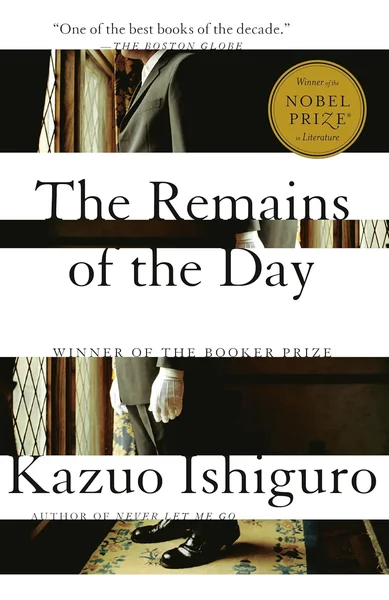
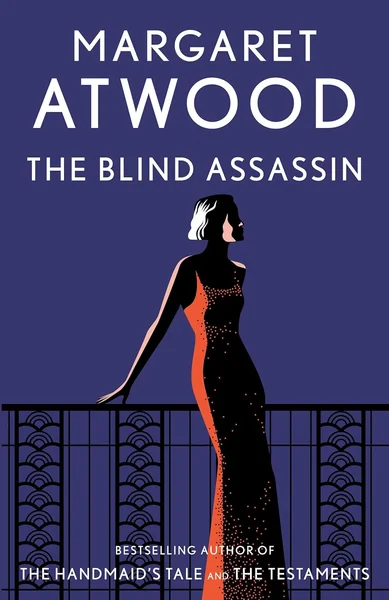
- Readers who respond to Atonement's blend of restrained prose, class tension, and the long shadow of a pivotal mistake will find much to admire in Kazuo Ishiguro's The Remains of the Day, which similarly uses an unreliable English narrator to excavate repression and roads not taken. Margaret Atwood's The Blind Assassin shares Atonement's structural ambition and its preoccupation with how a narrator shapes — and distorts — the story she tells. L.P. Hartley's The Go-Between and Michael Ondaatje's The English Patient are also frequently mentioned alongside Atonement for their wartime settings and their examinations of how a single charged moment can reorder entire lives. Daphne du Maurier's Rebecca likewise combines an English country house, psychological tension, and a retrospective narrator whose reliability is never entirely secure.
- Who should read this?
- Atonement is best suited to readers who are drawn to novels that interrogate their own construction — those interested in questions of narrative reliability, moral responsibility, and how stories shape and distort memory. Its sweep from the English country house to the chaos of Dunkirk to a late-life reckoning in 1999 will appeal to readers who value formally ambitious fiction as much as emotional storytelling. It is also a strong choice for readers who enjoyed the 2007 film adaptation and want the deeper interiority — especially inside Briony's perspective — that only the novel provides. Readers who prefer propulsive pacing or emotionally transparent endings may find the opening's deliberate pace and the finale's metafictional reframing more obstacle than reward.
- About Ian McEwan
- Ian McEwan is a renowned British novelist whose intricate explorations of memory, morality, and human psychology have defined contemporary literary fiction. In Atonement, he crafted a multi-narrative novel that spans decades, weaving together a false accusation, the devastation of war, and a metafictional inquiry into whether fiction can repair what it destroys.
- Tell me about the adaptation
- The 2007 film adaptation of Atonement was directed by Joe Wright and stars Saoirse Ronan as Briony Tallis, James McAvoy as Robbie Turner, and Keira Knightley as Cecilia Tallis. It won both a BAFTA Award and an Academy Award, cementing the story's status as one of the defining British dramas of its decade. For readers arriving via the film, the novel provides considerably more interiority — particularly inside Briony's perspective during the early sections at the Tallis estate — and the metafictional dimensions of the final section are more fully and explicitly realised on the page than they can be on screen.
- What are the main themes?
- Atonement operates on several overlapping thematic levels simultaneously. At its core, it is a profound exploration of guilt, shame, and the difficulty — perhaps impossibility — of genuine absolution, as Briony Tallis spends decades attempting to repair the devastation her false accusation caused. Closely bound to this is the novel's metafictional inquiry: Briony is herself a writer, and McEwan uses that fact to interrogate whether fiction can ever truly restore what it destroys, or whether it is simply another instrument of self-deception. Memory, class — Robbie's precarious position as the housekeeper's Cambridge-educated son — and the relationship between storytelling and moral responsibility complete the novel's central preoccupations.
- Is this a good book club pick?
- Atonement is exceptionally well suited to book clubs. The novel's most debated element — the structural finale, which reframes the entire preceding narrative — divides readers between those who find it among the most devastating strokes in contemporary British fiction and those who find it emotionally distancing, guaranteeing a substantive discussion. Broader questions of guilt, moral responsibility, the reliability of memory, class prejudice in 1930s England, and whether fiction can serve as genuine atonement give groups rich thematic territory well beyond the plot itself. Groups whose members have also seen the 2007 film will find an additional layer of comparison available.
Summarize this book
Follow up
Synthesized from verified book data & published reviews · How we review
What would you like to know about Atonement?
Answers come from our editorial notes on this book. If we haven't covered something, we'll say so.
Readers often ask
Our Review
What Happens — and What the Novel Is Really About
Significance and Standing
What McEwan Does Well
Genuine Limitations and Who May Struggle
Who It Is For
Sources & Further Reading
The key facts and claims in this review are grounded in the retrieved, verified sources listed below.
- Cited in this review
- 1
Open Library
- 2
abebooks.com
- Further reading
- 3
Age & Reading Level
Recommended age
Ages 16+
Reading level
Adult
Heat level
Mild · an intercepted sexually explicit letter; no graphic sex scenes
Tropes
From how readers and romance sites describe it, not our own reading.
3 content notes · who it suits
Content to know about
Best for: Adults / mature 16+ — sexual assault is a pivotal plot event, and the novel's metafictional ambiguity requires comfort with literary complexity
Skip if you want emotionally transparent storytelling with a cathartic, unambiguous resolution
Reader reviews
Be one of the first readers to answer.
Read it? Was it right for you?
Books like Atonement
Curated picks for readers who enjoyed Atonement, with our reasoning for each match.

If you liked Atonement