
Share This Review

Our review
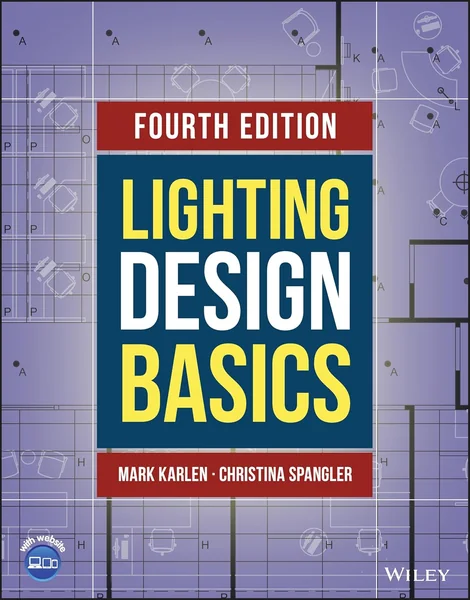
Lighting Design Basics
Lighting Design Basics by Mark Karlen and Christina Spangler Review: Authoritative, Visual, and Curriculum-Ready
Now in its fourth edition, Lighting Design Basics by Mark Karlen and Christina Spangler remains a foundational textbook for architecture, interior design, and engineering students who need a rigorous, visually driven introduction to professional lighting design — balancing technical instruction with real-world application across a wide range of spatial settings.
LuvemBooks Verdict
Best for
Architecture and interior design students — and early-career practitioners — who need a visually rich, scenario-based introduction to professional lighting design aligned with NCIDQ and NCARB credentialing pathways.
Worth it if
You are building foundational lighting knowledge and want more than 25 real-world design scenarios, integrated plan and 3D drawings, and current LED guidance in a single structured textbook.
Skip if
You are an experienced practitioner needing advanced engineering depth, emerging-technology research, or a quick-reference handbook organised by fixture type or code compliance — this book's introductory, educational architecture is not designed for those use cases.
What readers & critics say
Retailer and platform descriptions consistently characterise the book as providing fundamental concepts and prescriptive techniques in a highly visual format, with abebooks.com noting it "provides a critical foundation and prescriptive techniques to help future architects and interior designers make smart design choices," while books.apple.com highlights its "immersive instruction through real-world settings, and practical guidance suited for immediate application in everyday projects."
Sources: AbeBooks, Apple BooksAsk LuvemBooks
Was this helpful?
- Is it worth reading?
- For architecture, interior design, and engineering students, Lighting Design Basics earns a strong recommendation as a durable foundational text. Its combination of credentialed authorship, highly visual instruction, real-world scenario breadth, and alignment with NCIDQ and NCARB exam preparation makes it a purposeful and practically useful classroom resource. The main caveat is scope: seasoned practitioners seeking advanced treatment of complex lighting engineering or emerging technologies, or those who need a quick-reference professional handbook, will find the introductory, scenario-based structure a different fit from what they need.
- Similar books
- Readers drawn to Lighting Design Basics for its broader design-and-technology perspective may find related interest in Smarter Homes: How Technology Will Change Your Home Life by Alexandra Deschamps-Sonsino, which explores how emerging technology reshapes domestic spaces, or in Homebody: A Guide to Creating Spaces You Never Want to Leave by Joanna Gaines, a visually oriented guide to crafting intentional interiors. For deeper technical grounding in lighting specifically, the review context also points to Architectural Lighting Design by Gary Steffy, The Lighting Handbook by the Illuminating Engineering Society, and Interior Lighting for Designers by Gary Gordon as titles practitioners frequently reference alongside Karlen and Spangler's work.
- Who should read this?
- Lighting Design Basics is explicitly aimed at students in architecture, interior design, and engineering programs who need a rigorous, visually driven introduction to professional lighting practice. Early-career practitioners seeking immediate, applicable guidance — particularly those preparing for NCIDQ or NCARB professional examinations — will also find strong value in its prescriptive, scenario-based approach. Seasoned professionals seeking advanced computational methods or a quick-reference project handbook are better served by more specialized resources.
- What real-world scenarios does it cover?
- Lighting Design Basics covers more than 25 distinct design scenarios spanning a wide range of spatial settings: residential, commercial, healthcare, education, and hospitality environments. Each scenario is accompanied by in-depth rationale for the proposed solution, lighting distribution diagrams, floor plans, and details for lighting installation and construction — giving the text practical breadth across the spaces a working practitioner is most likely to encounter.
- How technical is it?
- Lighting Design Basics is technically grounded but calibrated to an introductory level — it delivers fundamental grounding in architectural lighting concepts, processes, and techniques, including coverage of computer calculation software and LED technology, supported by lighting distribution diagrams and construction details. It is rigorous enough to align with NCIDQ and NCARB exam preparation, but the review is clear that it will not satisfy advanced practitioners seeking in-depth treatment of complex lighting engineering or emerging computational methods.
- Can it help with professional exams?
- Lighting Design Basics explicitly includes skill-building exercises aligned with both NCIDQ (National Council for Interior Design Qualification) and NCARB (National Council of Architectural Registration Boards) exam preparation, signaling deliberate alignment with professional credentialing pathways. This makes it a practical supplementary study resource for candidates in interior design and architecture licensing programs, not just a classroom text.
Summarize this book
Follow up
Synthesized from verified book data & published reviews · How we review
What would you like to know about Lighting Design Basics?
Answers come from our editorial notes on this book. If we haven't covered something, we'll say so.
Readers often ask
Our Review
This review covers the book's content, premise and published critical reception, not a first-hand reading.
What the Book Actually Is
Scope and Structure
Strengths: Visual Format and Prescriptive Guidance
Technology Coverage and Currency
Audience and Limitations
Sources & Further Reading
The key facts and claims in this review are grounded in the retrieved, verified sources listed below.
- Cited in this review
- 1
- 2
- Further reading
- 3
- 4
Age & Reading Level
Recommended age
Adult
who it suits
Skip if you need an advanced technical reference or a quick-lookup professional handbook rather than a student-oriented foundational textbook.
Reader reviews
Be one of the first readers to answer.
Read it? Was it right for you?
Books like Lighting Design Basics
Curated picks for readers who enjoyed Lighting Design Basics, with our reasoning for each match.

If you liked Lighting Design Basics


