BOOKS
Published

Read Time

3 min read

Curated & edited by

LuvemBooks Editorial

How we create our reviews →
Share This Review

The Things We Cannot Say by Mitch Sebourn Review: Emotionally Charged Horror Exploring Hidden Truths

The Things We Cannot Say is a horror novel by Mitch Sebourn, published in January 2021 as a Kindle edition, that weaves together themes of secrets, reconciliation, sacrifice, and found family. ReadingLadies describes it as engaging, memorable, and emotional, and SuperSummary's study guide points to the complexity at its core. It is a focused, thematic work best suited to readers who appreciate horror that digs into human relationships and moral difficulty alongside its genre tension.

LuvemBooks Verdict

Best for

Horror readers who prioritise emotional resonance and character-driven moral complexity — particularly those drawn to themes of secrets, found family, reconciliation, and caring for children with differing abilities — over pure dread or action.

Worth it if

You want a compact, thematically layered horror novel that uses genre pressure to explore guilt, unspoken truths, and human connection, and you appreciate economical storytelling that earns its emotional weight within a tight 198-page frame.

Skip if

You prefer expansive, world-building-heavy horror or seek extreme/splatterpunk intensity — the novel's tone is calibrated toward emotional grounding rather than transgression, and its many themes share limited page real estate.

What readers & critics say

ReadingLadies describes the novel as "engaging, memorable, page-turning, and emotional," positioning it as accessible, character-focused horror with a rich thematic architecture. The Kirkus review in the retrieved list pertains to a different book and cannot be applied here; no other major trade-press assessment was retrieved for this title.

Sources: ReadingLadies
3.5from 54 Amazon ratings— reader ratings, not a LuvemBooks score
In This Review
  • What Works & What Doesn't
  • What the Book Is and What It Sets Out to Do
  • Thematic Depth and Emotional Range
  • Craft and Structure
  • Audience Fit and Genuine Limitations
  • Place in the Genre and Why It Matters

What Works & What Doesn't

What Works
  • Thematically rich, with ReadingLadies identifying multiple layered themes including reconciliation, secrets, found family, survival, and sacrifice
  • Compact 198-page structure delivers focused, economical storytelling without padding
  • Emotionally driven horror that goes beyond atmosphere to engage character-level moral complexity
  • Kindle edition is broadly accessible, with enhanced typesetting, Word Wise, and Screen Reader support
What Doesn't
  • At 198 pages, the novel's many interlocking themes may receive less individual development than readers accustomed to longer horror novels might prefer
  • Readers seeking extreme or action-heavy horror rather than emotionally grounded character work may find the tone a different register than expected
Mitch Sebourn's The Things We Cannot Say is a horror novel that earns its emotional weight through an interlocking web of secrets, sacrifice, and the cost of what is left unspoken — a book that ReadingLadies calls engaging, memorable, page-turning, and emotional.

What the Book Is and What It Sets Out to Do

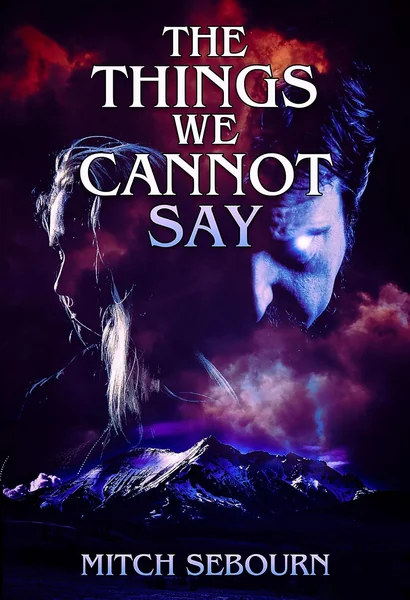
The Things We Cannot Say by Mitch Sebourn front cover
The Things We Cannot Say is a horror novel by Mitch Sebourn, self-identified as a horror writer in a Kendall Reviews interview. Published on January 22, 2021, as a Kindle edition, the novel runs to a print length of 198 pages — a deliberately lean frame for the story it tells. The title itself signals the book's central preoccupation: the things human beings are unable or unwilling to say to one another, and what those silences cost. According to ReadingLadies, the novel's thematic architecture is rich, encompassing secrets, determination, found family, risk-taking, survival, difficult choices, and caring for children with differing abilities. Reconciliation is identified by that same source as a prominent theme running through the narrative.

Thematic Depth and Emotional Range

What distinguishes The Things We Cannot Say within the horror genre is its apparent commitment to emotional complexity alongside its genre mechanics. The thematic range catalogued by ReadingLadies — from survival and sacrifice to the nuanced territory of caring for children with differing abilities — points to a novel that uses horror not merely for shock or dread but as a pressure system that forces characters into moral and emotional extremes. SuperSummary, whose study guide exists to help readers navigate the book's complexity and beauty, corroborates that there is genuine depth here worth unpacking. For readers who come to horror seeking resonance beyond atmosphere, this thematic layering is a meaningful part of the book's design.

Craft and Structure

At 198 pages, The Things We Cannot Say is a tightly constructed work. The decision to tell a multi-thematic story — one that touches on found family, reconciliation, secrets, and sacrifice — within a compact page count reflects a particular kind of narrative discipline. The Kindle edition supports enhanced typesetting and is Word Wise enabled, indicating it is formatted for accessibility across reading environments. Screen Reader support further broadens its reach. While no starred reviews or major trade-press assessments are available in the verified record, the existence of a dedicated SuperSummary study guide is a meaningful signal: it suggests the novel rewards close reading and carries sufficient literary texture to merit academic-style analysis.

Audience Fit and Genuine Limitations

The Things We Cannot Say is most squarely aimed at horror readers who value character-driven emotional stakes. ReadingLadies' framing — "engaging, memorable, page-turning, and emotional" — positions it as accessible rather than purely transgressive, which means readers seeking extreme or splatterpunk horror may find the tone calibrated differently than they expect. At 198 pages, readers who prefer expansive, world-building-heavy horror novels will encounter a story that moves with economy rather than sprawl; that brevity is a feature for some and a limitation for others. The novel's thematic density — secrets, reconciliation, differing abilities, found family, survival — packed into a short frame also means individual threads may receive less development than they might in a longer work, a trade-off inherent to the book's scope.

Place in the Genre and Why It Matters

Mitch Sebourn writes from outside the major publishing establishment — a Kendall Reviews interview situates him as a working horror writer engaged directly with the genre community. The Things We Cannot Say reflects a strand of contemporary horror that takes seriously the interior lives of its characters and treats the genre as a vehicle for examining guilt, unspoken truths, and human connection under duress. The themes of found family and caring for children with differing abilities are not standard horror furniture, and their presence signals a writer using the genre's conventions to illuminate territory that mainstream literary fiction rarely enters in quite the same way. For readers navigating the broad horror landscape, this novel represents the emotionally grounded end of the spectrum.

Sources & Further Reading

The key facts and claims in this review are grounded in the retrieved, verified sources listed below.

  1. Cited in this review
  2. 1
  3. Further reading
  4. 2