7 min read
4.3
· 30,362 Amazon ratingsShare This Review

Babel, or The Necessity of Violence by R. F. Kuang is a speculative fiction novel set in a fantastical 1830s Oxford, where magical silver bars powered by the gaps between translated words fuel Britain's imperial supremacy—and four scholars from colonized nations must decide how far they'll go to resist it. The novel debuted at number one on The New York Times Best Seller list and won the 2022 Nebula Award for Best Novel, marking it as one of the defining works of dark academia fiction.
LuvemBooks Verdict
Best for
Readers who love dense, erudite fantasy rooted in academic settings and who want colonial history — specifically the lead-up to the First Opium War — treated as active moral and dramatic stakes rather than period backdrop.
Worth it if
Worth reading if you want a magic system that is structurally inseparable from its political argument — where the exploitation of colonized languages is literally the engine of imperial power — and you're prepared to sit with that argument for 560 unrelenting pages.
Skip if
Skip it if you prefer politics woven subtly into plot rather than debated explicitly at length, or if dense linguistic and historical scaffolding tests your patience when momentum slows.
What readers & critics say
Kirkus Reviews awarded Babel a "Get It" verdict and named it one of their Best Books of 2022, calling it "dark academia as it should be." Bookmarks Reviews synthesises a mixed critical picture: a rave from Amal El-Mohtar critics calling it "inventive and engaging, passionate and precise," set against a critics dissent that the narrative is "frequently interrupted by lectures on why imperialism is bad," keeping already-sympathetic readers at arm's length.
“Dark academia as it should be.”
— Kirkus ReviewsAsk LuvemBooks
Was this helpful?
- Is it worth reading?
- For readers drawn to dark academia, colonial history as active dramatic stakes, and magic systems with genuine thematic weight, Babel delivers at an exceptional level — its commercial and genre-award recognition (a number-one New York Times debut and the 2022 Nebula Award for Best Novel) reflects real breadth of impact. The four-character cohort structure — Robin, Ramy, Victoire, and Letty — stages the central dilemma across meaningfully different relationships to British power, generating sustained dramatic tension rather than a single protagonist's arc. The key caveat is the novel's unrelenting, front-facing thematic argument: at 560 pages of explicit political debate woven into the narrative, readers who prefer politics integrated subtly or plots that prioritise momentum over argument may find the approach exhausting.
- Similar books
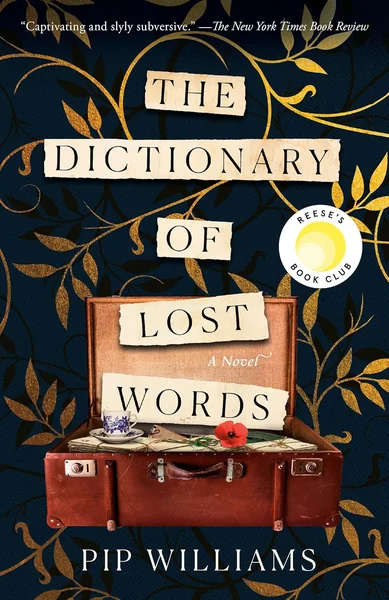
- Readers who respond to Babel's blend of academic setting, linguistic obsession, and moral complexity have several strong companion reads. Pip Williams' The Dictionary of Lost Words shares the Oxford-adjacent setting and a preoccupation with the politics embedded in language and who gets to define it. For the dark academia atmosphere, Leigh Bardugo's Ninth House and Olivie Blake's The Atlas Six both deliver morally complex academic settings with genre elements. Marina Dyachenko and Sergey Dyachenko's Vita Nostra offers the same sense of an academic institution that is genuinely dangerous and transformative. Genevieve Cogman's The Invisible Library rounds out the field for readers who want libraries and language at the centre of a fantasy world.
- Who should read this?
- Babel is written for adult readers drawn to dark academia, erudite historical fantasy, and fiction that treats colonial history as a site of active interrogation rather than atmospheric backdrop. Fans of morally complex academic settings — and readers interested in the First Opium War, translation theory, or the mechanics of imperial power — will find the novel unusually rewarding. It is not the right fit for readers who prefer politics woven subtly into narrative or who prioritise plot momentum over sustained thematic argument.
- About R. F. Kuang
- Rebecca F. Kuang, writing as R. F. Kuang, is an American novelist and short-story writer.
- What are the main themes?
- The novel's primary thematic concern is the relationship between language, power, and empire — specifically, how the linguistic labour of people from colonized nations is extracted to sustain imperial supremacy. The silver-bar magic system is the structural expression of this argument: the gaps between translated words from Mandarin, Haitian Creole, and other marginalized languages literally fuel Britain's global power. Running through this is an extended, explicit reckoning with violence as a tool of resistance — whether it is morally defensible, strategically necessary, or both — a question the title announces without apology and the four-character cohort debates from meaningfully different positions.
- How does it compare to other dark academia novels?
- The publisher positioned Babel explicitly as a thematic response to The Secret History by Donna Tartt and a tonal retort to Jonathan Strange & Mr. Norrell by Susanna Clarke — situating it within a tradition of erudite, morally complex fantasy. Where The Secret History centres aesthetic obsession and moral corruption among a privileged American cohort, Babel turns the same dark-academia atmosphere outward toward colonial violence and the politics of language. Its awards performance — the 2022 Nebula Award for Best Novel and a number-one New York Times debut — confirms that it landed with force in both the genre and literary mainstream.
Summarize this book
Follow up
Synthesized from verified book data & published reviews · How we review
What would you like to know about Babel?
Answers come from our editorial notes on this book. If we haven't covered something, we'll say so.
Readers often ask
Our Review
What the Book Actually Is
The Central Conflict and Stakes
Significance and Recognition
What the Novel Does Well
Who It Is For and Where It Challenges
Sources & Further Reading
The key facts and claims in this review are grounded in the retrieved, verified sources listed below.
- Cited in this review
- 1
- 2
fromtheheartofeurope.eu
- Further reading
- 3
R. F. Kuang, Wikipedia
- 4
- 5
goodreads.com
Age & Reading Level
Recommended age
Ages 16+
Reading level
Adult
Tropes
From how readers and romance sites describe it, not our own reading.
4 content notes · who it suits
Content to know about
Best for: Adults / mature 16+ — the novel's sustained, explicit engagement with colonial violence, racial exploitation, and the ethics of violent resistance suits mature readers
Skip if you prefer politics woven subtly into narrative or want a plot-driven read over sustained ideological debate
Reader reviews
Be one of the first readers to answer.
Read it? Was it right for you?
Books like Babel
Curated picks for readers who enjoyed Babel, with our reasoning for each match.

If you liked Babel