
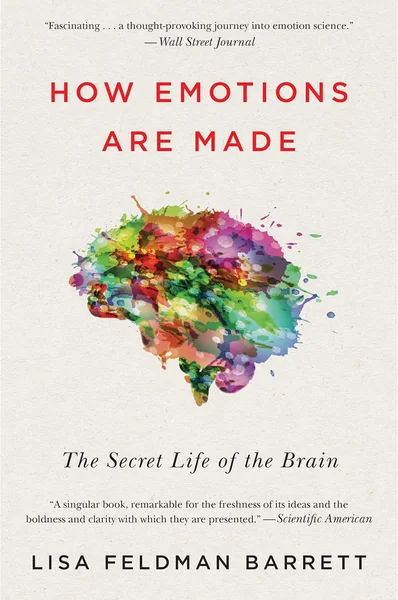
How Emotions Are Made: The Secret Life of the Brain―How We Create by Lisa Barrett
by Lisa Barrett
4.5
Other articles on this book
Are Facial Expressions Really Universal? What Neuroscience Says
Paul Ekman's six universal emotions theory, proposed in the 1960s, has faced serious challenges from decades of cross-cultural research.
1 min read
Frequently asked questions
Did Paul Ekman prove that facial expressions are universal?
Ekman's 1960s–70s studies suggested universality, but critics have shown his forced-choice methodology inflated agreement across cultures. When researchers use open-ended tasks or study isolated communities without that constraint, cross-cultural consensus drops substantially, and his six-basic-emotion framework no longer holds up cleanly.
Do people from different cultures read facial expressions differently?
Yes. Studies show East Asian participants focus more on the eyes, while Western European participants weight the whole face, producing different emotion judgments from identical stimuli. Cultural display rules — norms about when and how to show emotion — also shape what faces express in public settings.
What is the constructionist theory of emotion?
The constructionist view, associated with neuroscientist Lisa Feldman Barrett, holds that emotions are not hardwired reflexes triggered by stimuli but actively built by the brain using prior experience, bodily signals, and cultural concepts. Faces show constructed emotion, not a pre-set biological readout.
Is emotion recognition AI accurate across different cultures?
Current evidence suggests it is not reliably accurate. A 2019 review of nearly 1,000 studies found facial movements don't consistently map to emotional states, and systems trained on the universality assumption show documented accuracy disparities across race and gender — undermining their use in hiring and law enforcement.
What are display rules in emotion psychology?
Display rules are culturally learned norms that govern when and how people express emotion in social settings. They explain why the same internal state — say, grief or excitement — may appear on the face very differently across cultures, complicating any claim that facial expressions are straightforward universal signals.
Continue exploring
Book hub
How Emotions Are Made: The Secret Life of the Brain―How We Create by Lisa Barrett →
Review
Read our full review of How Emotions Are Made: The Secret Life of the Brain―How We Create by Lisa Barrett →
Related article
The Theory of Constructed Emotion: How Your Brain Builds Every Feeling You Have →