Skip to content
Reviewed

Read Time

8 min read

Reader rating
4.8 · 3,325 Amazon ratings, as of Nov 2026
reader ratings, not a LuvemBooks score
Curated & edited by

LuvemBooks Editorial

How we create our reviews →
Share This Review
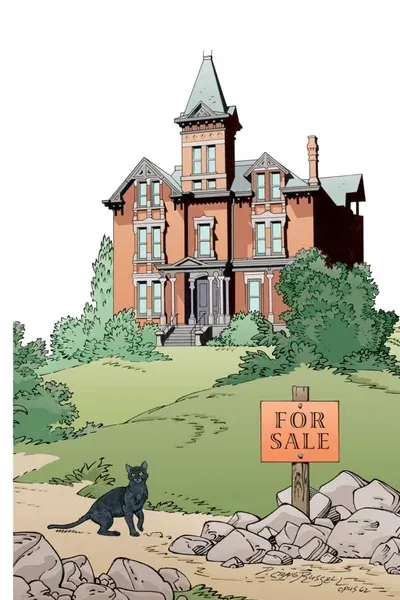
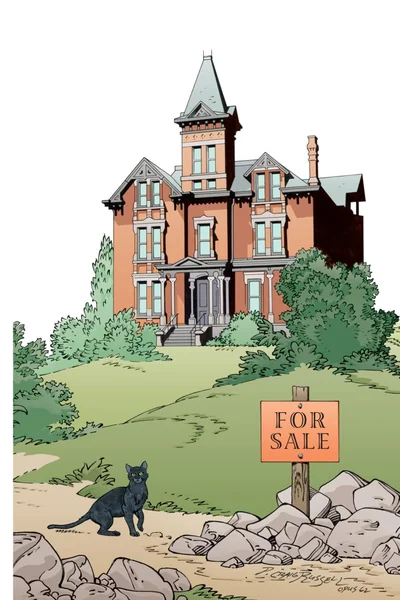
Interior illustration of a Victorian mansion with a "For Sale" sign and a black dog on the grounds.

Our review

Coraline: The Graphic Novel

Coraline: The Graphic Novel Review: A Haunting Adaptation (Neil Gaiman)

Neil Gaiman’s dark fantasy novella translates into a masterful graphic novel through P. Craig Russell’s meticulous artwork, delivering a chilling tale of childhood terror that stands firmly on its own merits decades after its original publication.
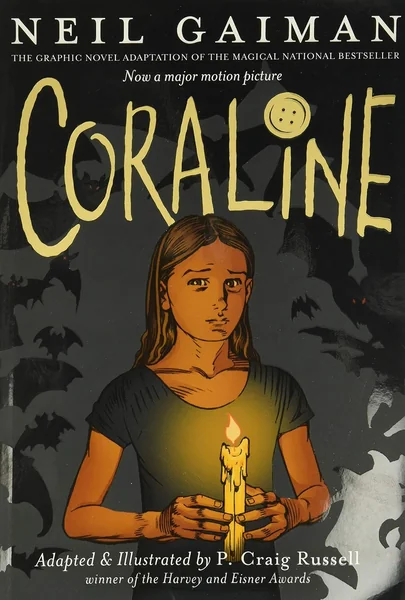
Interior graphic novel page depicting a bedroom exploration sequence with multiple panel perspectives showing architectural details and character movement.Back cover with synopsis, review quotes, publisher logo, and barcode.Coraline: The Graphic Novel by Neil Gaiman front coverTap to enlarge
Our age band: Ages 10+captivity · psychological terror

LuvemBooks Verdict

Best for

Recommended for readers seeking a masterful adaptation that translates Neil Gaiman's gothic novella into a chilling, visually striking graphic novel.

Worth it if

Worth reading if you want a pitch-perfect visual retelling that amplifies the original's dread while preserving its themes of bravery and authentic connection.

Skip if

Skip it if you prefer lighthearted adventure or are sensitive to intense themes of captivity and psychological terror, as the graphic novel's eerie atmosphere may overwhelm younger readers.

Where reviewers agree and split

Readers rate it 4.8 on Amazon. The reviews we read that discuss it in depth split on some points:

  • Positive

    The Guardian · Press review: creepy and clever, with brilliant atmosphere and fascinating storytelling throughout

  • Positive

    Kirkus Reviews · Press review: stellar reworking that delights fans and mesmerises newcomers with pitch-perfect accuracy

  • Positive

    Bookreporter · Magazine: wonderfully exotic and subversive, the graphic novel works perfectly for all audiences

  • Positive

    Compulsive Reader · Book blog: nice change from other children's authors, works well for both kids and adults

  • Positive

    Teen Ink · Book blog: great book everyone should read, teaches valuable lessons about bravery

  • Negative

    The Independent · Book blog: lacks the depth of Carroll, never entirely convinces, less amusing than intended

  • Positive

    Kathryn's Inbox · Book blog: amazed at how well the translation works, beautifully eerie graphic novel (from its headline)

    Overall verdicts are our summary of each review we read, from its headline, rating and conclusion.

    Conversely, The Independent found Gaiman never a match for Carroll as a writer. Conversely, The Independent criticizes Gaiman as lacking the depth of Carroll.

    “A deliciously dark graphic adaptation of Gaiman’s modern classic is delivered with pitch-perfect accuracy”

    — Kirkus Reviews

    “brilliant atmosphere and it was devised so cleverly”

    — The Guardian
    Sources: The Guardian, Kirkus Reviews, Bookreporter, The Independent, Kathryn's Inbox
    4.8from 3,325 Amazon ratings, as of Nov 2026— reader ratings, not a LuvemBooks score

    Preview the book

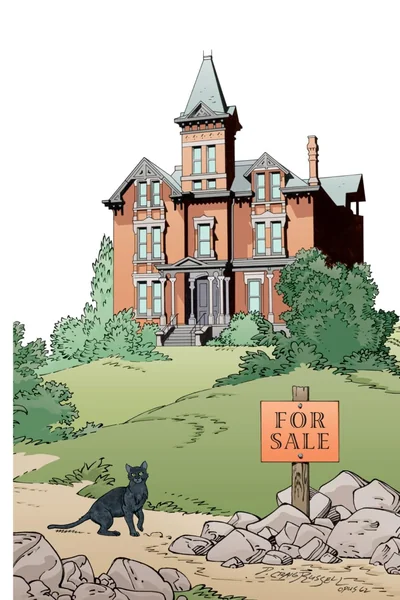
    Interior illustration of a Victorian mansion with a "For Sale" sign and a black dog on the grounds.
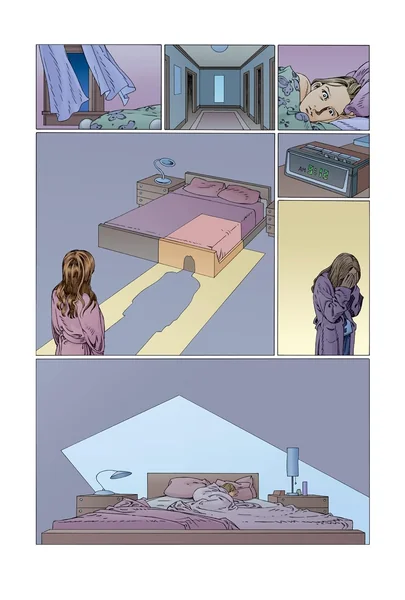
    Interior graphic novel page depicting a bedroom exploration sequence with multiple panel perspectives showing architectural details and character movement.
    Back cover with synopsis, review quotes, publisher logo, and barcode.
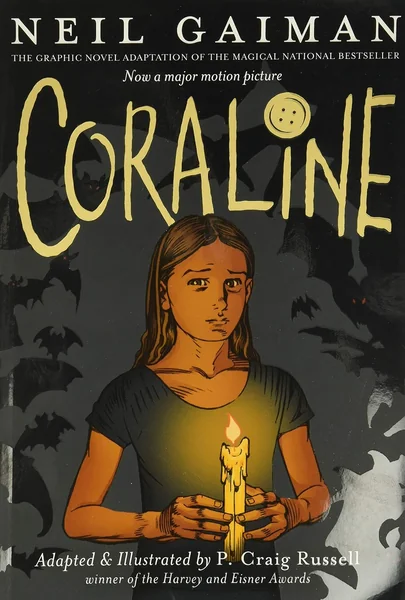
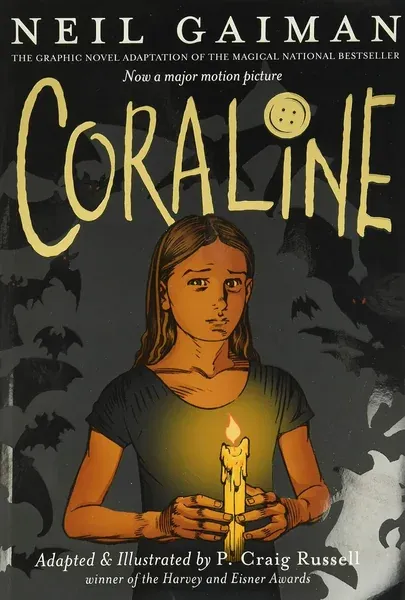
    Coraline: The Graphic Novel by Neil Gaiman front cover

    Ask LuvemBooks

    Was this helpful?

    Neil Gaiman's Coraline: The Graphic Novel delivers a chilling tale of terror through P. Craig Russell's meticulous artwork, successfully translating the gothic dread into a visually striking format. It is a masterful adaptation that amplifies psychological horror while preserving the protagonist's bravery. However, the intense atmosphere may overwhelm younger or sensitive readers.
    Is it worth reading?
    It is highly recommended for readers seeking a masterful adaptation that translates Neil Gaiman's gothic novella into a chilling graphic novel. P. Craig Russell’s artwork amplifies the source material's dread while preserving its themes of bravery and authentic connection. Critics from The Guardian and Kirkus Reviews praise its pitch-perfect accuracy and atmospheric storytelling.
    Similar books
    Readers who enjoy this story will also appreciate Ransom Riggs' Hollow City for its blend of mystery and supernatural dread. Fans of Neil Gaiman's The Graveyard Book will find similar gothic tones, while those drawn to the story's descent into strange, rule-bending realms will find echoes of Lemony Snicket's A Series of Unfortunate Events: The Bad Beginning and Susan Cooper's The Dark Is Rising.
    Who should read this?
    This graphic novel is best suited for middle-grade readers and adults. It appeals to those who appreciate brave young protagonists navigating terrifying worlds, as well as readers who value atmospheric storytelling and literary adaptations. The adaptation successfully bridges classic gothic tales with modern graphic storytelling.
    What age is it for?
    Best for ages 10 and up. The story explores intense psychological terror, themes of captivity, and manipulation by a false parent, which may overwhelm younger readers despite the 10+ age recommendation. Older children and teens will find the protagonist's resourcefulness and bravery highly engaging.
    About Neil Gaiman
    Neil Richard MacKinnon Gaiman is an English author of short fiction, novels, comic books, audio theatre, and screenplays.
    What are the main themes?
    The graphic novel explores the danger and the courage required to face the unknown. It warns against trading genuine connection for a manufactured paradise, emphasizing that authentic relationships require navigating real-world imperfections. The presence of the talking black cat serves as a crucial anchor to reality amidst the psychological unraveling.
    How does the graphic novel compare to the novella?
    P. Craig Russell's adaptation balances elegance and dread while utilizing the graphic novel format to amplify its emotional weight. Third-person narration and thought bubbles successfully maintain the original's tone, while deliberate pacing conveys the protagonist's journey. Critics note it reads as though it were intended for the graphic novel format in the first place.
    Summarize this book

    Summarize this book

    Coraline Jones moves into a sprawling old house with her distracted parents and discovers a hidden passage to a parallel world. There, a doppelgänger family offers her a life of perfect attention, but only if she stays forever and has buttons sewn into her eyes. Armed with a lucky adder stone and her own resourcefulness, Coraline must outwit the Other Mother and rescue trapped children to escape.

    Follow up

    Does it have a happy ending?
    Is it safe for sensitive readers?

    Synthesized from verified book data & published reviews · How we review

    Ask LuvemBooks

    What would you like to know about Coraline: The Graphic Novel?

    Answers come from our editorial notes on this book. If we haven't covered something, we'll say so.

    Readers often ask

    Our Review

    We review the evidence: published critics, reader verdicts and BookTube reviews, gathered and weighed with AI assistance and edited by LuvemBooks, rather than one reader's first-hand take.

    Neil Gaiman’s dark fantasy novella translates into a masterful graphic novel through P. Craig Russell’s meticulous artwork, delivering a chilling tale of childhood terror that stands firmly on its own merits decades after its original publication.
    What Happens in the Story

    Coraline Jones and her parents move into a sprawling old house divided into multiple flats. The property feels drab and unexciting compared to their previous home.
    While exploring the grounds, she discovers a locked door behind a wall of bricks. She eventually unlocks the passage to find a mirror flat inhabited by button-eyed doppelgängers of her family.
    The Other Mother and Other Father offer Coraline a life of perfect attention and endless entertainment. They demand that she stay with them forever and sew buttons into her eyes to seal the arrangement.
    Coraline must outwit the Other Mother and rescue the trapped souls of other children to escape the Other World. Her journey tests her courage as she navigates a shifting reality designed to trap her.
    She relies on her wits and a lucky adder stone to survive the encounter.
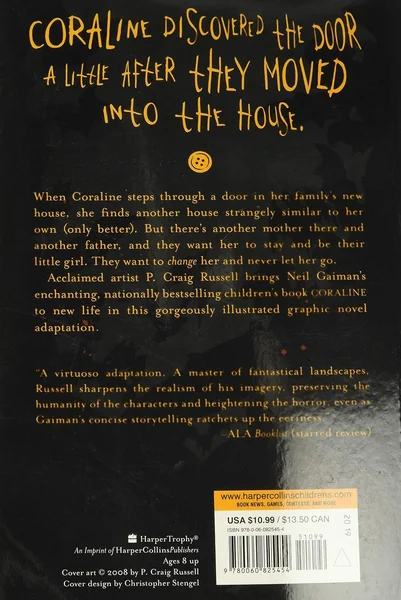
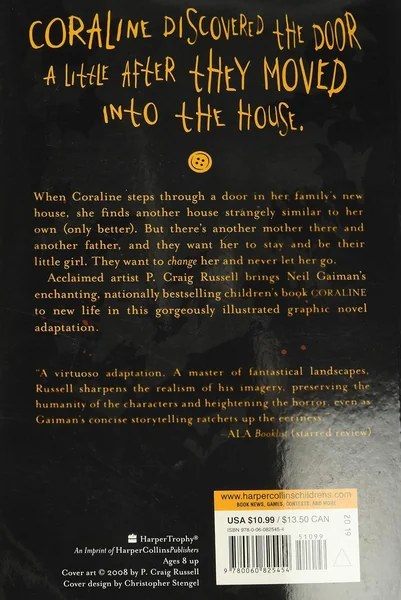
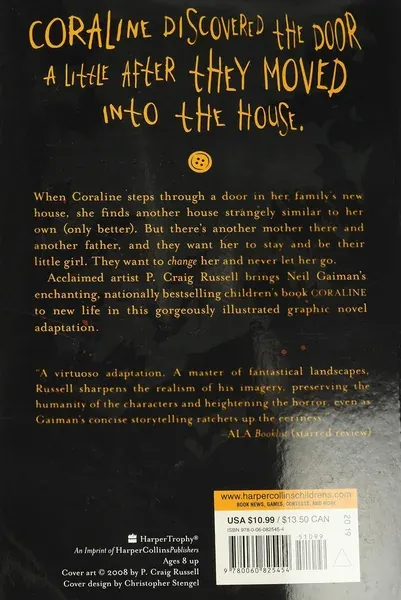
    Back cover with synopsis, review quotes, publisher logo, and barcode.
    Back cover with synopsis, review quotes, publisher logo, and barcode.

    Artistic Execution and Adaptation Choices
    P. Craig Russell adapts the source material with a style that balances elegance and dread. The Guardian, Kirkus Reviews, and Bookreporter praise the adaptation, while The Independent offers a negative take on Gaiman's original prose compared to Carroll.
    One reviewer noted that the adaptation reads as though it were intended for the graphic novel format in the first place. The visual storytelling relies heavily on atmospheric paneling and expressive character designs to convey Coraline’s isolation.
    Digital Chameleon’s coloring work enhances the eerie contrast between the drab real world and the hyper-stimulating Other World. Kirkus Reviews highlighted how the artwork successfully captures the gothic tone of the original novella.
    Kathryn’s Inbox observed that the illustrations make every element, from the Other Mother to Coraline’s initial boredom, perfectly fit the narrative. The graphic novel format successfully utilizes third-person narration and thought bubbles to maintain the original's tone.
    Russell’s pacing mirrors the psychological unraveling of the protagonist through deliberate visual cues, though its effectiveness is debated. The adaptation stands as a definitive visual interpretation of Gaiman’s dark fantasy.
    Interior illustration of a Victorian mansion with a "For Sale" sign and a black dog on the grounds.
    Interior illustration of a Victorian mansion with a "For Sale" sign and a black dog on the grounds.

    Thematic Depth and Genre Execution

    The graphic novel operates firmly within the fantasy horror genre while remaining accessible to younger audiences. The story explores themes of childhood agency, the danger of superficial perfection, and the courage required to face the unknown.
    The Book Smugglers described the protagonist as a young, curious girl eager to explore and thwart evil. The narrative avoids simplistic moralizing by grounding Coraline’s bravery in genuine fear and resourcefulness.
    The presence of the talking black cat provides a crucial anchor to reality, constantly reminding the protagonist of the stakes involved. Wikipedia notes that the novella draws heavily from Lewis Carroll’s Alice’s Adventures in Wonderland and Sigmund Freud’s concept of the uncanny.
    These influences manifest in the shifting architecture of the Other World and the psychological terror of being trapped by a false parent. The tale warns against trading genuine connection for a manufactured paradise.
    Coraline’s refusal to accept the button-eyed facade underscores the value of authentic relationships. The graphic novel successfully translates these literary themes into a compelling visual medium.
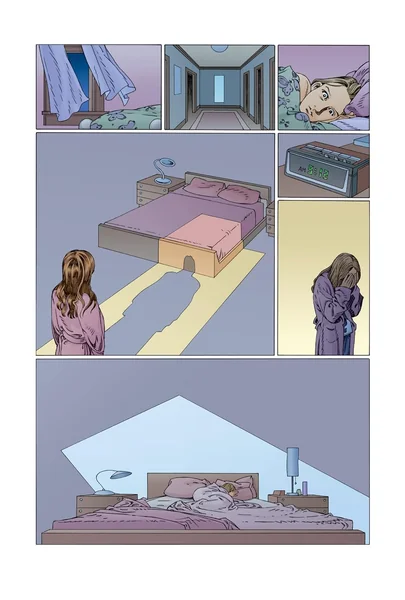
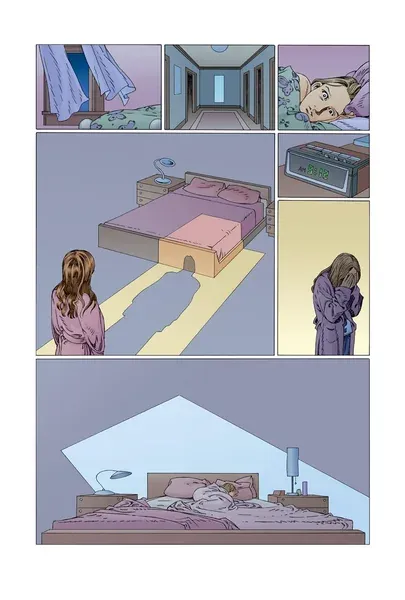
    Interior graphic novel page depicting a bedroom exploration sequence with multiple panel perspectives showing architectural details and character movement.
    Interior graphic novel page depicting a bedroom exploration sequence with multiple panel perspectives showing architectural details and character movement.

    Is Coraline: The Graphic Novel Worth Reading Today?

    The reception highlights a tension between the story's comforting childhood agency and its underlying psychological dread. Critics noted that Russell's art preserves the characters' humanity while sharpening the horror, a balance that appeals to readers who enjoy dark fantasy without sacrificing emotional resonance.
    The Book Smugglers found the narrative captures the thrill of childhood exploration, pointing the graphic novel toward young readers who crave brave protagonists in terrifying worlds. Conversely, the intense atmosphere and themes of captivity may alienate those seeking lighthearted adventure.
    The story draws clear comparisons to Lewis Carroll’s Alice’s Adventures in Wonderland, echoing its descent into strange, rule-bending realms. Critics agree that the adaptation successfully bridges the gap between classic gothic tales and modern graphic storytelling.
    The Guardian ranked the original novella at number 82 on its list of the 100 Best Books of the 21st Century. The story has earned the Hugo Award, the Nebula Award, and the Bram Stoker Award for its literary and genre impact.
    The Book Smugglers awarded the graphic novel a 9 out of 10, calling it nearly perfect. Critics consistently emphasize that the visual medium amplifies the source material's emotional weight rather than diminishing it.
    The adaptation introduces the story to a new generation while preserving the eerie atmosphere that defined its initial release.

    Sources & Further Reading

    The key facts and claims in this review are grounded in the retrieved, verified sources listed below.

    1. 1

      Neil Gaiman, LuvemBooks

    2. 2
    3. 3

      en.wikipedia.org

    4. 4

      mousecircus.com

    5. 5

      harperstacks.com

    6. 6
    7. 7
    8. 8
    9. 9
    10. 10
    11. 11
    12. 12

      The Guardian

    13. 13

      Kirkus Reviews

    14. 14

      The Independent

    Age & Reading Level

    Our age band

    Ages 10+

    Reading level

    Middle grade

    Amazon listing

    Ages 10+ (set by customers) · Grade 3–7

    Our age band groups books for browsing; it isn't an age a review gave.

    Content to know about

    captivity
    psychological terror
    manipulation by a false parent
    death of trapped children

    Best for: Ages 10+ — intense psychological terror and themes of captivity may overwhelm younger readers

    Skip if you prefer lighthearted adventure or are sensitive to intense themes of captivity and psychological terror

    From our readers

    Reader reviews

    Be one of the first readers to answer.

    Read it? Was it right for you?

    Books like Coraline: The Graphic Novel

    Curated picks for readers who enjoyed Coraline: The Graphic Novel, with our reasoning for each match.
    Discussion

    Reader comments