
7 min read
Share This Review
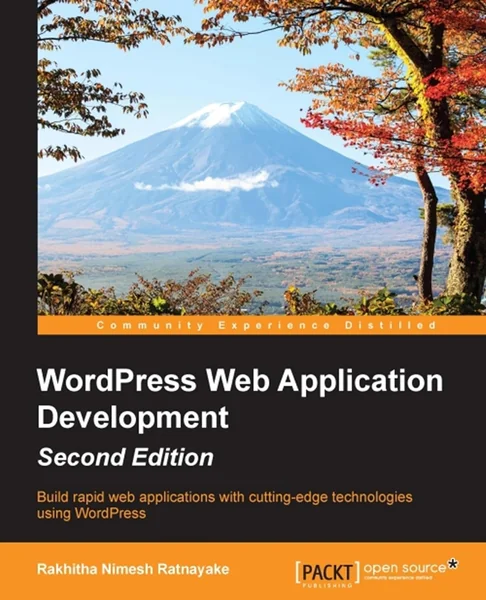
WordPress Web Application Development – Second Edition by Rakhitha Nimesh Ratnayake Review: A Focused Technical Guide for WordPress Developers
Published by Packt Publishing in May 2015, this second edition of WordPress Web Application Development is a practical, scenario-driven technical guide aimed squarely at WordPress developers and designers who want to build modular, scalable web applications efficiently. Ratnayake draws on his background as a freelance developer and plugin creator to walk readers through leveraging WordPress's core features — while honestly confronting the platform's limitations — to deliver applications on tight timelines and limited budgets. The book's premise-driven, real-world approach makes it a useful desk reference for practitioners already comfortable with basic web development, though its 2015 publication date means readers must weigh its coverage against the pace of WordPress's ongoing evolution.
LuvemBooks Verdict
Best for
Working WordPress developers and designers who already have foundational web development knowledge and want a practitioner-led, scenario-driven guide to building modular, scalable web applications on the WordPress platform.
Worth it if
Worth it if you're an intermediate-to-advanced WordPress developer seeking a conceptually rigorous framework for application architecture — and are prepared to cross-reference current WordPress documentation to account for the book's 2015 publication date.
Skip if
Skip it if you're new to web development or WordPress, or if you need up-to-date coverage of post-2015 WordPress changes such as the Gutenberg block editor and expanded REST API — the book predates these developments entirely.
What readers & critics say
Publisher descriptions retrieved from Books Google and Packt Publishing position the book as "an extensive, practical guide" for developers who want to move beyond conventional website development toward scalable web application building within limited time frames. A reader comment surfaced on the Packt Publishing product page notes buying both Kindle and print versions specifically to use the book as an ongoing reference, underscoring its perceived utility as a durable technical resource rather than a one-time read.
Sources: books.google.com, packtpub.com, amazon.inAsk LuvemBooks
Was this helpful?
- Is it worth reading?
- For working WordPress developers and designers who want to build scalable web applications efficiently, the book earns its reputation through its scenario-driven structure and its rare willingness to map platform limitations alongside capabilities — rather than overselling WordPress as a solution to every problem. Ratnayake's background as a practitioner who builds and ships real applications gives the guidance a professional-grade credibility that distinguishes it from purely instructional titles. The significant caveat is its 2015 publication date: readers in 2025 must treat it as a conceptually strong foundation and cross-reference implementation details with current WordPress documentation, since major changes like the Gutenberg block editor and ongoing REST API expansion postdate the book entirely.
- Who should read this?
- This book is squarely aimed at WordPress developers and designers who already have prior knowledge of basic web development and design, and who want to develop quality web applications within a limited time frame and for maximum profit. It is particularly well-suited to practitioners — freelancers, consultants, and agency developers — who need to build modular, scalable applications efficiently and want honest guidance on navigating WordPress's limitations alongside its capabilities. Readers seeking an entry point to either WordPress or web development generally will find the assumed baseline a significant barrier and should look elsewhere first.
- Similar books
- Readers who find value in WordPress Web Application Development – Second Edition may also want to explore other practitioner-oriented WordPress and PHP development titles from Packt Publishing, such as books covering WordPress plugin development, theme development, and PHP application architecture. For those interested in the broader topic of building web applications on CMS platforms, titles covering PHP frameworks like Laravel or Symfony offer comparable depth with more current applicability. Because this book's real strength lies in its scenario-driven, real-world application structure, readers may also benefit from platform-agnostic software architecture references that cover modularity and scalability principles independently of any specific CMS.
- How technically deep does it go?
- The book operates at a professional-practitioner level throughout, covering plugin architecture, modular application design, scalability considerations, and workaround strategies for WordPress's inherent limitations — not introductory concepts. Ratnayake's background as a plugin creator for the CodeCanyon marketplace and a technical consultant on large-scale web applications for a leading software development firm in Sri Lanka informs the depth and professional orientation of the material. The scope spans the full arc from leveraging WordPress's core features to building modular, scalable applications, making it a comprehensive guide rather than a focused single-topic reference.
- Does the 2015 date matter?
- The 2015 publication date is the book's most significant practical constraint for readers approaching it today. WordPress has evolved considerably since then, most notably with the introduction of the Gutenberg block editor in 2018 and ongoing REST API expansion — neither of which is covered. Technical specifics such as code patterns, plugin API conventions, and architectural recommendations may no longer reflect current best practices. LuvemBooks recommends treating the book as a conceptually strong foundation and cross-referencing implementation details with current WordPress documentation rather than relying on it as a sole primary reference in 2025.
- Does it cover WordPress's weaknesses?
- One of the book's most distinctive qualities is its candid treatment of WordPress's limitations — rather than overselling the platform, Ratnayake maps where developers must tread carefully and equips them with workaround strategies specifically designed to sidestep maintenance traps that can turn a fast-built application into a long-term liability. This balance between capability and constraint is described as one of the more valuable things a platform-specific technical book can offer, and it aligns directly with Ratnayake's background as someone who builds and ships real applications rather than teaching from a purely theoretical perspective.
Summarize this book
Follow up
Synthesized from verified book data & published reviews · How we review
Press Enter to ask. Answers come from our editorial Q&A — start typing to see related questions.
Age & Reading Level
Recommended age
Adult
Reading level
Adult
who it suits
Skip if you are new to web development or WordPress and need a foundational, beginner-friendly guide
Our Review
What the Book Is and What It Sets Out to Do
Intended Audience and Prerequisite Knowledge
Core Strengths: Real-World Scenarios and Honest Platform Assessment
Scope, Format, and Edition Context
Limitations and Longevity Considerations
Sources & Further Reading
The key facts and claims in this review are grounded in the retrieved, verified sources listed below.
- Cited in this review
- 1
- 2
oreilly.com
- Further reading
- 3
- 4
- 5
- 6
- 7
Related reading
Adjacent titles worth exploring. We haven't reviewed these yet, so they link out to Amazon.