
BOOKS
Published
Read Time
8 min read
Share This Review
Fury Bound by Sable Sorensen Review: A Brutal, Polarizing Romantasy Sequel
Fury Bound is Sable Sorensen's second Wolves of Ruin novel, the dark romantasy sequel to Dire Bound, in which newly crowned Meryn Cooper fights to hold a splintering Kingdom of Nocturna together alongside her bonded direwolf Anassa. Early reader response prizes its emotional ferocity and the human–direwolf bond while dividing sharply over its pacing and a late-series plot pivot.
In This Review
- What Works & What Doesn't
- What the Book Is
- Characters, Bonds, and the Romance
- What Early Readers Praise
- Where It Frustrates
- Who It's For
What Works & What Doesn't
What Works
- Continues Dire Bound with higher stakes: Meryn Cooper now holds Nocturna's crown amid civil distrust and war
- The human–direwolf bond (Meryn and Anassa) remains central and is praised by early reviewers as intimate and convincing
- Emotionally brutal storytelling — betrayals and twists that multiple early readers describe as relentless and hard-hitting
- Strong romantic and sibling threads: the Meryn–Stark chemistry and Saela's transformation give the sequel its emotional core
- Substantial 608-page middle volume that directly advances the trilogy's arc
What Doesn't
- Early reviewers flag uneven pacing — slow stretches followed by a rushed, breakneck final act
- Some readers feel the book drifts from the series' core direwolf-versus-siphon conflict into convenient shadow-magic plot devices
- The late-book setup for the trilogy's continuation strikes at least one reviewer as nearly unrelated to the main story
- Requires having read Dire Bound first; not an entry point to the series
Fury Bound is a dark romantic fantasy sequel that delivers the emotional brutality its premise promises, though early readers split over whether its second-half turns serve the series or strain it.
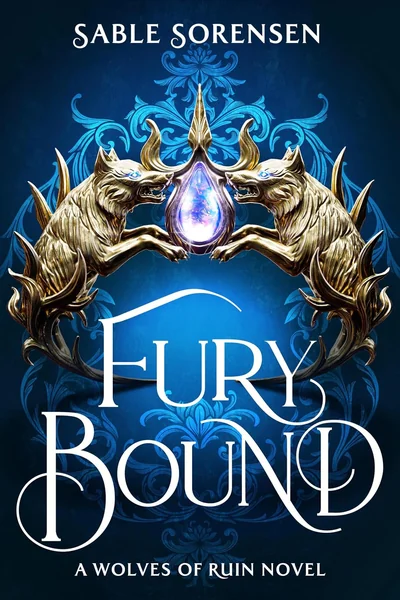
Fury Bound (The Wolves of Ruin Book 2) by Sable Sorensen front cover
What the Book Is
Fury Bound is the second book in Sable Sorensen's The Wolves of Ruin trilogy, published by Requited in May 2026 and running 608 pages. It picks up directly after Dire Bound, the series opener, and the publisher's synopsis lays out a clear escalation: "CROWNED BY DESTINY. CONSUMED BY VENGEANCE." Against the odds, Meryn Cooper has inherited the crown — and a deadly war. The Kingdom of Nocturna is splintering under generations of lies, and Meryn, her bonded direwolf Anassa, and their allies must pull the country back from the brink. The obstacle is political as much as military: the commoners, the Bonded, and the nobles all distrust their new queen, trapping Meryn in what the publisher calls a deadly game of politics, with revenge demanding sacrifice.
“CROWNED BY DESTINY. CONSUMED BY VENGEANCE.”
This is firmly a middle volume — one that assumes familiarity with Dire Bound and builds toward the trilogy's conclusion. Readers new to the series should start at the beginning; the stakes here are the direct consequences of the first book's ending, with the throne itself functioning as the new battleground rather than the prize.
Characters, Bonds, and the Romance
The series' signature element is the bond between humans and direwolves, and it remains central here through Meryn and Anassa. Beyond that pairing, the sequel leans heavily on two relationships that early reviewers single out. The first is familial: Saela's transformation — which, per ursummary.com's reviewer, is treated not as a mere plot device but as a genuine, ongoing wound between sisters. The second is romantic: Meryn's connection with Stark, described by the same reviewer as intensely physical and present, and by the reviewer at nadsbooknook.wordpress.com as a deeply emotional connection with palpable surface chemistry — though that same review faults the relationship as thinly supported underneath that chemistry.
Sorensen's own stated authorial focus is dark, emotionally relentless fantasy centered on bonds that transcend the physical — between lovers, siblings, and humans and their animal counterparts — and the excerpts from early coverage suggest this book is built squarely on that brief. Readers who came to Dire Bound for the direwolf bond and the romance get more of both, amplified.
What Early Readers Praise
The strongest recurring note in early coverage is the book's emotional intensity. The reviewer at jrsbookreviews.com describes an experience in which nobody feels safe, nobody gets easy wins, and the betrayals land hard — a reading defined by constant stress, political betrayal, and a protagonist who cannot catch a break as plot twists arrive one after another. For readers who want a sequel that raises the cost of victory rather than rewarding it, that is the selling point.
Usummary.com's reviewer offers a complementary verdict: the first two-thirds are gripping, with political maneuvering that works and a human–direwolf bond written with enough intimacy to feel real. That same review's framing — a book that will divide its audience cleanly down the middle — is the most accurate summary of the reception picture emerging from these early responses. The praise is genuine and specific; so is the frustration.
Where It Frustrates
The criticisms are equally concrete. Nadsbooknook.wordpress.com's reviewer calls the book 600 pages of uneven pacing — slow and meandering for long stretches, then breakneck as the story rushes to wrap up while setting up a nearly unrelated plotline to extend the series. That reviewer also argues the book loses sight of the series' core conflict — direwolves versus siphons, the setting's vampire-equivalent — devolving into convenient magical rocks, shadow magic, and visions that function as easy solutions. Usummary.com's reviewer reaches a compatible conclusion from a more positive starting point, frustrated precisely because the strong opening stretch gives way to a less satisfying final act.
Meryn herself takes some fire: one reviewer characterizes her decisions in this volume as shortsighted and naïve, and at least one early reader has stated they will not continue the trilogy after this installment. These are individual blog reactions rather than a broad consensus, but they are specific enough that prospective readers should weigh them — particularly anyone who valued the first book's central wolf-versus-siphon conflict.
Who It's For
Fury Bound is for committed Dire Bound readers who want the sequel to hurt — who prioritize emotional stakes, betrayal, and bonds over clean structure. It suits fans of dark romantasy with military and political elements, and readers comfortable with a middle book that spends its length destabilizing everything the first volume built. Those sensitive to pacing whiplash, or invested in the series' original central conflict staying front and center, may want to temper expectations going in. The trilogy's conclusion will determine whether this volume's divisive final act reads as bold setup or overextension.
Frequently Asked Questions
Is Fury Bound worth reading if you loved the first book?
The review recommends it specifically for committed Dire Bound readers who want the sequel to hurt — prioritizing emotional stakes, betrayal, and bonds over clean structure. Those who valued the first book's wolf-versus-siphon central conflict, however, are advised to temper expectations, as that conflict takes a back seat in this volume.
Can this book be read as a standalone, or do you need to read Dire Bound first?
The review is clear that Fury Bound is firmly a middle volume that assumes full familiarity with Dire Bound. The stakes are direct consequences of the first book's ending, and readers new to the series are advised to start at the beginning.
What is the overall verdict on this book?
The review describes it as a dark romantic fantasy sequel that delivers the emotional brutality its premise promises, while noting that early readers are split over whether its second-half turns serve the series or strain it. The praise from early coverage is genuine and specific, but so is the frustration — making it a book that will divide its audience.
Who is the target audience for this book?
The review identifies the ideal reader as a fan of dark romantasy with military and political elements who is comfortable with a middle book that spends its length destabilizing everything the first volume built. Readers sensitive to pacing whiplash or deeply invested in the direwolves-versus-siphons conflict staying central may want to adjust their expectations.
What are the main themes in this book?
The review highlights bonds — between lovers, siblings, and humans and their animal counterparts — as the thematic core of the book, consistent with Sable Sorensen's stated authorial focus on dark, emotionally relentless fantasy. Political betrayal, the cost of power, and the weight of vengeance are also central, with Meryn navigating a deadly game of politics as the newly crowned queen of a splintering kingdom.
How does the sibling relationship between Meryn and Saela develop in this book?
The review notes that Saela's transformation is treated not as a mere plot device but as a genuine, ongoing wound between sisters, a point singled out by the reviewer at ursummary.com as one of the sequel's strengths. This familial bond is described as one of two key relationships the book leans heavily on.
How is the romance between Meryn and Stark handled?
Early reviewers are divided: the ursummary.com reviewer describes it as intensely physical and present, while the nadsbooknook.wordpress.com reviewer acknowledges a deeply emotional connection with palpable surface chemistry but faults it as thinly supported underneath. The romance is amplified compared to the first book but draws qualified rather than universal praise.
What role does the human-direwolf bond play in this book?
The bond between Meryn and her direwolf Anassa remains the series' signature element and is central to this volume. The ursummary.com reviewer specifically praises the human-direwolf bond as written with enough intimacy to feel real, calling it one of the gripping elements of the book's strong first two-thirds.
How does this book handle its political storyline?
The review notes that the political maneuvering works well in the book's first two-thirds, with Meryn trapped in a deadly game of politics as commoners, the Bonded, and nobles all distrust their new queen. However, the final act is criticized for rushing and introducing a nearly unrelated plotline, which undercuts the political tension built earlier.
What are the biggest pacing problems in this book?
The nadsbooknook.wordpress.com reviewer calls the book 600 pages of uneven pacing — slow and meandering for long stretches, then breakneck as the story rushes to wrap up. The ursummary.com reviewer reaches a compatible conclusion, noting that a strong opening stretch gives way to a less satisfying final act.
Sources & Further Reading
The key facts and claims in this review are grounded in the retrieved, verified sources listed below.
- 1
sablesorensen.com
- 2
- 3
- 4
booksonthe747.com
- 5
- 6
- 7
theproficientreviewer.com
Reader Comments
No comments yet
Be the first to share your thoughts!