
BOOKS
Published

Read Time

9 min read

Reader rating

4.6

· 5,942 Amazon ratings
reader ratings, not a LuvemBooks score
Curated & edited by

LuvemBooks Editorial

How we create our reviews →
Share This Review

Castle in the Air by Diana Wynne Jones Review: A Spirited Arabian Nights Fantasy Sequel

Castle in the Air is Diana Wynne Jones's young adult fantasy sequel to Howl's Moving Castle, following a new hero — Abdullah, a young rug merchant — through an Arabian Nights–inspired adventure across the fantasy world of Ingary and beyond. Narrated by Jenny Sterlin in this Recorded Books audiobook edition, the story draws on djinns, magic carpets, and more than a hundred kidnapped princesses, while reuniting fans with beloved characters from the first book. Critics called its predecessor "ebulliently inventive," and the sequel carries that same spirit of layered humor and surprise into fresh, myth-soaked territory.

LuvemBooks Verdict

Best for

Young adult fantasy readers drawn to myth-remix storytelling, Arabian Nights atmosphere, and ensemble casts who enjoy a sequel that confidently charts its own cultural and narrative course rather than simply continuing its predecessor's story.

Worth it if

You come to it having read Howl's Moving Castle and are ready to embrace a new protagonist and a One Thousand and One Nights framework — the layered disguises, delayed jokes, and returning characters pay off most richly with that context in place.

Skip if

You're firmly attached to Sophie Hatter and expecting the same brisk, sardonic English-folklore register of the first book — Abdullah's more passive early arc and the broader ensemble of djinns and wishes can feel diffuse by comparison.

Kirkus Reviews called it "a bewitching romp, gratifying to mind, imagination, and funnybone," singling out Jones's gift for giving vivid personality to every element — including the lazy, flattery-susceptible carpet — and praising double identities that "should surprise even fans familiar with her bottomless bag of tricks" (kirkusreviews.com). School Library Journal awarded it a starred review, declaring that "readers won't put down the book until they figure out all its secrets," as quoted on waterstones.com.

Jones provides delicious personalities even for the carpet — it's lazy but susceptible to flattery — and slips in double identities that should surprise even fans familiar with her bottomless bag of tricks.

kirkusreviews.com
Sources: Kirkus Reviews, Waterstones
4.6from 5,942 Amazon ratings— reader ratings, not a LuvemBooks score

Age & Reading Level

Recommended age

Ages 12–18

Reading level

Young adult

Best for: Ages 10+ — the layered plot structure, ensemble cast of djinns, and jokes that pay off chapters later suit confident readers in the upper middle-grade and YA range

Skip if you want a direct continuation of Sophie Hatter's story with a tightly focused single-protagonist arc in the vein of Howl's Moving Castle.

In This Review
  • What Works & What Doesn't
  • What the Story Is and Where It Goes
  • Roots in the Arabian Nights
  • Jones's Craft: Character, Comedy, and Surprise
  • Place in the Series and Its Standalone Appeal
  • Who This Is For and Where It Holds Back

What Works & What Doesn't

What Works
  • Draws inventively on Arabian Nights traditions, giving the series a new cultural register distinct from the English-folklore atmosphere of Howl's Moving Castle
  • Critics praised Jones's ability to give vivid, comic personality to every element — including the magic carpet itself
  • Layered disguises and double identities reward attentive readers, especially those familiar with the first book
  • Princess Flower-in-the-Night is written as a genuinely educated, complex figure rather than a passive romantic object
  • The unabridged Recorded Books audiobook, narrated by Jenny Sterlin, clocks in at nearly eight hours — substantial value for a single sitting
What Doesn't
  • Readers attached to Sophie Hatter as protagonist may find the adjustment to Abdullah's more passive early characterization slower going
  • The broader ensemble of djinns, wishes, and magical objects can feel more diffuse than the tightly focused invention of Howl's Moving Castle
This review covers the content and published reception of Castle in the Air by Diana Wynne Jones; it reflects published sources and editorial synthesis, not hands-on listening or reading.
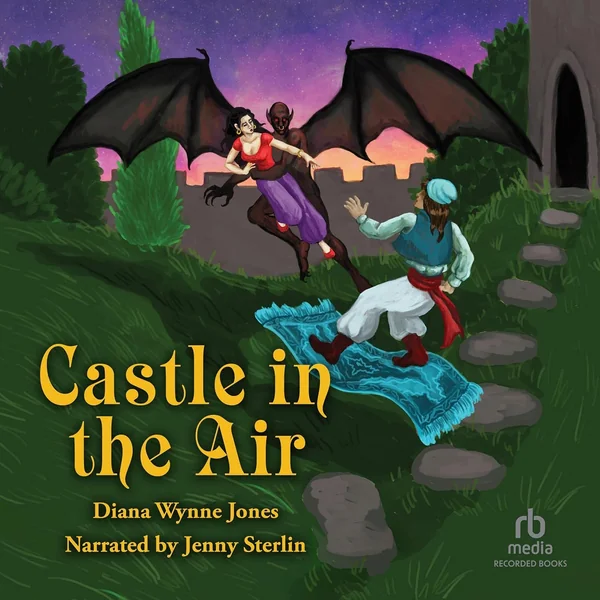
Castle in the Air by Diana Wynne Jones front cover

What the Story Is and Where It Goes

Castle in the Air, first published in 1990, is the second book in Diana Wynne Jones's Howl's Castle trilogy (also known as the Lands of Ingary series). Where Howl's Moving Castle centered on Sophie Hatter, this sequel shifts the spotlight to Abdullah, a young rug merchant from the desert city of Zanzib who sustains himself with elaborate daydreams about being a lost prince. A mysterious stranger sells him a threadbare but magical carpet, which begins transporting Abdullah in his sleep to a beautiful garden — and to Princess Flower-in-the-Night, a young woman as well-read as she is sheltered, who becomes his true love and, quickly, the impetus for his entire quest. A wicked djinn — aided by his more benevolent but enthralled brother — has captured more than a hundred princesses with the aim of marrying them all, and Abdullah's dreams and nightmares begin colliding with waking reality as he sets out to rescue her. The quest moves from the deserts of Zanzib through the Britain-like kingdom of Ingary and ultimately up to the sky-high castle where the djinn holds his captives.
delicious personalities even for the carpet (it's lazy but susceptible to flattery).

Roots in the Arabian Nights

Jones structured this sequel as a deliberate riff on One Thousand and One Nights, giving the book a distinctly different texture from the English-folklore atmosphere of Howl's Moving Castle. Abdullah travels with a comically cranky genie, rides a lazy magic carpet, and navigates a world of disguises and wishes gone sideways — all familiar furniture from the Arabian tradition, recast with Jones's signature wit. This dual-world design — Zanzib's desert culture rubbing up against Ingary's fairy-tale Europe — gives the novel a broader geographical and tonal canvas than its predecessor. Fans of the first book encounter returning characters from Howl's Moving Castle, though many appear in disguise, which Jones uses as both a plot mechanism and a running source of comedy.

Jones's Craft: Character, Comedy, and Surprise

Kirkus Reviews, in its assessment of the novel, singled out Jones's talent for giving personality to everything — noting that she provides what it called "delicious personalities even for the carpet (it's lazy but susceptible to flattery)." That same review praised the double identities woven through the plot as the kind of twists likely to "surprise even fans familiar with her bottomless bag of tricks." One reader, writing from Vienna, described Jones's prose style as hitting a precise register: writing in a way that "never talks down to her readers" while never showing off either — a balance that distinguishes Jones's voice in the young adult space. Princess Flower-in-the-Night, for her part, is characterized not just as a romantic prize but as a formidably educated young woman whose knowledge comes entirely from books — a detail that Jones uses for both humor and genuine character depth.

Place in the Series and Its Standalone Appeal

Because Castle in the Air follows a new protagonist rather than continuing Sophie's story directly, it functions with a degree of independence from Howl's Moving Castle — readers unfamiliar with every detail of the first book can follow Abdullah's journey on its own terms. That said, the novel rewards those who come to it with knowledge of the first book: the returning characters carry more weight, and the disguises land with greater force when the reader knows who is hiding beneath them. Critics described Howl's Moving Castle as "ebulliently inventive," and Castle in the Air inherits that inventive energy while charting its own mythological course. The audiobook edition, published by Recorded Books on April 20, 2009, runs seven hours and fifty-nine minutes and is narrated by Jenny Sterlin in an unabridged version.

Who This Is For and Where It Holds Back

Readers who loved Sophie Hatter as a protagonist may need a moment to adjust to Abdullah — his starting point as a daydreaming, somewhat passive young man is a deliberate character design, but it places the early chapters in a lower gear than Sophie's brisk, sardonic opening. The Arabian Nights framework, while fresh, also means the novel leans into a broader ensemble of wishes, djinns, and magical objects that some readers find more diffuse than the focused invention of the first book. Those who embrace the shift, however, will find a fantasy novel dense with moving parts, jokes that pay off chapters later, and the kind of structural cleverness that Jones's admirers consistently prize. Young adult fantasy readers drawn to myth-remix storytelling and ensemble casts — rather than a single tightly focused hero's arc — are the audience this book is most squarely designed for.

Sources & Further Reading

The key facts and claims in this review are grounded in the retrieved, verified sources listed below.

  1. 1
  2. 2
  3. 3
  4. 4
  5. 5
  6. 6
  7. 7