Skip to content
Reviewed

Read Time

7 min read

Reader rating
4.4 · 84,853 Amazon ratings, as of Nov 2026
reader ratings, not a LuvemBooks score
Curated & edited by

LuvemBooks Editorial

How we create our reviews →
Share This Review
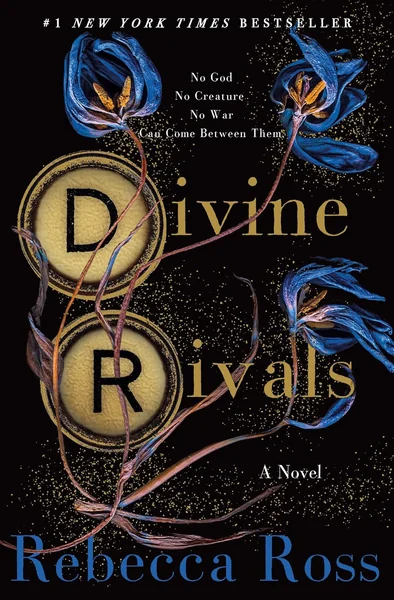
Divine Rivals: A Novel (Letters of Enchantment, 1) by Rebecca Ross front cover

Our review

Divine Rivals

Divine Rivals by Rebecca Ross Review: A War-Torn Epistolary Romance

Rebecca Ross's debut fantasy novel delivers a sweeping enemies-to-lovers romance anchored by a poignant exploration of grief and war. While its epistolary format and abrupt cliffhanger may frustrate some readers, the book's lyrical prose and emotional depth make it a compelling start to the Letters of Enchantment series.

Our age band: Ages 16+addiction · war-related trauma

LuvemBooks Verdict

Best for

Readers who enjoy lyrical prose will appreciate the book's poignant exploration of personal struggles.

Worth it if

Worth reading if you enjoy epistolary structures that prioritize intimate character dynamics and grief-themed angst over rapid plot progression.

Skip if

Skip it if you require a fast-paced adventure or a fully resolved standalone plot, as the book ends on a dramatic cliffhanger and prioritizes correspondence over action.

Where reviewers agree and split

Readers rate it 4.4 on Amazon. The reviews we read that discuss it in depth split on some points:

  • Positive

    Kirkus Reviews · Press review: recommends for war perspectives with romance and fantasy

  • Positive

    Books Hearts · Book blog: highly praises emotional depth and romantic pacing

  • Negative

    Nazah Afreen · Book blog: fails to meet hype and leaves reader unimpressed

  • Positive

    Megs Book Rack · Book blog: enjoys character dynamics and magical realism elements

    Overall verdicts are our summary of each review we read, from its headline, rating and conclusion.

    Kirkus Reviews recommends the book for readers seeking war perspectives blended with romance and fantasy, while Books4Hearts highlights its pacing. Conversely, Nazah Afreen finds the narrative structure tedious and the leads' chemistry lacking.

    “Ideal for readers seeking perspectives on war, with a heavy dash of romance and touch of fantasy.”

    — Kirkus Reviews
    Sources: Kirkus Reviews, Books Hearts, Nazah Afreen, Megs Book Rack
    4.4from 84,853 Amazon ratings, as of Nov 2026— reader ratings, not a LuvemBooks score

    Ask LuvemBooks

    Was this helpful?

    Rebecca Ross's debut fantasy novel delivers a sweeping narrative. While its abrupt cliffhanger may frustrate some readers, the book remains a compelling start to the Letters of Enchantment series. Highly atmospheric and emotionally resonant, it is best suited for readers who enjoy slow-burn dynamics and do not mind heavy thematic weight.
    Is it worth reading?
    The book delivers a fantasy romance that prioritizes emotional intimacy and lyrical storytelling. It appeals to those who enjoy grief-themed angst and do not mind a heavy dose of war-related themes.
    Similar books
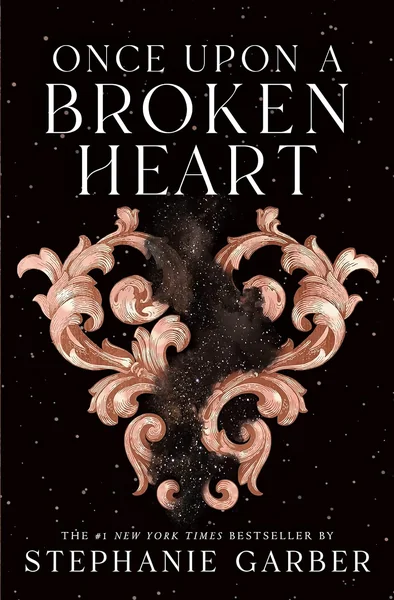
    Readers who enjoy mythic fantasy with strong romantic cores often compare this to V.E. Schwab's The Invisible Life of Addie LaRue, Rachel Gillig's One Dark Window, Stephanie Garber's Once Upon a Broken Heart, and Amber V. Nicole's The Book of Azrael. These titles share the blend of historical settings and character dynamics that define Ross's narrative.
    Who should read this?
    It appeals to those who appreciate epistolary structures that prioritize character development. However, it may not satisfy readers looking for adventure or a resolved narrative.
    What age is it for?
    Best for ages 16 and up, as the story explores heavy themes of addiction, war-related trauma, and moral corruption. The emotional complexity and mature subject matter make it more suitable for young adult and adult readers rather than younger children or early middle-grade audiences.
    About Rebecca Ross
    Rebecca Ross is an American author of young adult novels and adult fantasy, best known for her New York Times bestselling Letters of Enchantment duology.
    Where does this book fit in the series?
    Divine Rivals serves as the first entry in the Letters of Enchantment duology. It introduces the magical world and the central rivalry that will continue in the subsequent volume, concluding on an open note while offering a complete romantic arc for its protagonists.
    Is this appropriate for teens?
    The novel is appropriate for mature teens (16+) due to its complex relationship dynamics. While it contains no graphic explicit content, its heavy emotional weight makes it better suited for older YA readers and adults.
    Summarize this book

    Summarize this book

    Set in an alternate-history mid-1910s where slumbering gods wage war, the story follows Iris Winnow, who must secure a column promotion while managing her mother's addiction and missing brother. Her private letters accidentally land in rival Roman Kitt's hands, sparking a magical typewriter correspondence that bridges their distance and fuels a romance amidst the front lines.

    Follow up

    How do the main characters interact?
    Is the pacing fast?

    Synthesized from verified book data & published reviews · How we review

    Ask LuvemBooks

    What would you like to know about Divine Rivals?

    Answers come from our editorial notes on this book. If we haven't covered something, we'll say so.

    Readers often ask

    Our Review

    We review the evidence: reader verdicts, gathered and weighed with AI assistance and edited by LuvemBooks, rather than one reader's first-hand take.

    Rebecca Ross's debut fantasy novel delivers a sweeping enemies-to-lovers romance anchored by a poignant exploration of grief and war. While its epistolary format and abrupt cliffhanger may frustrate some readers, the book's lyrical prose and emotional depth make it a compelling start to the Letters of Enchantment series.

    Plot Summary and Characters

    Set in a world where slumbering gods have awakened to wage war, the story follows eighteen-year-old Iris Winnow. Her primary goal is to keep her fractured family intact while her mother battles addiction and her brother remains missing on the front lines.
    To secure a columnist promotion at the Oath Gazette, Iris must outmaneuver her professional rival, Roman Kitt. When Iris's private letters to her absent brother mysteriously land in Roman's hands, an anonymous magical correspondence begins.
    The two rival journalists discover that their typewriters are linked across vast distances, allowing them to communicate intimately despite their public animosity. As their written bond deepens, the pair is thrust into the heart of the conflict.
    They are forced to confront their growing feelings amidst the chaos of battle. Taking place in the mid-to-late 1910s, the novel proposes an alternate history in which the mythologies of gods and goddesses have a basis in fact.
    Iris and Roman join the soldiers at the front as war correspondents, an act that pushes the narrative to its dramatic conclusion.

    Critical Reception and Themes

    Kirkus Reviews offers a positive verdict, recommending the novel for its war perspectives blended with romance and fantasy, noting it "flirts with clichéd tropes but also takes some startling turns." Books Hearts also delivers a positive assessment, highly praising the emotional depth and romantic pacing while stating the book effortlessly swept me off my feet.
    Megs Book Rack shares a positive reception, enjoying the character dynamics and magical realism elements, and notes, "I really enjoyed this." Conversely, Nazah Afreen provides a negative review, concluding the novel fails to meet hype and leaves the reader unimpressed, writing that it "didn't quite live up to the colossal hype."
    Readers frequently highlight the novel's emotional resonance.

    Format and Reading Experience

    The epistolary elements and typewriter imagery benefit greatly from visual presentation. This suggests that the physical format enhances the narrative's tactile charm for many readers.
    The novel was originally published in April 2023 by Wednesday Books. Its 368-page length provides ample space for the correspondence to unfold, though pacing reception varies.
    Readers can choose between the printed edition or the audiobook, though the printed version offers a distinct advantage for tracking the correspondence. The book blogger behind MegsBookRack admitted that the history behind the gods and the broader fantasy aspects have completely left their brain.
    This highlights that the romantic and emotional arcs take precedence over the mythological worldbuilding in the reader's memory. The audiobook runtime spans ten hours and fifty minutes, offering a different auditory experience for those who prefer listening.
    The book blogger behind LibGirlBooks described the typewriters as "old-timey email," emphasizing how the magical connection functions as a permanent lifeline between the protagonists.
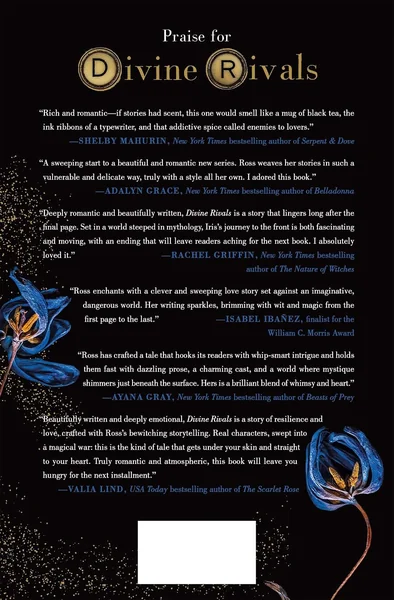
    Back cover with praise quotes from bestselling authors and decorative floral illustrations on black background.
    Back cover with praise quotes from bestselling authors and decorative floral illustrations on black background.

    Is Divine Rivals Worth Reading?

    Weighing these reviews, the book emerges as a highly atmospheric fantasy romance that prioritizes emotional intimacy and lyrical storytelling over rapid plot progression. The tension in the reception largely circles the epistolary format itself: for some, the letters provide a cozy, intimate window into the protagonists' hearts; for others, they bog down the narrative momentum.
    The novel is frequently compared to Shadow and Bone and Lore, positioning it as a mythic fantasy with a strong romantic core. It is best suited for readers who enjoy slow-burn enemies-to-lovers dynamics and do not mind a heavy dose of grief and war-related angst.
    Those seeking a fast-paced adventure or a fully resolved standalone plot may find the pacing and cliffhanger ending less satisfying. The book's strength lies in its ability to make the magical correspondence feel like a lifeline for the characters, offering a poignant look at how words can bridge the widest divides.

    Series Context

    Divine Rivals serves as the first entry in the Letters of Enchantment duology. It introduces the magical world and the central rivalry that will continue in the subsequent volume.
    The author, Rebecca Ross, is a #1 New York Times and Sunday Times bestselling author known for fantasy fiction. This debut novel establishes her ability to blend mythic elements with grounded emotional storytelling.
    While the story concludes on a dramatic cliffhanger, it functions as a complete romantic arc for its protagonists. The book blogger behind Books4Hearts noted that Ross effortlessly swept them off their feet and left them anxiously awaiting the next installment.
    This indicates that the novel successfully hooks readers into the broader saga despite its standalone emotional resolution.

    Sources & Further Reading

    The key facts and claims in this review are grounded in the retrieved, verified sources listed below.

    1. Cited in this review
    2. 1
    3. Further reading
    4. 2

      Rebecca Ross, LuvemBooks

    5. 3

      rebeccarossauthor.com

    6. 4
    7. 5
    8. 6
    9. 7
    10. 8
    11. 9
    12. 10
    13. 11
    14. 12
    15. 13
    16. 14
    17. 15

      kirkusreviews.com

    Age & Reading Level

    Our age band

    Ages 16+

    Reading level

    Young adult

    Amazon listing

    Ages 15+ (set by customers) · Grade 7–9

    Our age band groups books for browsing; it isn't an age a review gave.

    Content to know about

    addiction
    war-related trauma
    moral corruption

    Best for: Ages 16+ — heavy themes of addiction and war-related trauma require mature comprehension.

    Skip if you require a fast-paced adventure or a fully resolved standalone plot, as the book ends on a dramatic cliffhanger and prioritizes correspondence over action.

    From our readers

    Reader reviews

    No LuvemBooks readers have answered yet.

    Read it? Was it right for you?

    Discussion

    Reader comments