BOOKS
Published

Read Time

9 min read

Reader rating

4.7

· 899 Amazon ratings
reader ratings, not a LuvemBooks score
Curated & edited by

LuvemBooks Editorial

How we create our reviews →
Share This Review

168 Better Than Takeout Chinese Recipes by Mandy Fu Review: A Visual, Wide-Ranging Debut Cookbook

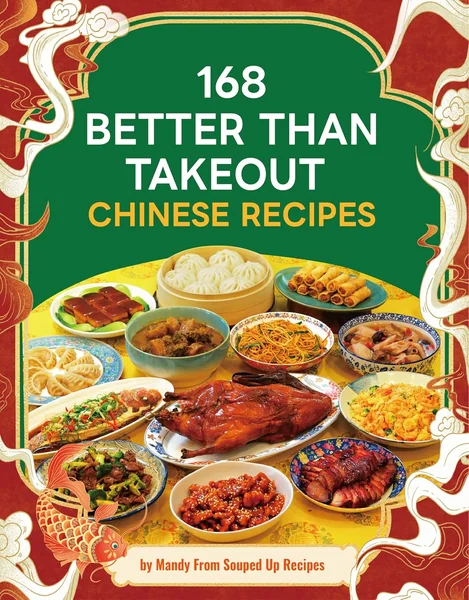
Mandy Fu's Souped Up Recipes debut collects 168 Chinese recipes — takeout staples like Mongolian Beef and Sesame Chicken alongside regional dishes such as Shaanxi Rou Jia Mo — each with step-by-step photos and a demo video. A broad, visual guide for home cooks, though its reliability rests on design rather than independent testing.
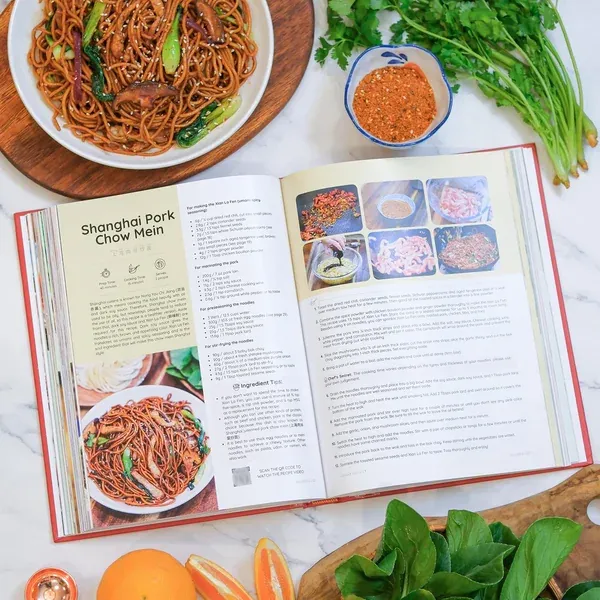
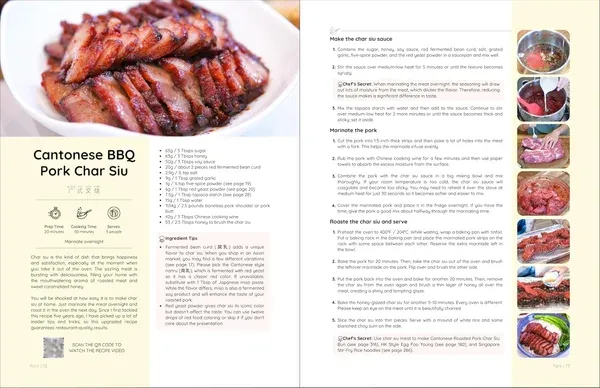
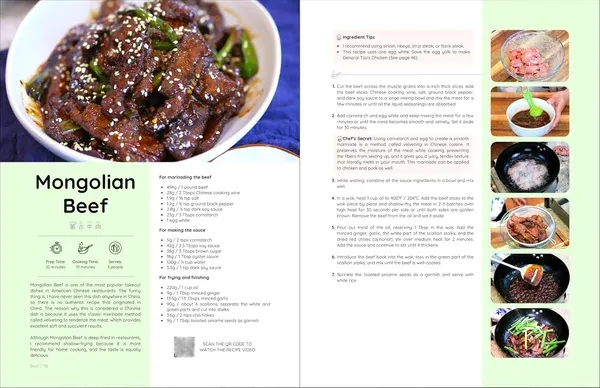
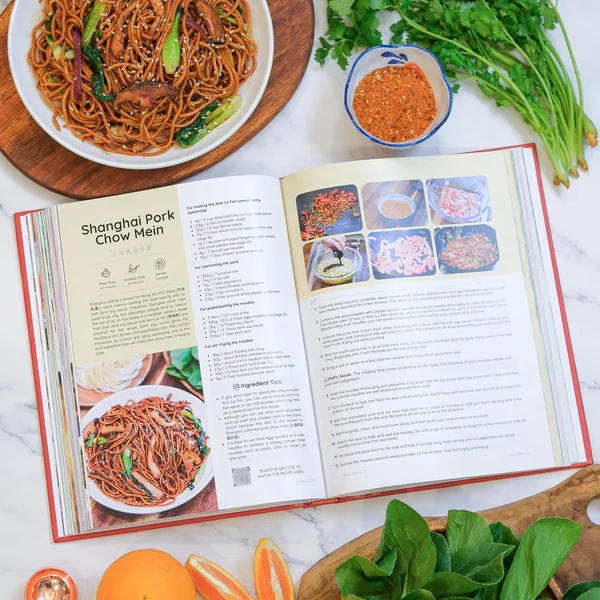
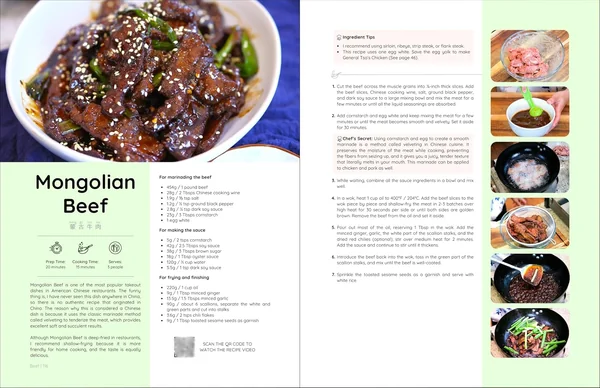
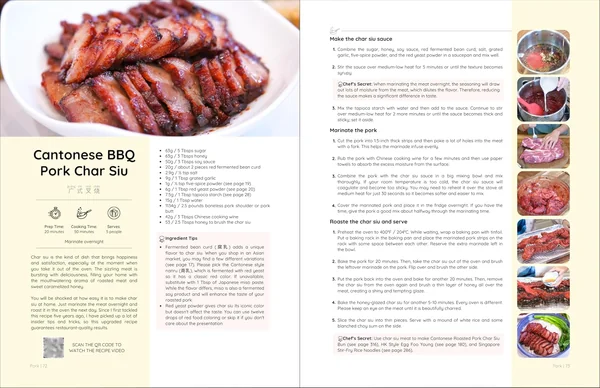
Recipe spread with plated noodle dish, ingredient photos, step-by-step instructions, and fresh garnishes displayed alongside.Recipe spread with plated pork dish, ingredient list, instructions, and step-by-step cooking photos.A recipe spread with a plated beef dish, ingredient list, cooking instructions, and step-by-step preparation photos.Tap to enlarge

LuvemBooks Verdict

Best for

Home cooks whose baseline for Chinese food is the takeout menu and who want to cook past it — visual learners especially, since every one of the 168 recipes carries step-by-step photos plus a linked demo video.

Worth it if

You want a single generous volume that covers the takeout classics and then branches into regional and fusion dishes, and you're happy to lean on photo-and-video teaching rather than text alone.

Skip if

You want depth in one regional cuisine, fully self-contained print recipes without a phone or tablet at the stove, or you already follow Souped Up Recipes closely and may find the material overlaps with what you've cooked free online.

Formal critical coverage is thin; the retrieved record is mostly retailer and publisher copy, with books.google.com and library catalog wcls.bibliocommons.com echoing the publisher's description of step-by-step photos and demo videos for all 168 recipes. The one substantive reader note comes via amazon.co.uk, where a longtime channel viewer said the book was "far more comprehensive and detailed" than expected, consistent with the 4.7/5 aggregate from 899 Amazon ratings.

Sources: amazon.co.uk, books.google.com, wcls.bibliocommons.com
4.7from 899 Amazon ratings— reader ratings, not a LuvemBooks score
Buy on Amazon

Age & Reading Level

Recommended age

Adult

Reading level

Adult

Skip if You're after deep coverage of a single regional Chinese cuisine — Sichuan, Cantonese, or Shaanxi specialists need a dedicated regional volume, not this 168-recipe survey.

In This Review
  • What Works & What Doesn't
  • What the Book Is
  • Range: Takeout Classics and Regional Dishes
  • Visual and Video Support
  • Where It's Less Strong
  • Who It's For

What Works & What Doesn't

What Works
  • Every recipe pairs step-by-step photos with a linked demo video — unusually strong visual support for a print cookbook
  • Covers the full takeout canon (Mongolian Beef, Sesame Chicken, Sweet and Sour Pork) plus regional dishes like Shaanxi Rou Jia Mo and Yunnan Herb Braised Beef Soup
  • Drawn from Mandy Fu's established Souped Up Recipes recipe archive, with selections tested against a large public audience
  • Honest about its scope: a curated glimpse of Chinese cuisine rather than a claim to encyclopedic coverage
  • Substantial 424-page hardcover offering genuine range for the price point
What Doesn't
  • Breadth over depth: 168 recipes across takeout, regional, and fusion cooking means no single regional cuisine gets more than a sampling
  • No independent kitchen testing or third-party verification of recipe accuracy is available in the published record
  • Large, 3.5-pound format and device-dependent demo videos add practical friction at the stove
  • Longtime Souped Up Recipes followers may find significant overlap with material already published online
A big, generous first cookbook from a creator with a proven teaching audience — strong on range and visual support, though its claims of reliability rest on design, not independent testing.

What the Book Is

168 Better Than Takeout Chinese Recipes is the debut cookbook from Mandy Fu, the creator behind the Souped Up Recipes channel, published by Souped Up Recipes in October 2024. It is a substantial hardcover — 424 pages collecting 168 recipes — and it is unapologetically a creator cookbook: Fu describes sifting through the recipes she had published on her social media pages and selecting the ones that belonged in a single volume. The framing promise is right in the title: these are dishes positioned as achievable at home and better than their takeout equivalents, aimed at cooks who want to reproduce familiar Chinese restaurant food in their own kitchens.
Fu is candid about the book's ambition and its limits. The term "Chinese food," she notes in her introduction, encompasses an effectively infinite spectrum of flavors and traditions, and no single volume can do justice to all of it. The book is presented as a curated glimpse rather than an encyclopedia — a reasonable and honest posture for a 168-recipe survey of one of the world's largest cuisines.
Recipe spread with plated noodle dish, ingredient photos, step-by-step instructions, and fresh garnishes displayed alongside.

Range: Takeout Classics and Regional Dishes

The recipe list deliberately runs on two tracks. The first is the popular takeout canon Fu knew she had to cover: Chicken Fried Rice, Mongolian Beef, Pepper Steak, Sesame Chicken, Sweet and Sour Pork, Chop Suey, and Chicken Lo Mein all make the cut. Her argument for including them is that these dishes have earned their status with audiences worldwide and that their simplicity and affordability make them natural fits for home cooking — the core "better than takeout" pitch.
The second track reaches well beyond the American-Chinese menu. The book includes Shaanxi Beef Burger Rou Jia Mo and Yunnan Herb Braised Beef Soup, pointing to a genuine interest in regional breadth, alongside fusion dishes such as Hong Kong Beef Curry and Shanghai Crispy Breaded Pork Chop — recipes shaped by colonial history and local tradition. That spread is the book's most distinctive quality: it does not stop at the takeout standards its title advertises, and readers who buy it for Sesame Chicken will also find street food and regional braises they may never have encountered.
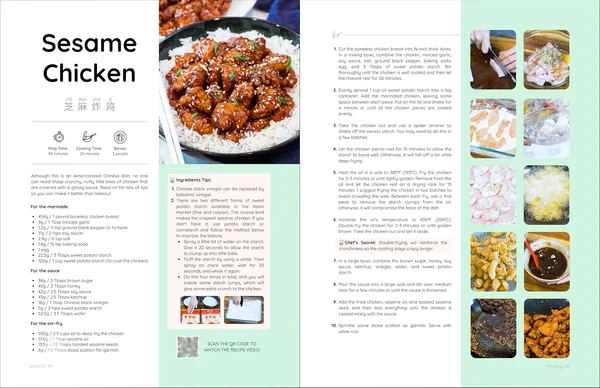
Recipe spread with plated pork dish, ingredient list, instructions, and step-by-step cooking photos.

Visual and Video Support

The book's clearest structural strength is how each recipe is presented. Every one of the 168 recipes is accompanied by detailed step-by-step photos and a linked demo video, extending the visual teaching style that built Fu's online audience into print. For techniques that frustrate beginners in text-only cookbooks — folding, velveting, wok handling — the combination of still photography and video demonstration is a sensible design choice, and it makes the volume function as a companion to her channel as much as a standalone object.
A scope note is in order here: this review assesses the book's content, organisation, and stated approach from published sources. It is not a kitchen test, and no independent verification of the recipes' accuracy or reproducibility is available in the record. Buyers weighing that question should know that the case for reliability rests on the book's structure — step-by-step photography, video back-up, and recipes drawn from a large, long-running public audience — rather than on third-party testing.
A recipe spread with a plated beef dish, ingredient list, cooking instructions, and step-by-step preparation photos.

Where It's Less Strong

The same breadth that distinguishes the book also caps its depth. One hundred sixty-eight recipes spread across takeout standards, street food, regional specialties, and fusion dishes means that any single regional tradition receives a handful of entries at most. Cooks looking for a deep treatment of Sichuan, Cantonese, or Shaanxi cooking specifically will be better served by a dedicated regional volume; this is a survey, and it reads as one by design.
The physical format is worth flagging practically. At 3.5 pounds with large-format dimensions, this is a substantial kitchen-counter book rather than something to prop casually beside a wok, and the demo videos, however useful, require a phone or tablet at hand — a small friction point for cooks who prefer a fully self-contained print experience. Finally, because the recipes originate from social media output, longtime followers of the channel may find overlap with material they have already cooked from free online.
A recipe spread with a plated chicken dish, ingredient list, instructions, and step-by-step cooking photos.

Who It's For

This is a book for the home cook whose reference point for Chinese food is the takeout menu and who wants to cook past it — first reproducing the classics, then branching into the regional and fusion dishes that fill out the collection. It suits visual learners particularly well, given that every recipe carries step-by-step photography and a video walkthrough. It is less suited to specialists seeking depth in one region, or to collectors who already own comprehensive Chinese cookbooks and want something this volume does not try to be. As a first print collection from a creator with an established teaching audience, it delivers exactly what it promises: breadth, familiarity, and heavy visual support.

Sources & Further Reading

The key facts and claims in this review are grounded in the retrieved, verified sources listed below.

  1. Cited in this review
  2. 1
  3. 2
  4. 3
  5. Further reading
  6. 4
  7. 5
  8. 6