
At a glance
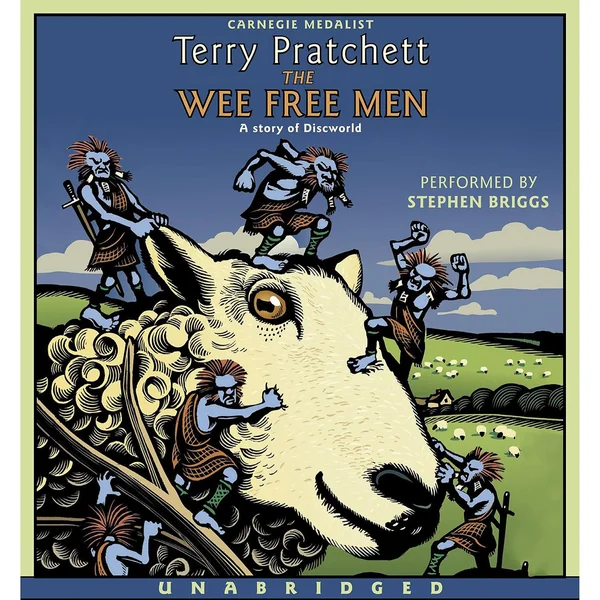
The Wee Free Men
LuvemBooks Verdict
Best for: Readers of any age — whether a young person encountering Discworld for the first time or an adult fan who has sidestepped the Tiffany Aching books as juvenilia — who want a fantasy that pairs genuine wit and Scots-Gaelic verbal comedy with real emotional and moral stakes, and who are open to experiencing it as an audiobook narrated by Discworld's established voice, Stephen Briggs.
Worth it? Skip it? Read the full verdict →Ask LuvemBooks
Was this helpful?
- Is it worth reading?
- For readers willing to meet Pratchett on his own terms, The Wee Free Men is a standout entry in the Discworld canon. Adult fans who have skipped the series assuming it is juvenilia are frequently among the readers who discover how much they have missed — the satire is as sharp as anything in the main sequence, and Tiffany Aching is among Pratchett's most fully realized protagonists. The audiobook narrated by Stephen Briggs, with Whispersync support, is particularly well-suited to Pratchett's dialogue-heavy, comedic style and the strongly differentiated voices of the ensemble cast. The main caveat is that new listeners may need time to calibrate to Pratchett's distinctive comedic register and the invented cosmology of Discworld.
- Similar books
- Readers who enjoy The Wee Free Men tend to gravitate toward other fantasy novels featuring resourceful young protagonists navigating strange, dangerous worlds. Roald Dahl's Matilda shares the appeal of an unusually capable child pushing back against larger forces, while Dahl's The BFG offers a similarly odd-couple dynamic between an unlikely pair facing genuine peril wrapped in comic invention. Madeleine L'Engle's A Wrinkle in Time is a natural companion for readers drawn to Tiffany's mix of emotional seriousness and fantastical adventure. Chris Colfer's The Wishing Spell and Katherine Rundell's Impossible Creatures both feature young characters drawn into richly built secondary worlds — strong picks for readers who want that same sense of a fully realized, internally consistent fantasy universe.
- Who should read this?
- The Wee Free Men is an excellent fit for confident younger readers aged nine and up who enjoy fantasy adventure with genuine stakes and comic invention, as well as for adult Discworld fans who have not yet explored the Tiffany Aching arc. It also works as a Discworld entry point for readers of any age who are new to the series — the novel is designed to stand alone. Readers particularly drawn to character-rich ensemble narration, Scots-inflected verbal comedy, and fantasy that takes both its humor and its themes seriously will find it especially rewarding.
- What age is it for?
- Best for ages 9 and up — the novel's length, Pratchett's layered satirical style, and its invented Discworld cosmology suit confident readers comfortable with more demanding fantasy fiction. Parents and gift-buyers should note that despite its YA classification, The Wee Free Men engages genuinely dark themes including death and real menace; it is not a light consequence-free adventure. Adult readers will find it equally rewarding, and the audiobook format with Stephen Briggs narrating can make it accessible for even slightly younger listeners.
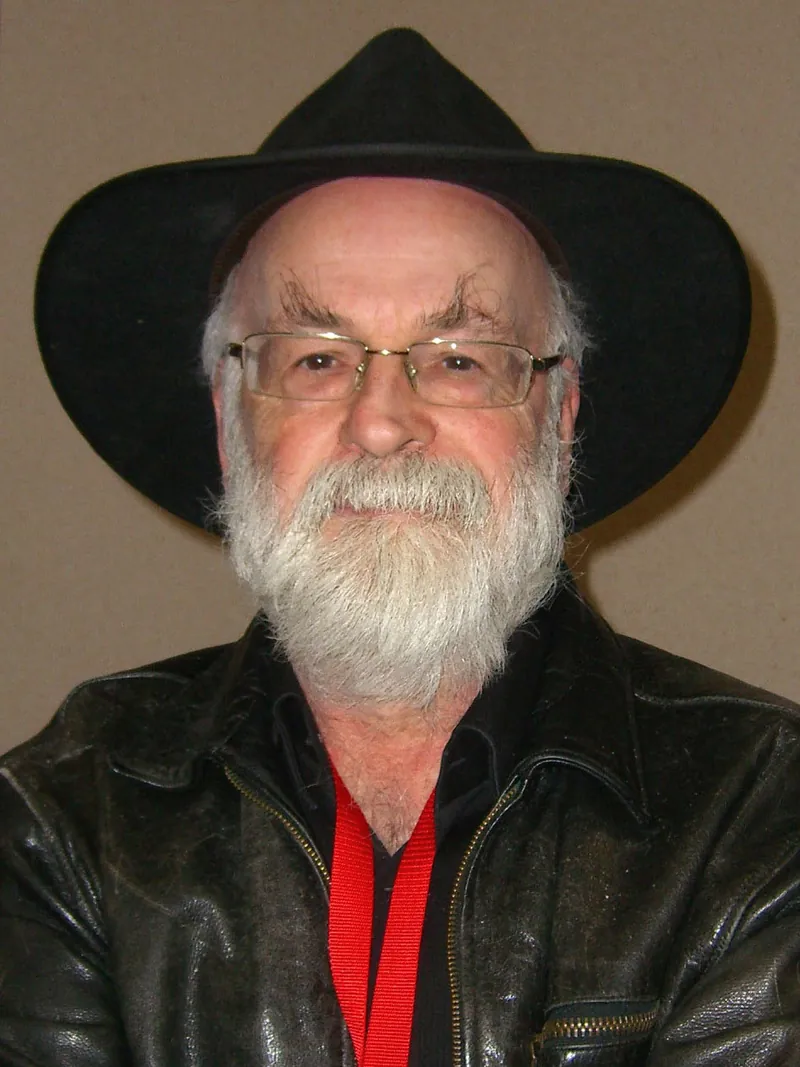
- About Terry Pratchett
- Terry Pratchett was a beloved British fantasy author best known for the Discworld series, celebrated for his satirical wit and having sold over 85 million books worldwide.
- How does this compare to other Pratchett books?
- The Wee Free Men sits at an unusual crossroads within the Discworld canon — officially a children's or YA title, yet thematically as demanding as anything in the adult series. Unlike the main Discworld sequence, it was written specifically for a younger readership, but critics note that Pratchett did not simplify his craft or ideas in doing so; the Tiffany Aching books can in fact be especially dark. The Nac Mac Feegle's Scots-Gaelic dialect replaces the rat-language euphemisms Pratchett used to handle coarse speech in his earlier children's Discworld title The Amazing Maurice and His Educated Rodents, demonstrating his ongoing willingness to innovate within the children's space.
- What's the P. G. Wodehouse connection?
- Pratchett openly cited P. G. Wodehouse as an idol, and Fantasy Literature notes that his gift for subtle humorous writing and satire runs throughout The Wee Free Men. This influence manifests not in slapstick or broad jokes but in a careful, layered comic craft — the kind of humor that rewards close reading and re-reading. The Nac Mac Feegle's dialect-driven verbal comedy is one of the clearest expressions of this sensibility in the novel.
Summarize this book
Follow up
Synthesized from verified book data & published reviews · How we review
Press Enter to ask. Answers come from our editorial Q&A — start typing to see related questions.
Age & Reading Level
Recommended age
Ages 8–12
Reading level
Middle grade
Content to know about
Best for: Ages 9+ — Pratchett's layered satirical style, invented cosmology, and longer narrative suit confident readers comfortable with more demanding fantasy fiction.
Skip if you're looking for a light, consequence-free children's fantasy romp with no dark stakes.
Editorial Review
The Wee Free Men is a 2003 comic fantasy novel by Terry Pratchett and the first entry in the Tiffany Aching sub-series of Discworld, following a nine-year-old witch-in-the-making as she battles the Queen of the Elves to rescue her kidnapped brother — armed with a frying pan, a borrowed toad, and a clan of six-inch-high, sword-wielding blue Scotsmen. The audiobook edition, narrated by Stephen Briggs and released through Clarion Books, runs seven hours and nine minutes.…
Read the Full ReviewRelated reading
Adjacent titles worth exploring. We haven't reviewed these yet, so they link out to Amazon.