8 min read
4.9
· 59 Amazon ratingsShare This Review
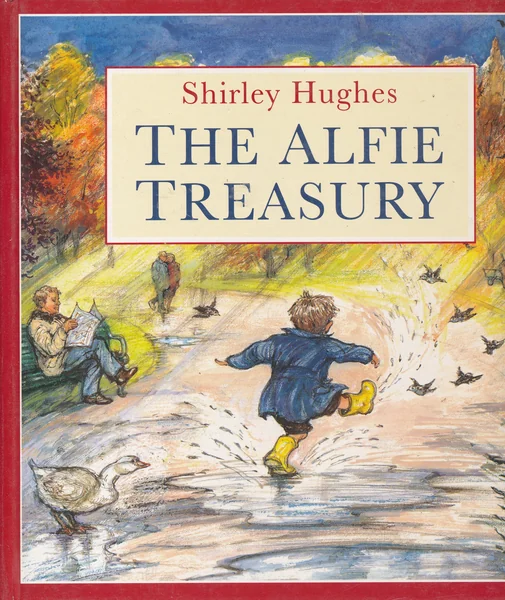
The Alfie Treasury by Shirley Hughes Review: A Timeless Collection for Pre-Schoolers
The Alfie Treasury is a hardcover picture-book collection by Shirley Hughes, published by Ted Smart, gathering seven Alfie stories into a single volume designed to delight young children and their caregivers alike. Drawing on Hughes's long-running series about a pre-school boy named Alfie, the anthology tackles the small but momentous concerns of early childhood — shyness, siblings, new shoes, birthday parties, and the looming adventure of starting school. Critical coverage describes Hughes as "a magical storyteller with an instinctive understanding of the mind of the pre-schooler," and this treasury serves as an ideal introduction to or celebration of that enduring body of work.
LuvemBooks Verdict
Best for
Families with pre-school children aged three to five who are new to Shirley Hughes's Alfie series and want a single hardcover gift edition that introduces the earliest and most celebrated stories in one volume.
Worth it if
Worth seeking out if you want a unified, beautifully produced keepsake that captures pre-school milestones — shyness, siblings, birthday parties, new boots — through Hughes's seamlessly integrated words and pictures.
Skip if
Skip it if you already own several of the individual Alfie picture books, as the treasury reprints those same earliest stories and the overlap may leave little that is genuinely new on your shelves.
What readers & critics say
The Guardian praises Hughes's dialogue between Alfie and his mum as "an almost exact echo" of real early-parenthood conversations, and notes that "words and pictures merge seamlessly in these simply devised books." Reader coverage on Toppsta highlights that "little ones love the reassuring stories about simple everyday events," reflecting the series' enduring multigenerational appeal.
“Words and pictures merge seamlessly in these simply devised books.”
— The Guardian“Hughes's interchanges between Alfie and his mum are an almost exact echo of my own daily conversations with my daughters.”
— The GuardianAsk LuvemBooks
Was this helpful?
- Is it worth reading?
- The Alfie Treasury is highly regarded as an introduction to or celebration of Shirley Hughes's enduring body of work. Critics have praised Hughes as 'a magical storyteller with an instinctive understanding of the mind of the pre-schooler,' and The Guardian's coverage notes that her stories transform everyday episodes — a child accidentally locking a parent out, separation anxiety at a party — into genuine small dramas that resonate with both children and caregivers. The principal caveat is for families who already own several individual Alfie titles: the treasury gathers the earliest stories in a single binding, so overlap with existing shelves is a real consideration. For everyone else, it is an ideal gift edition and a unified keepsake.
- Similar books
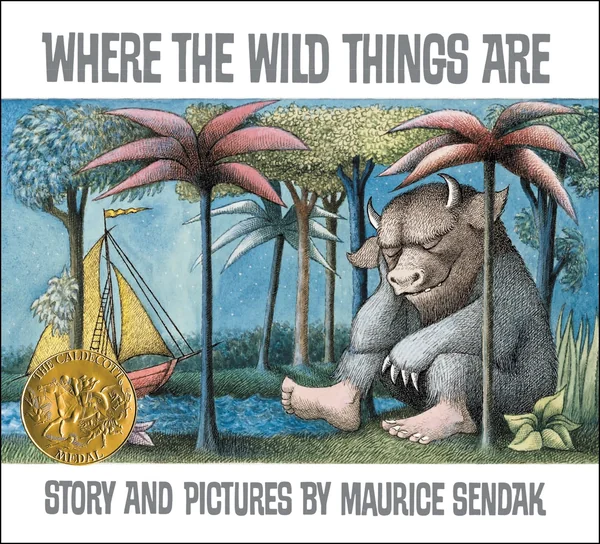
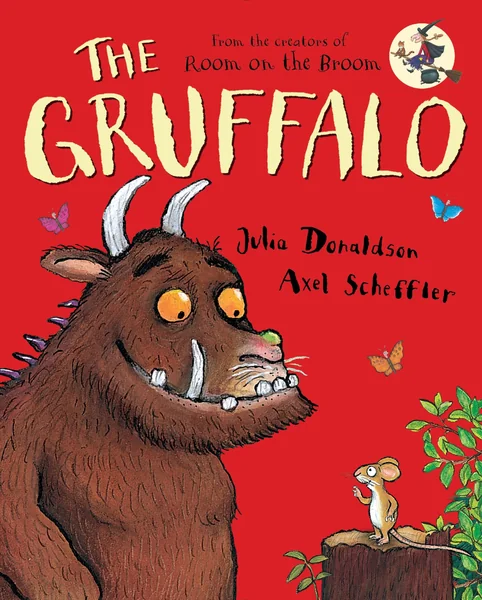
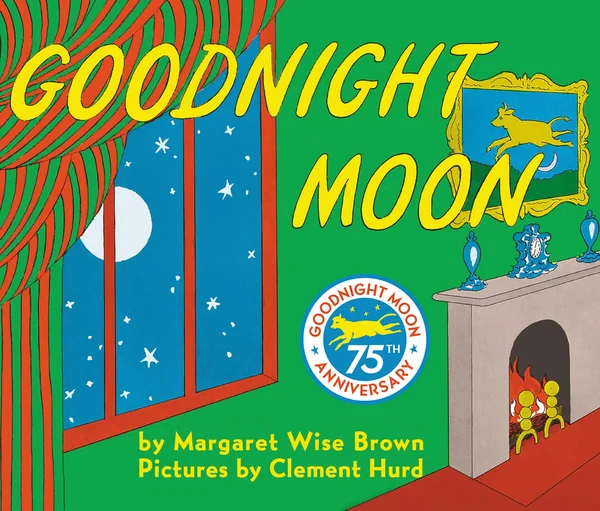
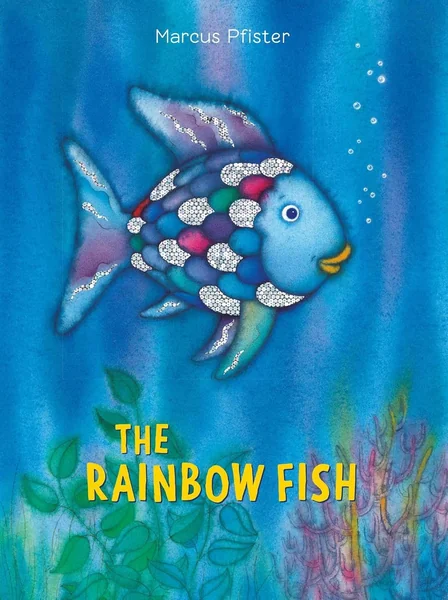
- Readers who love The Alfie Treasury's warm, domestic approach to early childhood will find much to enjoy in other classics of the picture-book canon. Goodnight Moon by Margaret Wise Brown shares the same reassuring, child-centred sensibility and has been a bedtime staple for generations. Where the Wild Things Are by Maurice Sendak similarly centres a young child's big feelings, though it ventures into imaginative rather than domestic territory. The Gruffalo by Julia Donaldson offers the same British picture-book tradition of finding adventure in an everyday setting, while The Very Hungry Caterpillar by Eric Carle and The Rainbow Fish by Marcus Pfister round out a strong shelf of enduring pre-school classics with warm illustration styles and accessible emotional themes.
- Who should read this?
- The Alfie Treasury is aimed squarely at pre-school children — roughly ages three to five — and the adults who read aloud with them. The stories are structured around situations children in that age group will recognise from their own lives, with emotional stakes scaled precisely to what matters most at that stage: will Alfie be brave enough to hold someone's hand at the party? Will Mum get back inside the house? For caregivers, the treasury adds its own layer of recognition, with Hughes's dialogue between Alfie and his mum described in critical coverage as 'an almost exact echo' of the daily conversations of early parenthood. It is designed to be shared rather than read alone.
- What age is it for?
- Best for ages 3 to 5, though younger toddlers with engaged caregivers and older pre-schoolers up to around age 6 will also find much to enjoy. The stories are built around milestones — shyness, siblings, birthday parties, new boots, starting school — that map closely onto the experiences of children in the pre-school years, and the emotional stakes are calibrated to resonate with that age group. The reading level is straightforward picture-book prose designed to be read aloud by a caregiver alongside a young child.
- About Shirley Hughes
- Shirley Hughes is a renowned British illustrator and author celebrated for her warm, detailed pen-and-ink drawings of everyday childhood moments. The Alfie Treasury collects her beloved stories about a young boy named Alfie and his adventures, showcasing the distinctive visual and narrative sensibility that has made her one of Britain's most enduring picture-book creators.
- What are the main themes?
- The Alfie Treasury addresses the small but momentous concerns of early childhood with precision and warmth. The seven stories move through shyness when expected to perform socially, the complicated feelings that come with having a younger sibling like Annie Rose, the social thrill and anxiety of encountering older children, and the brave new world of starting school. Hughes transforms everyday episodes — accidentally locking a parent out of the house, separation anxiety at a birthday party, new wellington boots perfect for puddle-splashing — into genuine small dramas that resonate with both children and caregivers. Critical coverage notes that Hughes 'makes the ordinary extraordinary,' a phrase that captures the collection's central artistic achievement.
- What's this book about?
- The Alfie Treasury is a single-volume hardcover collection of seven Shirley Hughes picture-book stories about Alfie, a pre-school boy whose world is richly populated by his younger sister Annie Rose, his mum, and a close-knit neighbourhood community. The stories — including Alfie Gets in First, Alfie's Feet, and Alfie and the Big Boys — follow him through a sequence of small but consequential adventures: accidentally locking his mother out of the house, navigating birthday parties, getting new wellington boots, and making tentative steps toward older children and school life. Published by Ted Smart in 1994, the treasury gathers the earliest stories in the series, which began in 1981, into a gift-quality hardcover designed for shared reading between young children and caregivers.
- Who is it for?
- The Alfie Treasury is designed for pre-school children aged roughly three to five and the adults who share books with them. The emotional stakes of each story — will Alfie be brave enough to hold someone's hand at the party? Will Mum get back inside the house? — are calibrated precisely to what looms largest in a four-year-old's world. Caregivers and parents will find their own layer of resonance: critical coverage describes Hughes's dialogue between Alfie and his mum as 'an almost exact echo' of the daily conversations of early parenthood. It is a collection built for shared reading rather than solitary enjoyment.
- What format or source is it?
- The Alfie Treasury is published in hardcover by Ted Smart, bringing seven standalone picture-book titles under a single binding in a treasury format. This hardcover edition is designed as both a gift volume and a keepsake, making it a durable, shelf-worthy edition of the earliest Alfie stories. Readers seeking the individual books in their original standalone editions will find those available separately.
Summarize this book
Follow up
Synthesized from verified book data & published reviews · How we review
Press Enter to ask. Answers come from our editorial Q&A — start typing to see related questions.
Age & Reading Level
Recommended age
Ages 5–8
Best for: Ages 3–6 — picture-book prose and illustrations designed to be read aloud by a caregiver with pre-school children; no advanced reading comprehension required.
Skip if you are looking for coverage of the full Alfie and Annie Rose catalogue rather than just the earliest stories.
Our Review
What the Book Contains
The Series' Place in Children's Literature
Strengths: The Ordinary Made Extraordinary
Who This Book Is Designed For
Limitations to Consider
Sources & Further Reading
The key facts and claims in this review are grounded in the retrieved, verified sources listed below.
- Cited in this review
- 1
booktopia.com.au
- 2
worldofbooks.com
- Further reading
- 3
Shirley Hughes, Wikipedia
- 4
- 5
amazon.com
Books like The Alfie Treasury
Curated picks for readers who enjoyed The Alfie Treasury, with our reasoning for each match.
If you liked The Alfie Treasury