BOOKS
Published

Read Time

8 min read

Reader rating

4.8

· 4,511 Amazon ratings
reader ratings, not a LuvemBooks score
Curated & edited by

LuvemBooks Editorial

How we create our reviews →
Share This Review

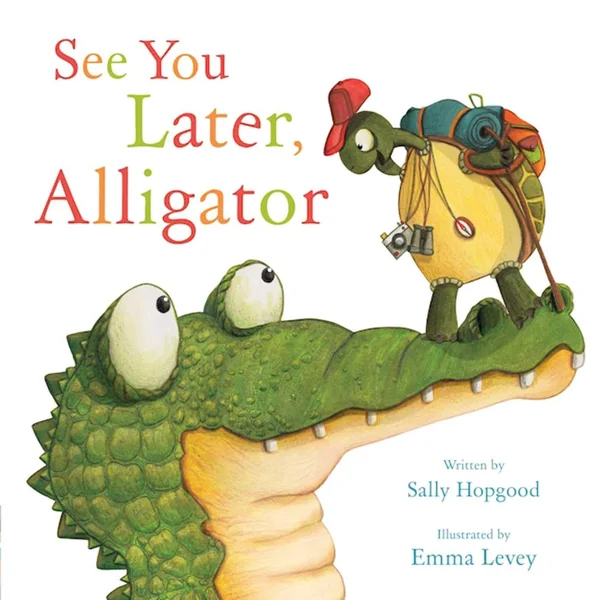
See You Later, Alligator by Sally Hopgood Review: A Giggly Goodbye Romp for Preschoolers

See You Later, Alligator is a rhyming picture book by Sally Hopgood, illustrated by Emma Levey, published by Sky Pony in 2016, in which a tortoise determined to embark on an adventure cannot resist saying an increasingly silly farewell to every animal he encounters — a premise that proved popular enough to spend eighteen weeks on the New York Times Bestseller list.
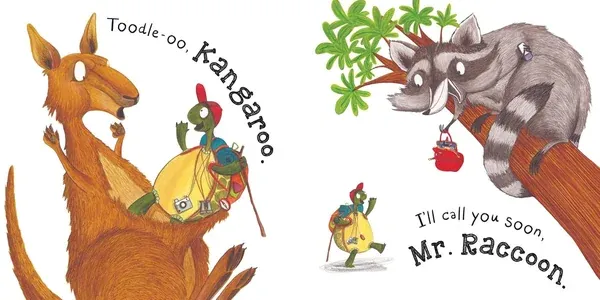
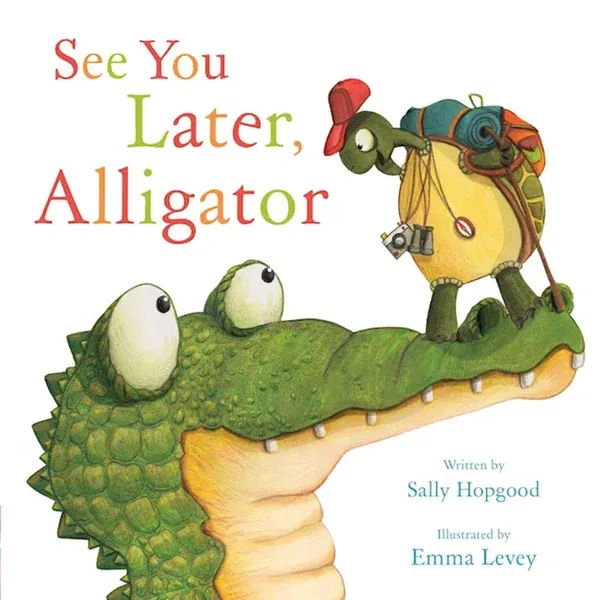
Interior illustration showing a tortoise encountering a crocodile by water, with a speech bubble containing a farewell phrase.Interior spread showing a kangaroo and tortoise saying goodbye, and a raccoon in a tree with farewell text.See You Later, Alligator (RhymeTime Animals) by Sally Hopgood front coverTap to enlarge

LuvemBooks Verdict

Best for

Caregivers, nursery educators, and gift-givers looking for a high-energy, rhyming read-aloud for preschoolers aged two to four who delight in animal characters, comic repetition, and participatory storytelling.

Worth it if

You're after a reliably funny, rhythm-driven bedtime or group read-aloud for the youngest picture-book audience — one with genuine bestseller credentials and a structure children can anticipate and join in with.

Skip if

Readers or gift-givers seeking narrative complexity, emotional depth, or stories suited to children who have moved beyond the preschool-to-kindergarten window are likely to find the single-joke, cumulative format too thin.

Picture Book Perfect (picturebookperfect123.com) calls it a "humorous rhyming picture book" that "lends itself to the younger reader" through its clever, predictable farewell rhymes. Father Reading (fatherreading.wordpress.com) describes it as "a nice, easy read suitable for children 2+" that delivers "charming illustration and a little joke at the end," while mehibi.com concludes it is "simple, funny, and very colorful," praising its ability to take a classic phrase and turn it into "a whole adventure."

Sources: Picture Book Perfect, Father Reading, Mehibi
4.8from 4,511 Amazon ratings— reader ratings, not a LuvemBooks score

Age & Reading Level

Recommended age

Ages 5–8

Best for: Ages 2–4 — the rhyming, repetitive structure and animal-comedy format are calibrated for preschool and kindergarten comprehension; children significantly beyond that window are unlikely to be the intended audience.

Skip if you're looking for a picture book with narrative complexity, emotional weight, or characters developed beyond a single comic premise.

In This Review
  • What Works & What Doesn't
  • What the Book Is About
  • The Premise and Its Gentle Subtext
  • Rhyme, Repetition, and Read-Aloud Design
  • Bestseller Reception and Audience Fit
  • Limitations and Considerations

What Works & What Doesn't

What Works
  • Spent eighteen weeks on the New York Times Bestseller list, reflecting strong and sustained commercial reception
  • Rhyming, repetitive structure is deliberately designed for read-aloud engagement and preschool participation
  • A single escalating comic premise — Tortoise's ever-sillier goodbyes — sustains the full 32 pages with clear momentum
  • Illustrated by Emma Levey, whose practice spans print, gouache, photography, and three-dimensional work, lending visual variety to the project
  • Part of the RhymeTime Animals series, giving fans of the format easy access to further titles in the same vein
What Doesn't
  • The book's humor rests on a single escalating joke, which limits its narrative and emotional range compared to more layered picture books
  • Optimized squarely for ages two to four; children beyond the preschool-to-kindergarten window are not the intended audience and may find the repetition thin
A rhyming picture book with a straightforward comedic hook and documented bestseller appeal, See You Later, Alligator earns its place on the preschool shelf through character, wordplay, and a quietly relatable premise.

What the Book Is About

The story centers on Tortoise, bags packed and adventure imminent — except that he cannot quite bring himself to leave without bidding farewell to every single creature around him. As the publisher's description puts it, he stops for every last timid mouse and bumblebee, shouting his rhyming goodbyes one after another. The escalation is the engine of the book: each farewell grows sillier and more inventive than the last, and the central comic question — when will the goodbyes end and the adventure actually begin? — gives the text a running gag that sustains its 32 pages. A standout moment flagged in the publisher synopsis is the perplexed rhinoceros that Tortoise cheerfully mistakes for a unicorn, a detail that captures the book's tone of affectionate absurdity. The setting, described by one source as a zoo, provides a parade of animal characters for Tortoise to address, each new encounter an opportunity for another rhyming send-off.
children will want to read — and giggle through — again and again.
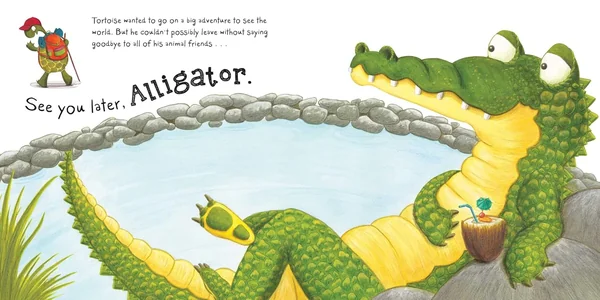
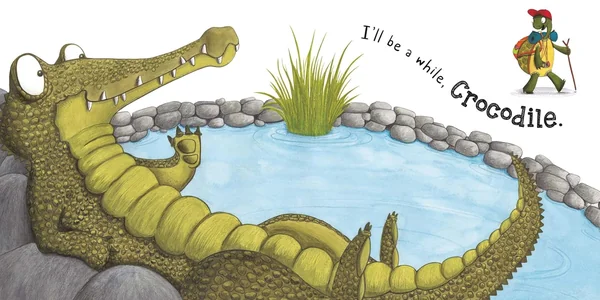
Interior illustration spread showing a tortoise saying goodbye to an alligator by a pond.

The Premise and Its Gentle Subtext

Underneath the comedy, the book encodes something recognizable to the adults likely to be reading it aloud: the possibility, gently floated in the publisher's own description, that Tortoise may be stalling the start of his trip. That small layer of self-aware hesitation — adventure is exciting, but goodbyes are also a way of delaying the scary thing — gives the story a mild emotional undercurrent without leaning into sentiment. For preschool-aged readers in the target range of two to four years, the comedy will be front and center; the subtext is there for parents reading along.

Rhyme, Repetition, and Read-Aloud Design

The book's structural backbone is the cumulative, repetitive farewell — a format with deep roots in children's literature that serves two practical purposes: it makes the text predictable enough for young children to anticipate and participate in, and it rewards repeat readings as children begin to recite the rhymes. The publisher describes the text as "expressive, rhyming" and the overall package as something "children will want to read — and giggle through — again and again." This design intent places the book squarely in the read-aloud tradition, where rhythm and repetition are the primary tools of engagement. Hopgood, whose background spans authorship, visual art, and paper engineering, brings a multidisciplinary sensibility to the project, while illustrator Emma Levey — whose practice draws on print, gouache, photography, and three-dimensional work — contributes the visual dimension of the book's storytelling.
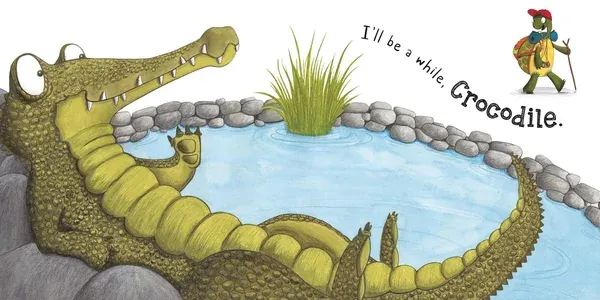
Interior illustration showing a tortoise encountering a crocodile by water, with a speech bubble containing a farewell phrase.

Bestseller Reception and Audience Fit

According to the publisher's own listing on skyhorsepublishing.com, the book spent eighteen weeks on the New York Times Bestseller list, a figure that reflects substantial commercial reach for a picture book. That level of sustained list performance points to genuine word-of-mouth traction, most plausibly driven by caregivers and early childhood educators seeking reliable read-aloud material. The verified reading age, drawn from customer data, is two to four years, with a recommended grade level of preschool through kindergarten — a cohort for whom animal characters, comic repetition, and predictable rhyme schemes are reliably effective. The book is part of the RhymeTime Animals series, situating it within a broader line of similarly structured titles for the same audience.
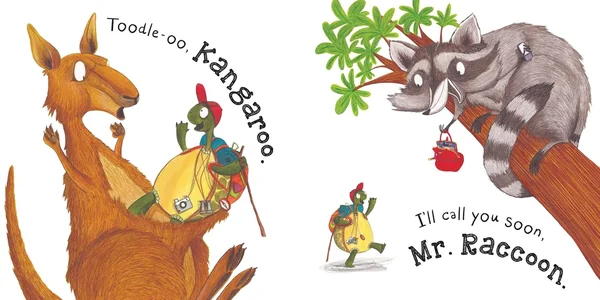
Interior spread showing a kangaroo and tortoise saying goodbye, and a raccoon in a tree with farewell text.

Limitations and Considerations

The book's greatest strength — its commitment to a single escalating joke — is also the boundary of its ambition. Readers or gift-givers seeking narrative complexity, emotional weight, or an expansive cast of fully developed characters will find the concept deliberately narrow. The format is optimized for the youngest end of the picture-book spectrum, and older children who have grown comfortable with longer, more layered stories are unlikely to be the primary audience. Additionally, because the humor rests almost entirely on rhyming wordplay and comedic repetition, the experience is at its best when read aloud; the interactive, performative dimension of the text is central to what the book is designed to deliver.

Sources & Further Reading

The key facts and claims in this review are grounded in the retrieved, verified sources listed below.

  1. Cited in this review
  2. 1

    skyhorsepublishing.com

  3. 2
  4. 3
  5. Further reading
  6. 4
  7. 5
  8. 6
  9. 7