
9 min read
4.4
· 8,269 Amazon ratingsShare This Review
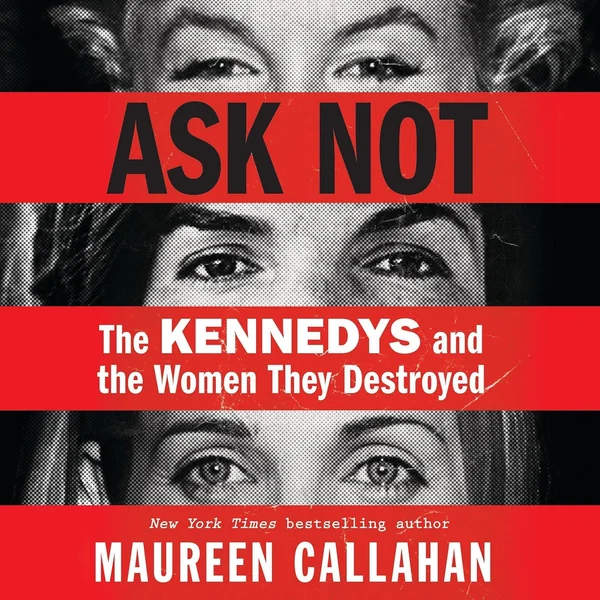
Ask Not: The Kennedys and the Women They Destroyed by Maureen Callahan Review: A Lacerating, Unflinching Dynastic Exposé
Maureen Callahan's Ask Not: The Kennedys and the Women They Destroyed is a sweeping, deeply reported exposé published by Little, Brown & Company that dismantles the gilded mythology of America's most celebrated political dynasty by centering the women — wives, lovers, daughters, and bystanders — who bore the cost of Kennedy power across generations. The Guardian describes it as a "lacerating exposé," and critical coverage places it within an already crowded field of Kennedy literature, asking what Callahan hopes to add to this "vale of tears." The answer, it turns out, is a great deal: a multigenerational reckoning that spans patriarch Joseph Kennedy through John Jr., tracing a pattern of abuse, coercion, and institutional impunity that the family's mythmakers worked hard to obscure.
LuvemBooks Verdict
Best for
Readers drawn to narrative nonfiction who want a propulsive, multigenerational reckoning with the Kennedy dynasty's treatment of women — particularly those more interested in prosecutorial storytelling than academic historiography.
Worth it if
The dynastic architecture Callahan builds — tracing a pattern of abuse from Joseph Kennedy through John Jr. as systemic rather than individual — is compelling enough to justify the read, especially for those encountering this material without deep prior immersion in Kennedy scholarship.
Skip if
Readers already deeply versed in Kennedy literature, or those expecting rigorous scholarly apparatus, may find that the underlying incidents are not new to the record and that the book's closing reach for a triumphal tone sits uneasily after relentless carnage.
What readers & critics say
The Guardian calls it a "lacerating exposé" of how generations of Kennedy men abused women with impunity, while Kirkus describes it as a "sharp-edged" and informative, if gossip-filled, history that draws on interviews and archival sources to document a "perverse double standard" in press and justice alike. Bookmarks.reviews tempers the praise, noting that the anecdotes are not new but that Callahan strings them together in a way that makes the Kennedy dynasty look like "Bluebeard's castle of horrors," while also flagging that she "refloats unfounded claims" about the Kennedy brothers' involvement in Marilyn Monroe's death.
“A lacerating exposé of how generations of Kennedys casually abused the women around them with impunity.”
— The Guardian“A sharp-edged exposé providing ample evidence of the 'perverse double standard' that allowed Kennedy men's insidious behavior to persist.”
— Kirkus ReviewsAge & Reading Level
Recommended age
Adult
Reading level
Adult
5 content notes · who it suits
Content to know about
Best for: Adults — extensive documented accounts of rape, sexual coercion, non-consensual medical procedures, and suicide across multiple subjects
Skip if you want scholarly historiography with rigorous academic apparatus rather than a propulsive, prosecutorial journalistic exposé
In This Review
- What Works & What Doesn't
- What the Book Actually Is and What It Argues
- The Scope of the Accusations Callahan Documents
- Callahan's Framing and Its Significance
- Strengths: Breadth, Momentum, and the Audible Edition
- Limitations and Who May Find It Frustrating
What Works & What Doesn't
What Works
- Multigenerational scope traces a pattern of abuse from Joseph Kennedy through John Jr., making the dynasty's conduct legible as systemic rather than individual
- The Guardian's review praises Callahan's 'lacerating' reporting on how Kennedy men abused women with impunity across decades
- Rich, concrete detail — drawn from documented incidents — gives the narrative a visceral specificity that broader dynastic histories often lack
- Narrated by Gabra Zackman in an unabridged eleven-hour audiobook, well-suited to the book's journalistic, propulsive pace
- Ranked #3 in Sexual Assault True Crime and #7 in Political Leader Biographies on Audible, reflecting strong cross-audience reach
What Doesn't
- Critical coverage notes that much of the underlying material — Rosemary's lobotomy, Joan Kennedy's struggles, JFK's infidelities — is not new to the historical record, raising questions about what the book adds for deeply informed readers
- The Times also observes that the book's closing attempt at a triumphal coda sits uneasily after its relentless catalog of harm, a tonal transition the narrative does not fully earn
What the Book Actually Is and What It Argues
The Scope of the Accusations Callahan Documents
Callahan's Framing and Its Significance
Strengths: Breadth, Momentum, and the Audible Edition
Limitations and Who May Find It Frustrating
Frequently Asked Questions
Sources & Further Reading
The key facts and claims in this review are grounded in the retrieved, verified sources listed below.
- Cited in this review
- 1
- 2
- 3
- Further reading
- 4
Maureen Callahan, Wikipedia
- 5
- 6
Related Reviews
Reviews of books we picked for readers who enjoyed Ask Not.


Reader Comments
No comments yet
Be the first to share your thoughts!