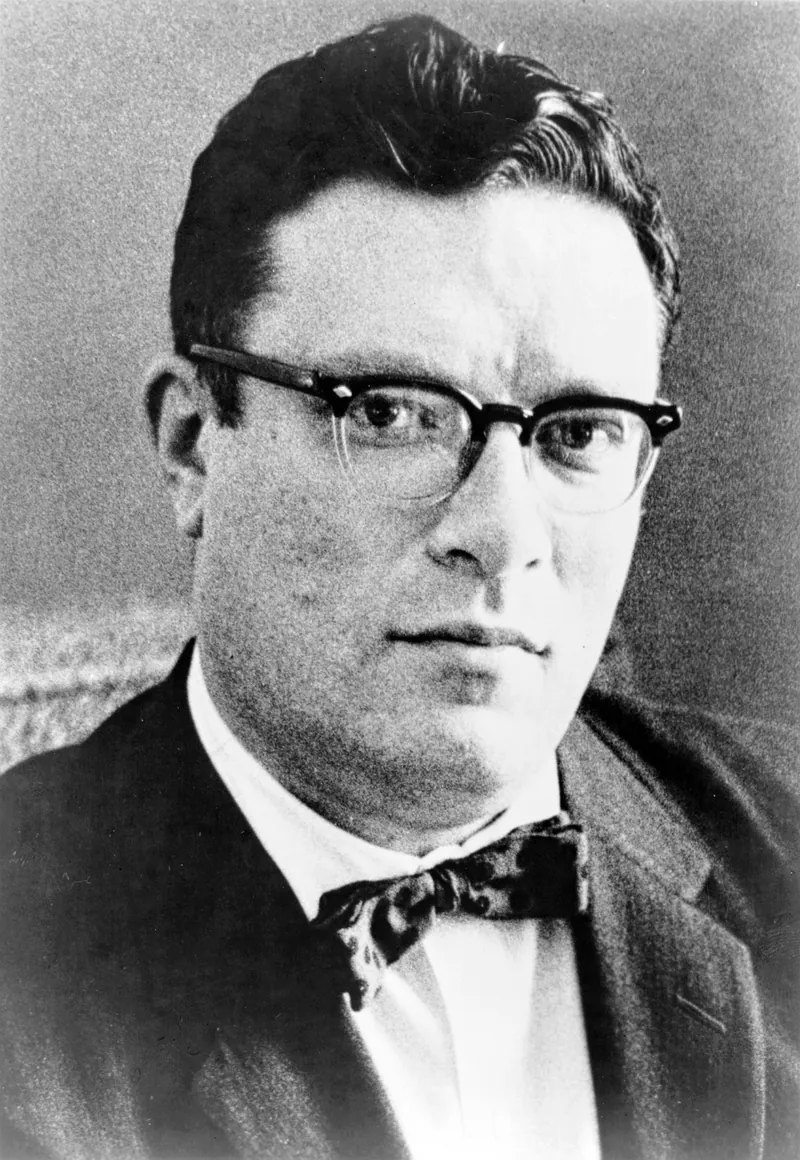
Photo:Phillip Leonian [1] from New York World-Telegram & Sun.[2]·Public domain·Commons
Isaac Asimov
American
1920 – 1992
Isaac Asimov was an American writer and professor of biochemistry at Boston University. During his lifetime, Asimov was considered one of the "Big Three" science fiction writers, along with Robert A. Heinlein and Arthur C. Clarke.He wrote or edited more than 500 books and an estimated 90,000 letters and postcards. Best known for his hard science fiction, Asimov also wrote mysteries and fantasy, as well as popular science and other non-fiction. His work spans nine out of the ten categories of the Dewey decimal system.
NOT REVIEWED YET
We haven't reviewed Isaac Asimov yet.
The authors readers ask for most get reviewed first.
NOT REVIEWED YET
We haven't reviewed Isaac Asimov yet.
The authors readers ask for most get reviewed first.
In Isaac Asimov's own words
Isaac Asimov discusses his prolific writing career, daily work habits, and predictions for the future of space and technology on Late Night with David Letterman.
Asimov mentions his forthcoming book, 'In the Beginning', in which he annotates the first 11 chapters of Genesis. He explains that roughly 15 pages of scripture expanded into about 200 pages when combined with his annotations.
Reaction to The Empire Strikes Back
Asimov shares that he loved 'The Empire Strikes Back' so much that as soon as the film concluded, he jumped out of his seat and demanded they start the third installment.
Prioritizing the Earth-Moon system
Asimov argues that humanity should thoroughly build out infrastructure in the Earth-Moon system—including space stations, power stations, and lunar mining—before attempting to explore deeper into space.
Accidental foresight in science fiction
While Asimov accurately predicted spacewalks, pocket computers, and space stations beaming energy, he notes he never consciously tried to forecast the future; he was simply writing commercial stories to pay his way through college.
Writing multiple projects simultaneously
Asimov explains that he can easily juggle multiple non-fiction manuscripts at different stages, but must write fiction strictly one book at a time to avoid confusing the plots.
Ask LuvemBooks
Press Enter to ask. Answers come from our editorial Q&A — start typing to see related questions.