Skip to content
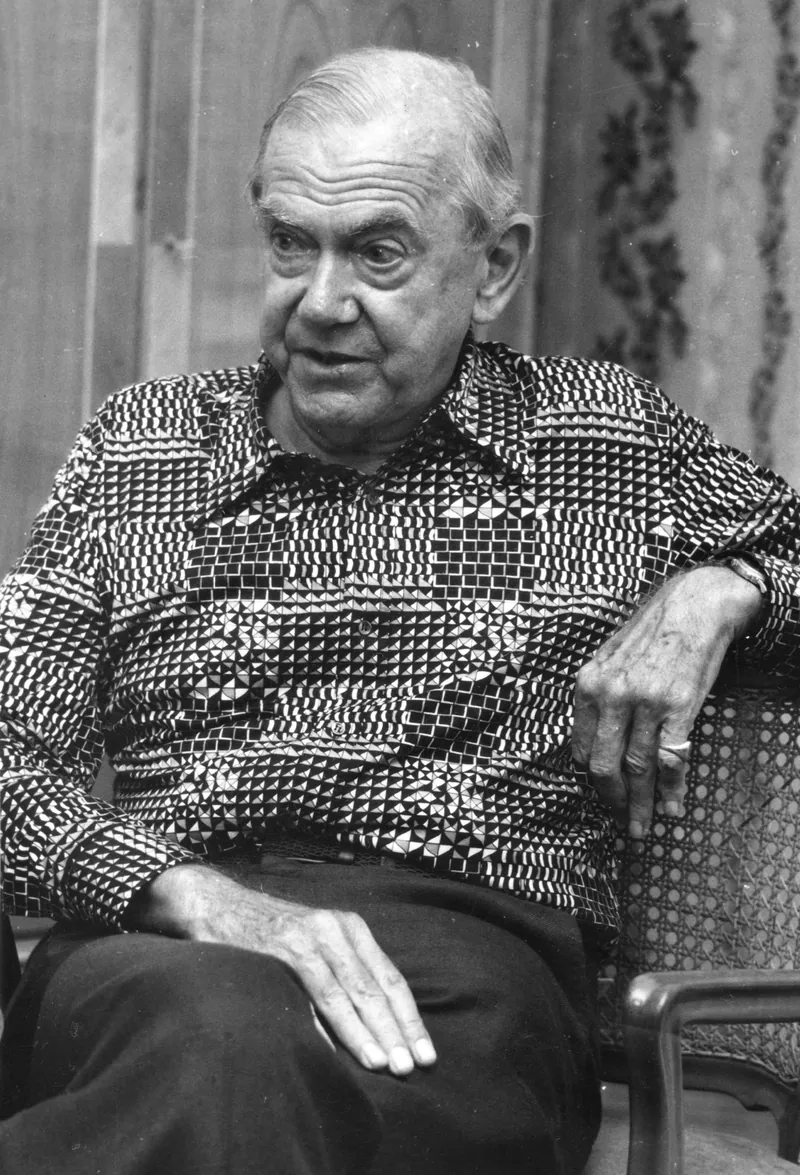
Graham Greene, author portrait
Photo:FOTO:Fortepan — ID 84697: Adományozó/Donor: Magyar Hírek folyóirat. archive copy at the Wayback Machine·CC BY-SA 3.0·
Commons

Graham Greene

British
1904 – 1991
Henry Graham Greene (2 October 1904 – 3 April 1991) was an English writer and journalist regarded by many as one of the leading novelists of the 20th century.
Combining literary acclaim with widespread popularity, Greene acquired a reputation early in his lifetime as a major writer, both of serious Catholic novels, and of thrillers (or "entertainments" as he termed them). He was shortlisted for the Nobel Prize in Literature several times. Through 67 years of writing, which included over 25 novels, he explored the conflicting moral and political issues of the modern world. The Power and the Glory won the 1941 Hawthornden Prize and The Heart of the Matter won the 1948 James Tait Black Memorial Prize and was shortlisted for the Best of the James Tait Black. Greene was awarded the 1968 Shakespeare Prize and the 1981 Jerusalem Prize. Several of his stories have been filmed, some more than once, and he collaborated with filmmaker Carol Reed on The Fallen Idol (1948) and The Third Man (1949).
He converted to Catholicism in 1926 after meeting his future wife, Vivien Dayrell-Browning. Later in life he called himself a "Catholic agnostic".
He died in 1991, aged 86, of leukemia, and was buried in Corseaux cemetery in Switzerland. William Golding called Greene "the ultimate chronicler of twentieth-century man's consciousness and anxiety". V. S. Pritchett called him "the most ingenious, inventive and exciting of our novelists, rich in exactly etched and moving portraits of real human beings and who understands the tragic and comic ironies of love, loyalty and belief."

NOT REVIEWED YET

We haven't reviewed Graham Greene yet.

The authors readers ask for most get reviewed first.

NOT REVIEWED YET

We haven't reviewed Graham Greene yet.

The authors readers ask for most get reviewed first.

In Graham Greene's own words

A 1991 BBC Late Show retrospective broadcast on the day of Graham Greene's death, featuring rare interview clips of the author and tributes from Anthony Burgess and fellow writers.

Recorded 1991 · Uploaded by foundin_a_attic , 2020 · Watch on YouTube ·

Fear of Not Being Alone

Greene says that rather than fearing loneliness, his real fear upon marrying was not having enough solitude. He notes that writing is inherently lonely work that required him to isolate himself and travel far from people he loved.

Refusing Television Appearances

Greene explains that he avoided appearing on television because he feared performing a role would corrupt his identity as an author. He worried that any on-camera success would tempt him to repeat the experience and turn him into a performer rather than a serious writer.

The Sociable Solace of Opium

Greene recalls finding great relief in smoking opium, which pushed his troubles to the horizon and placed problems into proper perspective. He also appreciated its communal nature, describing how sharing pipes in pairs led to deep conversations.

Escaping Lifelong Boredom and Depression

Greene states that a profound dread of boredom drove much of his life and writing since adolescence. Rather than a pure melancholic, he characterizes his psychological makeup as manic-depressive.

Weakening Faith with Age

Greene reflects that his Catholic faith grew increasingly faint as he neared the end of his life. While he was originally convinced by intellectual arguments that Catholicism was closest to the truth, he admits to having forgotten those rationales in old age.

Ask LuvemBooks

​

Press Enter to ask. Answers come from our editorial Q&A — start typing to see related questions.